Best Chelsea Boots for Men: Fit, Leather, and Comfort
What's inside
- Quick answer: which Chelsea boot suits your situation?
- Leather versus suede: the first major choice
- Sole construction: comfort, grip, and repairability
- Fit and sizing: measure before choosing a number
- Break-in comfort: what to expect
- Useful Chelsea boot categories and established examples
- Ownership costs and maintenance
- Final buying recommendation
- Quick answer: which Chelsea boot suits your situation?
- Leather versus suede: the first major choice
- Sole construction: comfort, grip, and repairability
- Fit and sizing: measure before choosing a number
- Break-in comfort: what to expect
- Useful Chelsea boot categories and established examples
- Ownership costs and maintenance
- Final buying recommendation
As an Amazon Associate I earn from qualifying purchases. This post may contain affiliate links at no extra cost to you.
The best Chelsea boots for men depend on where you will wear them: choose full-grain leather and a replaceable rubber sole for frequent work, suede or polished leather for everyday outfits, and a slimmer welted or stitched sole for dressier use.
As an Amazon Associate we earn from qualifying purchases at no extra cost to you.


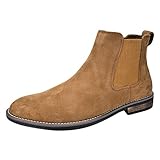

Quick answer: which Chelsea boot suits your situation?
| Situation | Best upper | Best sole | Useful target specifications | Typical market range |
|---|---|---|---|---|
| Daily commuting and casual wear | Full-grain or pull-up leather | Moderate-lug rubber | 12–16 oz leather, 20–30 mm heel, removable or cushioned insole | $120–$250 |
| Outdoor work and wet conditions | Oiled full-grain leather | Deep-lug rubber, stitched or cemented construction | 2.5–4 mm lug depth, gusseted tongue if present, sealed seams | $160–$350 |
| Office and smart-casual outfits | Calfskin or smooth dress leather | Leather, slim rubber, or fine Dainite-style rubber | 8–12 oz leather, 18–25 mm heel, narrow welt profile | $180–$450 |
| Lightweight travel and warm weather | Suede or thin pull-up leather | Flexible rubber or crepe-style sole | 700–1,100 g per pair, flexible forefoot, breathable lining | $100–$250 |
These figures are useful buying targets rather than universal standards. Boot weight changes with size, leather thickness, lining, and sole design. A heavier boot is not automatically tougher, but excessive weight can become tiring when worn for a full shift.
Leather versus suede: the first major choice
Full-grain leather
Full-grain leather keeps the outer surface of the hide, so it generally offers the best resistance to abrasion and repeated flexing. It develops a patina, can be conditioned, and is easier to wipe clean after contact with dust or light mud. Oiled or pull-up leather is particularly practical for casual work because small scuffs can often be blended with brushing or conditioner.
The trade-off is a longer break-in period. Firm leather around the ankle and instep may feel stiff for the first several wears, especially when paired with a rigid welted sole. Look for elastic panels that hold the foot without crushing the instep, and avoid sizing down to compensate for leather that has not yet softened.
Suede
Suede has a napped surface made from the underside of the hide. It usually feels softer from the beginning, flexes comfortably, and gives a Chelsea boot a less formal appearance. It is a strong choice for dry daily wear, smart-casual clothing, and travel where low break-in discomfort matters more than maximum weather resistance.
Suede is not automatically fragile, but it demands different care. Water marks, oil, and road salt can permanently change its appearance. Use a suede brush rather than wax polish, and apply a compatible protective spray before regular wear. For frequent outdoor work, smooth or oiled leather is normally easier to maintain.
Dress leather
Smooth calfskin or corrected-grain leather creates the cleanest silhouette with tailored trousers. It may be thinner and more polished than work-oriented leather, so inspect the sole and heel carefully if you expect to walk on rough surfaces. A narrow toe can look elegant but should not squeeze the toes; length cannot solve a width problem.
Sole construction: comfort, grip, and repairability
The sole affects the boot more than many product descriptions suggest. A cemented sole is glued and sometimes stitched to the upper. It is usually lighter, flexible, and affordable, but replacement may be limited once the bond or midsole deteriorates. This construction can be very comfortable from day one.
Goodyear welted and storm-welted boots attach the upper, insole, welt, and sole through a visible structural strip. They are often more resistant to water entering through the sole edge and can usually be resoled by a qualified cobbler. Their disadvantages are greater weight, a firmer feel, and a more noticeable break-in period.
Blake-stitched footwear has stitching directly through the upper and sole. It can flex naturally and look sleek, but the stitching is closer to the ground and may be more exposed to moisture. For office wear and city walking, that slim profile can be preferable to a lugged work sole.
- Choose fine rubber or leather soles for offices, restaurants, and dress trousers.
- Choose moderate lugs for mixed pavement, gravel, and everyday outdoor use.
- Choose deep lugs only when traction is a genuine need; they can feel clumsy indoors and collect mud.
- Choose a cushioned midsole when standing for long periods, but check that the heel remains stable.
Fit and sizing: measure before choosing a number
Start with the socks you will actually wear. Measure both feet at the end of the day while standing, because feet commonly expand after hours of walking. Record heel-to-toe length and the widest forefoot measurement. Use the manufacturer’s own chart rather than assuming every brand’s size is equivalent.
A properly fitted Chelsea boot should hold the heel with only slight movement, allow the toes to lie flat, and leave roughly 8–12 mm of space beyond the longest toe. The instep should feel secure but not painful. Elastic side panels should stretch enough to let the foot enter without excessive force, then return without sagging.
Do not use extra length to fix a boot that is too narrow. If the toes touch the front, go longer; if the sides or instep feel compressed, seek a wider last. A removable insole can create a little extra volume, but it cannot turn a fundamentally narrow boot into a wide fit.
Break-in comfort: what to expect
Soft suede and flexible cemented soles may feel close to their final comfort immediately. Thick full-grain leather, leather footbeds, and welted soles can take approximately 10–30 short wears to settle, depending on construction and foot shape. Break-in should mean gradual softening, not persistent pain or blistering.
A safer break-in routine
- Wear the boots indoors for 20–30 minutes with normal socks.
- Check the heel, ankle edge, and widest part of the forefoot afterward.
- Increase wear to one or two hours before using them for a full workday.
- Alternate with another pair for the first week so moisture can evaporate.
- Use a thin blister pad or properly fitted sock for friction points, but do not force a painful fit.
Leather conditioner can soften dry leather, but applying too much may make the upper floppy and reduce its original finish. Never heat boots aggressively with a radiator, hair dryer, or heater; rapid drying can shrink leather, weaken adhesives, and crack finishes.
Useful Chelsea boot categories and established examples
For rugged everyday use, the Blundstone 500 and 550 families are widely recognized for elastic-sided construction, cushioned soles, and casual styling. They suit commuting, light outdoor work, and travel, although their fit and insole volume should be checked carefully because sizing conventions differ from many dress-shoe brands.
For a more traditional work-boot approach, Red Wing Chelsea styles such as the Classic Chelsea and Weekender Chelsea lines offer different combinations of leather, cushioning, and sole construction. The heavier options are better suited to durability and repeated outdoor wear, while lighter versions are easier for everyday walking.
For a dressier silhouette, the Allen Edmonds Liverpool and RM Williams Comfort Craftsman represent sleeker leather Chelsea designs. They are more at home with wool trousers, denim, or business-casual clothing than muddy job sites. Their narrower profiles make width selection especially important.
Thursday Boot Company’s Cavalier is a common middle-ground option: leather uppers, a relatively streamlined shape, and a price position below many premium welted boots. Dr. Martens 2976 Chelsea boots emphasize a bold silhouette and air-cushioned rubber sole, making them distinctive casual footwear rather than a conventional dress boot.
Ownership costs and maintenance
A useful way to compare value is cost per wear. Suppose a $180 pair is worn twice weekly for three years. That is approximately 312 wears, or about $0.58 per wear before maintenance. A $350 pair worn three times weekly for five years provides about 780 wears, or roughly $0.45 per wear. The more expensive boot wins only if its fit, durability, and repairability actually lead to more frequent or longer use.
Brush dirt off after each outing. Wipe smooth leather with a slightly damp cloth, allow it to dry naturally, then condition sparingly every few months or whenever it looks dry. Clean suede with a dry brush and use a suede eraser for localized marks. Replace worn heel caps before the heel tilts, since uneven wear can damage the heel block and affect comfort.
The elastic panels often lose tension before the leather upper fails. Soles commonly wear first at the outer heel and ball of the foot. A resole is worthwhile when the upper, stitching, and heel counter remain sound; it is poor value when the leather is cracked through, the elastic is badly stretched, or the internal structure has collapsed.
Final buying recommendation
For one versatile pair, choose medium-weight full-grain or pull-up leather, a moderately lugged rubber sole, a stable heel, and enough forefoot room for your everyday socks. Choose suede when low break-in effort and smart-casual styling matter most. Choose a slim leather or fine-rubber sole for dressier clothes, and reserve deep-lug, heavily welted boots for demanding outdoor use. The best Chelsea boots for men are the ones whose last matches your foot, whose sole matches your surfaces, and whose maintenance requirements fit how often you will actually wear them.