Best Laptops With Integrated Graphics
What's inside
As an Amazon Associate I earn from qualifying purchases. This post may contain affiliate links at no extra cost to you.
The best laptop with integrated graphics for most people in 2026 is the MacBook Air with M4 for quiet everyday work and battery life, while the ASUS Zenbook S 14 with Intel Core Ultra 7 258V is a stronger Windows choice for creative applications and light gaming; buyers who want upgradeable memory and storage should look at the Framework Laptop 13 with AMD Ryzen 7 7840U.
Integrated graphics share the processor’s memory instead of using a separate graphics card. That makes a laptop thinner, quieter, and more efficient, but performance depends heavily on memory bandwidth, cooling, screen resolution, and whether the laptop is plugged in. The right choice is therefore less about the “fastest iGPU” and more about the work you actually do.
As an Amazon Associate we earn from qualifying purchases at no extra cost to you.

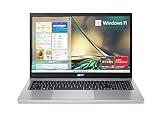


Best laptops with integrated graphics by situation
- Best overall for office work and battery life: Apple MacBook Air 13-inch with M4
- Best Windows laptop for creative apps: ASUS Zenbook S 14 with Core Ultra 7 258V and Intel Arc graphics
- Best for light gaming on Windows: Lenovo Yoga Pro 7 with Ryzen 7 8840HS and Radeon 780M
- Best upgradeable option: Framework Laptop 13 with AMD Ryzen 7 7840U
- Best large-screen value: Lenovo ThinkPad T16 Gen 3 AMD with Ryzen 7 PRO 8840U
- Best for maximum battery endurance: a Snapdragon X laptop such as the Lenovo Yoga Slim 7x, provided your applications are compatible
Head-to-head comparison
| Laptop and processor | Integrated GPU | Typical configuration | Weight | Battery capacity | Best suited to |
|---|---|---|---|---|---|
| MacBook Air 13, Apple M4 | 8- or 10-core M4 GPU | 13.6-inch, 16GB RAM, 256GB–512GB SSD | About 1.24 kg | 53.8 Wh | Office work, streaming, photo work, quiet travel |
| ASUS Zenbook S 14, Core Ultra 7 258V | Intel Arc 140V | 14-inch 3K OLED, 32GB RAM, 1TB SSD | About 1.2 kg | 72 Wh | Windows productivity, video editing, color-sensitive work |
| Lenovo Yoga Pro 7, Ryzen 7 8840HS | Radeon 780M | 14.5-inch, 16GB–32GB RAM, 512GB–1TB SSD | About 1.5 kg | 73 Wh | Light gaming, coding, creative workloads |
| Framework Laptop 13, Ryzen 7 7840U | Radeon 780M | 13.5-inch, user-configurable RAM and SSD | About 1.3 kg | 55 Wh | Repairability, upgrades, long-term ownership |
| Lenovo Yoga Slim 7x, Snapdragon X Elite | Qualcomm Adreno GPU | 14.5-inch OLED, 16GB–32GB RAM, 512GB–1TB SSD | About 1.28 kg | 70 Wh | Long unplugged use, web and office applications |
These are representative configurations rather than fixed prices or universal specifications. Manufacturers can change memory, storage, displays, and regional battery ratings. Expect roughly $700–$1,500 for capable integrated-graphics laptops, with premium OLED and MacBook configurations often costing more.
How the integrated GPUs compare
Apple M4 GPU
The M4’s integrated GPU is particularly effective for office work, browser-heavy multitasking, photo editing, and video playback. macOS applications such as Final Cut Pro and Apple’s own media tools are well optimized, and the fanless MacBook Air remains silent during normal use. Its limitations are compatibility and upgradeability: memory is unified with the processor and cannot be replaced later, while gaming support is narrower than on Windows.
Intel Arc 140V
Intel’s Arc 140V is one of the more capable integrated graphics options in thin Windows laptops. It benefits from fast on-package LPDDR5x memory and performs well in GPU-accelerated creative software, modern video codecs, and many games at 1080p with medium or low settings. The Core Ultra 7 258V platform usually includes 32GB of memory, but that memory is soldered, so choose the capacity carefully.
AMD Radeon 780M
The Radeon 780M remains a strong all-round integrated GPU. It is suitable for games such as Rocket League, Fortnite, Minecraft, and many older or well-optimized titles at 1080p. A system with dual-channel or fast LPDDR5X memory performs much better than a low-cost laptop restricted to slower single-channel memory. AMD laptops also offer broad Windows application and game compatibility.
Qualcomm Adreno
Snapdragon X laptops can deliver excellent battery life and responsive everyday performance. They are attractive for writing, video calls, web work, and streaming, but they use Windows on Arm. Most mainstream applications run through translation, yet specialist plug-ins, older utilities, some games, and certain device drivers may not behave like their Intel or AMD versions. Check compatibility before buying for professional software.
Office work, streaming, and battery life
For documents, spreadsheets, email, video calls, and dozens of browser tabs, almost any current laptop with 16GB of RAM is sufficient. The more important specifications are a comfortable keyboard, a bright display, a good webcam, and efficient cooling.
Streaming video is also easy for modern integrated GPUs because hardware decoding handles common formats such as H.264, HEVC, and AV1. The display matters more than the GPU: a 400-nit screen is easier to use in a bright room, while an OLED panel provides better contrast but may use more power when showing bright content.
Battery capacity alone does not predict runtime. As a practical estimate, divide usable battery energy by average system draw. For example, a 70 Wh battery operating at an average 7 W during mixed office use gives a theoretical 10 hours:
70 Wh ÷ 7 W = 10 hours
Real runtime will be lower because of charging losses, background tasks, display brightness, and battery aging. Gaming or sustained rendering can raise consumption to 35–60 W, reducing a 70 Wh battery to roughly 1–2 hours. Integrated graphics improve efficiency, but they do not make intensive workloads battery-friendly.
Creative applications and light gaming
Integrated graphics are a good fit for Lightroom, Photoshop, Canva, Affinity applications, 1080p video editing, and light 3D work. They become less suitable for complex 4K timelines with multiple effects, large 3D scenes, advanced motion graphics, or modern games demanding high settings.
- Photo editing: prioritize 16GB or 32GB RAM, a color-accurate screen, and an SSD of at least 512GB.
- Video editing: choose a processor with hardware encoding and decoding for H.264, HEVC, and AV1; 32GB RAM is preferable for 4K projects.
- Light gaming: use 1080p resolution, medium or low settings, and an in-game frame-rate cap around 30–60 frames per second.
- 3D applications: check the software’s GPU and driver requirements before relying on an integrated solution.
The Zenbook S 14 is a particularly balanced Windows option because the Arc 140V combines modern media support with good integrated-GPU performance. The Yoga Pro 7 is preferable if gaming is a higher priority and you want AMD’s broad compatibility. Neither should be confused with a laptop containing a dedicated GeForce or Radeon GPU; those remain substantially faster for demanding games and rendering.
Upgradeability and long-term ownership
Many thin laptops now solder both RAM and storage, or solder the RAM while retaining one replaceable SSD. MacBook Air, Zenbook S 14, Yoga Slim 7x, and most ultraportables require you to select memory at purchase. This is important because integrated graphics use system memory: 8GB is increasingly restrictive, while 16GB is the sensible minimum and 32GB gives creative applications more room.
The Framework Laptop 13 is the clearest alternative for ownership flexibility. Its memory and M.2 SSD can be replaced, ports are modular, and many components are designed for repair. A repairable laptop may cost more initially, but replacing a $70–$150 SSD is far cheaper than replacing an entire computer when storage fills up.
Storage is often the first practical limitation. A 512GB SSD can hold the operating system, applications, and ordinary files, but video footage and game libraries consume space quickly. Keep at least 15% of the SSD free to reduce slowdowns and leave room for system updates.
Durability, maintenance, and common mistakes
Integrated graphics eliminate a separate graphics card, but the laptop still depends on fans, heat pipes, battery cells, hinges, keyboard switches, and USB ports. Dust buildup can raise temperatures and reduce sustained performance. Clean external vents with compressed air every few months in a dusty workspace, and avoid using the laptop on bedding or soft surfaces that block intake vents.
Three common buying mistakes are choosing 8GB of RAM to save money, assuming a large battery guarantees long runtime, and buying an Arm-based laptop without checking application compatibility. Another is selecting a high-resolution OLED display for creative work while overlooking its increased power use. For frequent unplugged use, a 1920×1200 or 2560×1600 IPS panel can offer a better endurance balance than a very bright 3K OLED.
Final buying advice
Choose the MacBook Air M4 if your priority is silent operation, dependable battery life, and mainstream office or creative work within macOS. Choose the ASUS Zenbook S 14 if you need Windows, a premium display, and strong integrated graphics in a light chassis. Choose an AMD Radeon 780M laptop for the best blend of Windows compatibility and light gaming. Choose the Framework Laptop 13 when repairability, replaceable memory, and future upgrades matter more than the thinnest design.
Whichever model you select, buy at least 16GB of RAM, a 512GB SSD, and a processor platform with modern video decoding. Those choices will affect everyday usability far more than a small difference in integrated-GPU benchmark scores.