Best Programmable Coffee Makers for Easy Brewing
What's inside
As an Amazon Associate I earn from qualifying purchases. This post may contain affiliate links at no extra cost to you.
The best programmable coffee makers for most kitchens are the OXO Brew 8-Cup for compact, simple brewing; the Cuisinart DCC-3200 for budget-friendly capacity; the Technivorm Moccamaster KBGV Select for long-term durability and temperature stability; and the Breville Precision Brewer Thermal for maximum control over brew size and profile.
As an Amazon Associate we earn from qualifying purchases at no extra cost to you.



Our Top Picks
 BLACK+DECKER 12-Cup Drip Coffee Maker with Vortex Brewing12 Cup8.25 x 12.25 x 11 inches4.5 poundsCheck on Amazon
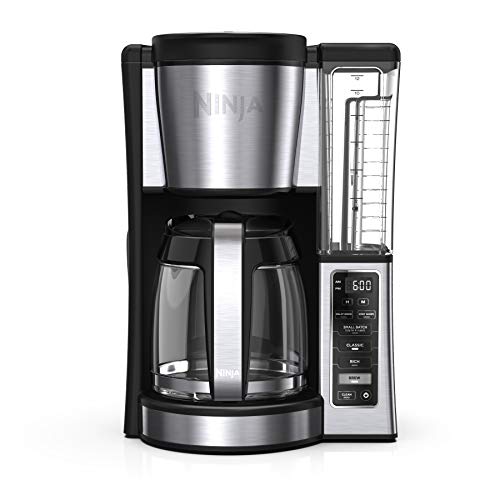


Best programmable coffee makers at a glance
| Model | Brew-size options | Carafe | Scheduling | Approximate footprint | Typical market range |
|---|---|---|---|---|---|
| OXO Brew 8-Cup | Single cup, 2–5 cups, full pot | 10-cup thermal | 24-hour programmable | Approx. 13.5 × 7 × 11.5 in. | $170–$220 |
| Cuisinart DCC-3200 | 1–14 cups | Glass carafe | 24-hour programmable | Approx. 7.8 × 9 × 14 in. | $80–$120 |
| Technivorm Moccamaster KBGV Select | Half or full carafe, up to 10 cups | Thermal carafe | No automatic start timer | Approx. 12.8 × 6.8 × 15.3 in. | $350–$380 |
| Breville Precision Brewer Thermal | 12 oz through 60 oz, depending on mode | Thermal carafe | Programmable start time | Approx. 6.7 × 12.3 × 15.7 in. | $280–$330 |
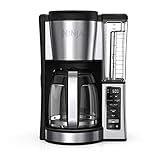
| Ninja 12-Cup Programmable Brewer | Single cup through 12 cups | Glass or thermal, depending on version | 24-hour programmable | Approx. 9.3 × 11.6 × 15.2 in. | $100–$180 |
Dimensions and capacities can vary slightly by version and region. The useful distinction is not simply how many cups a machine claims to make, but whether it can brew the amount you actually drink without wasting coffee or sacrificing temperature control.
Our picks by buying situation
- Best for small households: OXO Brew 8-Cup. Its single-serve basket and compact width make it easier to use when a full carafe is unnecessary.
- Best budget choice: Cuisinart DCC-3200. It offers a wide capacity range, adjustable brew temperature, a programmable timer, and inexpensive paper filters.
- Best for durability: Technivorm Moccamaster KBGV Select. Its metal construction, replaceable parts, and simple controls favor long ownership, although it is not a programmable machine.
- Best for enthusiasts: Breville Precision Brewer Thermal. Its multiple brew modes and adjustable settings are useful when you switch between everyday coffee, strong coffee, and pour-over-style brewing.
- Best for flexible serving sizes: Ninja 12-Cup Programmable Brewer. It is suited to households that alternate between a travel mug and a large pot.
Head-to-head: what separates these coffee makers?
Brew-size options
The Cuisinart DCC-3200 is the most convenient if you regularly fill a large carafe. Its 1–14-cup range also gives it an advantage for families or office kitchens. The OXO Brew 8-Cup is better scaled for one or two people because its single-serve insert accommodates a mug without requiring a separate machine.
The Breville Precision Brewer provides the most deliberate control. Its smaller settings are useful for one or two servings, while its larger modes can produce a full thermal carafe. However, its broader feature set adds buttons, programming steps, and cleaning considerations.
Keep in mind that a “cup” usually means about 5 ounces, not an 8-ounce mug. A 12-cup coffee maker may therefore produce roughly seven or eight ordinary mugs. Calculate capacity using your real serving size before choosing a machine.
Scheduling controls
A 24-hour timer is valuable when you want coffee ready at a predictable time, but the controls differ in convenience. The Cuisinart and Ninja models typically use a clock, program button, and hour/minute controls. They are practical but may require resetting after a power interruption.
The OXO uses a clearer digital interface and is easier to adjust for a different wake-up time. The Breville provides more control over brew settings, but that flexibility can make the setup less immediate than a basic timer.
The Moccamaster KBGV Select is the exception: it is designed around simple manual operation and does not provide an automatic start schedule. Choose it only if durability and brew performance matter more than waking up to a finished pot.
Carafe type and heat retention
A glass carafe is usually cheaper and lets you see the remaining coffee, but it depends on a hot plate. Leaving coffee on that plate for an hour or more can produce a cooked, bitter flavor. Glass is also more vulnerable to accidental impact, although replacement carafes are often easier to find.
A thermal carafe avoids a constantly heated surface and generally preserves flavor better during a normal morning. The trade-off is that you cannot see the level at a glance, and the lid, pouring channel, and interior require careful rinsing. Thermal performance also depends on preheating the carafe with hot water before brewing, especially when making a small batch.
The Moccamaster’s thermal carafe is a strong durability choice, while the OXO and Breville are more suitable when scheduled brewing and heat retention are both priorities.
Temperature consistency
Consistent water temperature matters more than a display showing a high maximum temperature. Coffee brewers certified by the Specialty Coffee Association are generally designed to keep brewing water in an appropriate range and to deliver a controlled contact time.
The Technivorm is known for a straightforward heating and spray system that maintains a stable brewing process. The Breville offers the most adjustment, including temperature and flow-related controls in applicable modes. OXO provides a simpler, repeatable brewing process without asking the user to manage many variables.
Less expensive programmable machines can still make good coffee, but results may vary more with small batches, cold water, or an incorrectly seated filter basket. Using the recommended minimum volume and rinsing the basket before brewing can improve consistency.
Cleaning, maintenance, and ownership costs
The parts that usually wear first are the carafe lid, silicone seals, filter-basket valve, and hot plate finish. A thermal carafe may last for years, but its lid can accumulate coffee oils or stop sealing well. Glass carafes are inexpensive to replace in many product lines, while proprietary thermal-carafe replacements can cost substantially more.
After every use, remove the grounds and rinse the basket. Leave the lid open so the reservoir and basket area can dry. Wash the carafe rather than merely swishing it with water; coffee oils become a stale-smelling film over time.
Descale when the manufacturer recommends it, or sooner if your water is hard. Mineral buildup can slow heating, reduce water flow, and cause a machine to stop before completing a full brew. A typical cleaning cycle takes roughly 30–45 minutes, including a rinse cycle. Do not use dish soap in the water reservoir unless the instructions specifically allow it.
A practical coffee-cost calculation
Suppose a household brews 40 grams of coffee per day and pays $16 for a 12-ounce bag. One 12-ounce bag contains about 340 grams, or approximately eight full brews. That works out to about $2 per day for coffee, before filters, water, and electricity. If a programmable machine costs $120 more than a basic model, the difference is not recovered through coffee savings; its value comes from convenience, better temperature control, reduced waste, or longer service life.
Countertop fit: measure more than the width
Width is only part of the space calculation. Check the machine’s height with the lid or water tank fully open, and leave room to remove the carafe. A tall machine under an upper cabinet may be difficult to fill even if it technically fits.
The OXO is the easiest of these choices for a narrow counter. The Cuisinart is relatively deep but has a familiar front-access layout. The Breville and Moccamaster are tall, so measure the clearance above the reservoir before buying. If the machine must slide forward every morning, a smaller footprint may be more valuable than extra capacity.
Which programmable coffee maker should you buy?
Choose the OXO Brew 8-Cup if you want a compact, polished machine for one to four people and appreciate both single-cup and carafe brewing. Choose the Cuisinart DCC-3200 if capacity, a low purchase price, and a glass carafe are the priorities. Choose the Breville Precision Brewer Thermal if you will use its brew modes and temperature controls rather than leaving it on one setting.
Select the Ninja 12-Cup Programmable Brewer for flexible serving sizes and strong everyday convenience. Pick the Technivorm Moccamaster KBGV Select only if automatic scheduling is not essential; its appeal is simple operation, repairable construction, and dependable brewing over many years.
For most buyers, the right decision comes down to three questions: Do you need coffee ready automatically, will you brew less than a full pot, and do you prefer thermal flavor preservation or the lower cost and visibility of glass? Answer those first, then compare capacity and countertop clearance.