Corded vs Cordless Drills: Which Option Has Better Value for Homeowners?
What's inside
As an Amazon Associate I earn from qualifying purchases. This post may contain affiliate links at no extra cost to you.
For occasional household repairs, the better-value drill is usually the one that avoids costs you won’t use. A corded drill can be the cheaper choice if you already have an outlet nearby and only need a drill for a specific job. A cordless drill costs more upfront, but it is easier to carry, simpler to use around the house, and often shares batteries with other tools.
As an Amazon Associate we earn from qualifying purchases at no extra cost to you.


The short answer
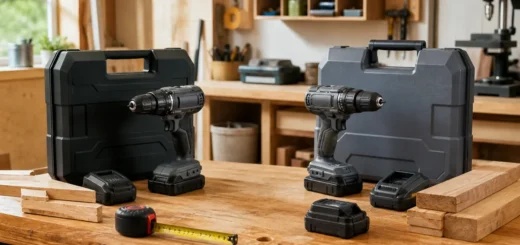
Choose corded for a low purchase price and long sessions near power. Choose cordless for everyday household jobs, work outdoors, or projects that involve moving between rooms. If you own—or plan to buy—other tools in a battery platform, a cordless drill’s value improves because you can share batteries and a charger.
For most homeowners buying their first drill, a basic cordless drill-driver kit with two batteries is the more useful purchase. If your work is limited to occasional holes in wood or metal in a workshop, a corded drill may cost less and never need charging.
Corded vs cordless at a glance
| Factor | Corded drill | Cordless drill |
|---|---|---|
| Typical upfront cost | Often lower for a basic drill | Higher when batteries and charger are included |
| Runtime | Continuous while plugged in | Limited by battery charge; a second battery reduces downtime |
| Mobility | Limited by outlet and extension cord | Works around the house, in a yard, or on a ladder |
| Weight and handling | No battery, but cord can snag or drag | Heavier at the handle, but no cord to manage |
| Best fit | Long sessions near power; tight budgets | Repairs, assembly, and varied jobs around the home |
| Long-term value | Good if you need only the drill | Best when batteries fit tools you already own |
Compare the whole cost, not just the drill
A corded drill’s headline price can be appealing, but check what the kit includes. You may still need a set of drill bits, a suitable extension cord, and a place to store the tool. A 25- or 50-foot extension cord adds reach, but it also adds another item to unwind, route safely, and put away.
For cordless, compare kits rather than bare tools. A bare drill can look inexpensive until you add a compatible battery and charger. For a first purchase, a kit with two batteries is more practical: use one while the other charges. If you already own batteries and a charger from the same platform, a bare tool may be the better deal. Batteries generally do not work across brands, and often not across a brand’s different voltage platforms, so check compatibility before buying.
Look at the warranty and battery replacement cost, too. A drill may last for years while its battery loses capacity or fails. Paying extra for a large battery is worthwhile only if you need longer runtime; for short household jobs, a smaller battery keeps the tool lighter and may be enough.
What homeowners actually do with a drill
Common jobs include driving screws into furniture, drilling pilot holes, hanging shelves, and making holes in wood or thin metal. For this mix, a cordless drill-driver is convenient because there is no cord to catch on a ladder or pull across a finished floor. A clutch also helps prevent overdriving screws: start with a low clutch setting and raise it only if the fastener stops before it is seated.
For these jobs, browse cordless drill-driver kits with two batteries, comparing included battery capacity, charger, clutch settings, and warranty rather than choosing by voltage or advertised torque alone.
Neither a basic corded drill nor a standard cordless drill is automatically the right tool for every hole. Drilling into concrete or brick may require a hammer drill and a masonry bit. Large holes in thick lumber can stall a compact drill, overheat the bit, or drain a battery quickly. Use sharp, correctly sized bits, keep the drill aligned, and ease off if the motor slows or the bit binds.
When a corded drill is the better buy
Choose corded if you have a dedicated bench, work close to an outlet, or expect a long drilling session where stopping to recharge would be inconvenient. There is no battery to age, replace, or remember to charge. For light, occasional use, the lower cost may outweigh the inconvenience of the cord.
That trade-off changes on a ladder, outside, or in a room with no convenient outlet. An extension cord can solve the reach problem, but a cord underfoot can snag, pull the drill, or create a trip hazard. Do not use a damaged cord, and keep connections away from wet ground. If those precautions and setup outweigh the savings, corded is not the value option for your job.
When cordless earns its higher price
Cordless makes sense when convenience saves setup time on repeated small jobs. It is especially good value if you already own compatible batteries, or if you intend to build a small tool collection on one platform. A battery can serve a drill and other compatible tools, spreading its cost across more than one purchase.
Runtime depends on the battery, material, bit, and workload. Driving many large screws or drilling repeated wide holes uses more power than assembling a bookcase. A single battery may be enough for a quick repair, but a low charge can stop a project midway. Keep a second charged battery available for longer work, and avoid forcing a stalled bit: binding can strain the tool and battery.
A practical buying choice
For a first drill used around the house, start with a cordless drill kit with a battery and charger. Choose two batteries if the price difference is reasonable or you expect longer sessions. Check the chuck capacity, clutch, included charger, battery platform, and return policy. A basic drill-driver is enough for many repairs; do not pay extra for features you will not use.
If you only drill occasionally in a workshop near an outlet and want the lowest initial spend, a corded variable-speed drill is a sensible budget pick. Variable speed gives better control when starting a hole, though it does not make the drill suitable for every material or task.
Before checkout, price the complete setup: drill, batteries or cord, charger if needed, and a basic bit set. The cheapest tool is good value only if it can reach the job and handle the work without creating more hassle than it saves.