Best Power Tools for Homeowners in 2026: The Essential Starter Kit
What's inside
As an Amazon Associate I earn from qualifying purchases. This post may contain affiliate links at no extra cost to you.
The best power tools for homeowners in 2026 come down to five cordless tools — a drill/driver, an impact driver, a circular saw, a random orbital sander, and an oscillating multi-tool — all bought on a single 18V/20V battery platform so every battery and charger works across the set.
Together they cover roughly 90% of what actually comes up in a house: hanging shelves and TVs, assembling and refinishing furniture, cutting lumber and sheet goods, replacing trim, removing grout and caulk, and building decks, planters, and simple projects. Below are the specs that matter, which battery platform to commit to, three realistic budget tiers, and the safety and ownership details most buying guides skip.
As an Amazon Associate we earn from qualifying purchases at no extra cost to you.


The Five Best Power Tools to Own
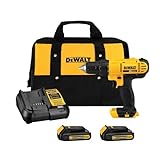
1. Cordless drill/driver (buy first)
The most-used tool in any home. Look for a brushless motor, a 1/2-inch keyless chuck, a two-speed gearbox, and an adjustable clutch — the clutch is what stops you from snapping screw heads or punching through drywall anchors. Anything in the 350–600 in-lbs torque range handles everything from pilot holes to spade bits. Skip the hammer-drill function unless your home has a lot of masonry.
2. Impact driver
An impact driver sinks long deck screws, lag bolts, and structural fasteners using rotational impacts instead of raw torque, so there’s no wrist-twisting reaction and far fewer stripped heads. A 1/4-inch hex collet and 1,400+ in-lbs covers residential work. It’s also the loudest tool on this list — more on that below. Buy it bundled with the drill: two-tool combo kits are the best-value purchase in the entire category.
3. Circular saw
The tool that turns “I could build that” into reality. For homeowners, a 7-1/4-inch brushless saw crosscuts 2× lumber and rips full sheets of plywood; lighter 6-1/2-inch models are easier to handle but give up about 3/8 inch of cut depth. Paired with a straightedge or factory track, it does most of what a miter saw does for an occasional user — without eating half your garage.
4. Random orbital sander
Furniture refinishing, deck prep, smoothing a drywall patch — a 5-inch random orbital sander with a hook-and-loop pad and variable speed handles them all without the swirl marks a sheet sander leaves. Prioritize a real dust port that fits a shop vacuum; it’s worth more than a slightly faster motor.
5. Oscillating multi-tool
The problem-solver: plunge-cutting a damaged floorboard, flush-trimming door casings for new flooring, scraping caulk, undercutting grout, sanding inside a cabinet corner. Insist on tool-free blade changes and a universal or Starlock-compatible interface so you’re not locked into one brand’s blades — this tool consumes accessories faster than any other on the list.
What didn’t make the five: a jigsaw (add it when you need curves — the multi-tool covers straight plunge cuts), a reciprocating saw (a demolition tool, not a repair tool), and a miter saw (worth the space only once you’re cutting trim weekly).
Spec Snapshot: What “Good” Looks Like in 2026
| Tool | Must-have spec | Target numbers | Bare-tool price |
|---|---|---|---|
| Drill/driver | Brushless, 1/2″ chuck, clutch | 350–600 in-lbs · 3–4 lbs | $60–$180 |
| Impact driver | Brushless, 1/4″ hex | 1,400–2,200 in-lbs · 2–3 lbs | $70–$200 |
| Circular saw | 7-1/4″ blade, electric brake | ~5,000–5,800 RPM · 2-7/16″+ depth at 90° · 7–10 lbs | $90–$250 |
| Random orbital sander | 5″ hook-and-loop pad, dust port | 7,000–12,000 OPM · 2–3 lbs | $50–$120 |
| Oscillating multi-tool | Tool-free blade change | 10,000–20,000 OPM · 3.2°–4° arc · 2–3.5 lbs | $70–$170 |
Pick One Battery Platform — Then Stop Thinking About Batteries
Batteries and chargers, not tools, are where cordless money goes; a single 4–5Ah pack runs $50–$150, so the platform commitment is the biggest cost decision in this article. Note that “20V MAX” and “18V” are the same voltage class marketed differently — don’t let it sway you. Pick by situation instead:
| Your situation | Platform to pick | Why | Entry cost (drill + impact kit, 2 batteries) |
|---|---|---|---|
| Lowest possible spend | Craftsman V20 or Hercules 20V | Cheapest entry, homeowner-grade durability | ~$100–$160 |
| Widest tool ecosystem | Ryobi ONE+ 18V | 300+ tools, including lawn and inflators, on one battery | ~$130–$200 |
| Best all-rounder | DeWalt 20V MAX or Makita 18V LXT | Durable, widely available, survives a remodel | ~$200–$320 |
| Heavy use / buy-once tools | Milwaukee M18 Fuel | Top-tier performance and longevity | ~$300–$450 |
| Lifetime battery coverage | Ridgid 18V | Service agreement covers even batteries when registered promptly (typically a 90-day window) | ~$170–$280 |
If you have no strong preference, Ryobi ONE+ is the safest homeowner default — it’s the only platform where the same battery also runs your string trimmer, inflator, and shop fan. Step up to DeWalt or Milwaukee if you want tools that shrug off years of heavy use.
Three Realistic Budget Tiers
| Tier | All-in for the five tools | What it looks like |
|---|---|---|
| Starter | $300–$350 | Brushed or entry brushless combo kit, three bare tools added over the first year, 1.5–2Ah packs |
| Sweet spot | $500–$650 | Brushless everything, one 4Ah pack plus a compact battery, better blades and blades-included kits |
| Premium | $900–$1,300 | Fuel/XR-grade tools, 5–8Ah packs, rapid charger — effectively done for a decade |
Buy in this order regardless of tier: the drill/impact combo first (it ships with batteries and a charger), then the circular saw the first time a project needs it, then the sander before your first refinishing job, then the multi-tool as problems arise. Spreading purchases also lets you catch holiday promos, which routinely cut kit prices 20–30%.
On the math: at roughly $550 all-in on the middle tier and a conservative 12 projects a year for five years, the kit costs about $9 per project — less than a single day of tool rental and roughly ten minutes of a handyman’s billable hour.
Hazards and PPE: The Part Most Starter Kits Skip
Each of the five tools injures people in a specific, predictable way — and the PPE list is short enough that there’s no excuse to skip it.
- Kickback (circular saw): the blade pinches in the kerf and throws the saw back toward you — the most serious common incident on this list. Support both sides of the cut so the kerf opens instead of closing, and never pin the guard open.
- Torque reaction (drill): when a bit binds, the torque goes into your wrist instead of the workpiece. Use the clutch and brace with two hands on large bits and hole saws.
- Noise: impact drivers and saws run roughly 95–105 dB at ear level. Foam plugs or muffs rated NRR 25+ for anything beyond a few seconds.
- Dust: hardwood dust is a known carcinogen, and grinding grout or mortar throws respirable silica. N95 minimum for sanding wood; P100 plus dust extraction for masonry removal.
- Eyes: ANSI Z87.1-rated glasses every session, no exceptions — the oscillating tool throws debris at exactly face height.
- The glove paradox: gloves are for carrying lumber and swapping blades — never wear them around a spinning drill, saw, or sander, where a snagged fingertip becomes a pulled-in hand.
- Battery safety: charge within roughly 40–105°F per most manufacturer specs, retire any pack that’s swollen, cracked, or hot after light use, and store packs off the charger.
What Wears Out First (and How to Make It Last)
- Batteries die before tools do. Expect noticeable capacity loss after ~300–500 charge cycles or 3–5 years of homeowner use. Store at 40–60% charge at room temperature — a pack left dead in a hot garage all summer is the number-one cause of premature failure.
- Multi-tool blades are consumables. A standard bi-metal blade can die inside one grout-removal session; buy carbide-grit blades for masonry and bulk packs for wood.
- Sander pads and discs. When discs stop sticking, the pad’s hooks are worn — a cheap part, but running the sander pressed flat on edges kills pads faster than anything.
- Saw blades. Burning smell and tear-out mean dull, not weak. A fresh thin-kerf blade makes even a budget saw feel new, and it’s worth marking the rotation arrow on install.
- Brushed vs. brushless. Brushed motors wear carbon brushes out; brushless tools run cooler, last longer, and pull more cuts per charge — the main reason the middle tier is the sweet spot.
- Match battery size to the tool. A 1.5–2Ah compact pack is fine in a drill but makes a 7-1/4-inch saw feel gutless. Saws want 4Ah minimum; an 18V/4Ah pack (~72Wh) delivers well over a hundred 2×4 crosscuts in normal use.
FAQ
Do I really need both a drill and an impact driver?
For anyone doing real projects, yes — the drill makes holes and drives screws precisely with its clutch, while the impact handles long fasteners. If you can only buy one, get the drill. In practice, the two-tool combo kit settles the question for roughly $30–$50 more than the drill alone.
Is a 12V platform enough?
For apartment dwellers hanging shelves and assembling furniture, a 12V drill/impact kit is genuinely pleasant — lighter, quieter, cheaper. The ceiling is the problem: 12V saws and sanders exist but feel compromised. If a saw is anywhere in your future, start on 18V/20V.
Do corded tools still make sense?
Two cases: a corded random orbital sander if you refinish furniture for hours at a stretch (no battery swaps, cheaper), and stationary tools like a miter saw where cordless buys you nothing. For everything else on this list, cordless won years ago.
Should I buy one of those 6- or 8-tool combo kits?
Usually no. Beyond the drill/impact pair, big kits pad the count with filler — flashlights, a reciprocating saw you’ll use twice, undersized batteries. The kit math only works if you’d buy every tool anyway; most homeowners do better building the five above, piece by piece.