Best Smart Diffusers with HVAC Integration
What's inside
- Top 3 Picks
- Quick Comparison
- How We Chose
- 1. AROMADD 3500 Sq.Ft Smart Scent Diffuser – HVAC System – Best for First-Time Whole-Home Scenting
- 2. FYNTRA Essential Oil Diffuser – HVAC System, 5500 Sq.Ft Waterless Diffuser – Best for Large Homes on a Tight Budget
- 3. FYNTRA 2026 Upgrade 5,500 Sq.Ft Essential Oil Diffuser – HVAC System, Jet – Best for Maximum Coverage and Output
- 4. Ziweo Waterless Essential Oil Diffuser, 3500 Sq Ft HVAC Smart Scent Diffuser – Best for Commercial and Retail Spaces
- 5. MQLMF HVAC Scent Diffuser, Waterless Diffuser, Whole House Scent System – Best for Simple Set-and-Forget Installs
- 6. AROMELY ARO PRO HVAC Scent Diffuser – Nebulizing Waterless Diffuser – Black – Best Overall
- 7. Aromadd 2026 Upgraded 3500 Sq.Ft HVAC Scent Diffuser for Home – Best for a Mid-Range Upgrade With Newer Controls
- How to Choose
As an Amazon Associate I earn from qualifying purchases. This post may contain affiliate links at no extra cost to you.
The best smart diffuser with HVAC integration for most homes is the AROMELY ARO PRO HVAC Scent Diffuser — a nebulizing, waterless unit that injects scent into the supply side of a ducted system so the air handler distributes it to every room. It suits homeowners with a central air handler, a low-voltage control circuit they can tap, and a budget that allows for a premium-tier purchase in exchange for fine atomization and a housing built for continuous commercial-style duty. If price is the deciding factor, the AROMADD 3500 Sq.Ft Smart Scent Diffuser scents a typical three-bedroom house for a fraction of that, and it is the pick most first-timers should start with. If maximum coverage and the strongest output matter more than cost, the FYNTRA 2026 Upgrade 5,500 Sq.Ft Jet is the premium choice for large or open-plan homes. Everything below comes down to three questions: how much volume you actually need to scent, whether your system can accept an inline nozzle, and how much control you want over intensity and scheduling.
Our Top Picks



Top 3 Picks
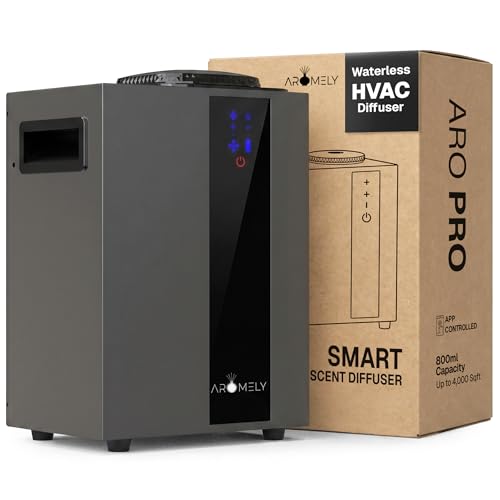
Best overall: AROMELY ARO PRO HVAC Scent Diffuser. It is the most complete package in this roundup — a nebulizing waterless design with a black commercial-grade housing, HVAC-inline installation, and the kind of atomizer that holds up to long duty cycles. Choose it if you want one unit to do the job properly and you are willing to pay premium-tier money for it.
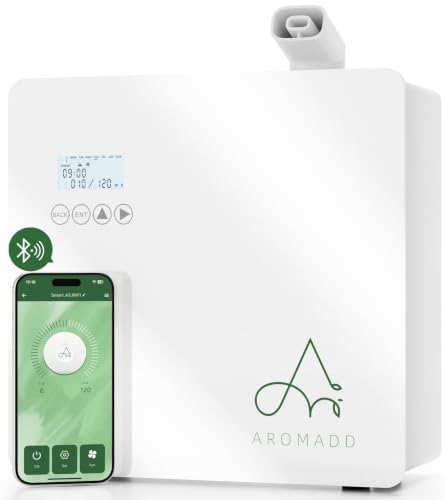
Best budget: AROMADD 3500 Sq.Ft Smart Scent Diffuser. The 3,500 sq ft rating lines up with the median North American house, and the smart control set gives you scheduling and intensity adjustment without a premium price. It is the right entry point if you have never scented ductwork before and want to learn your own preferences before spending more.
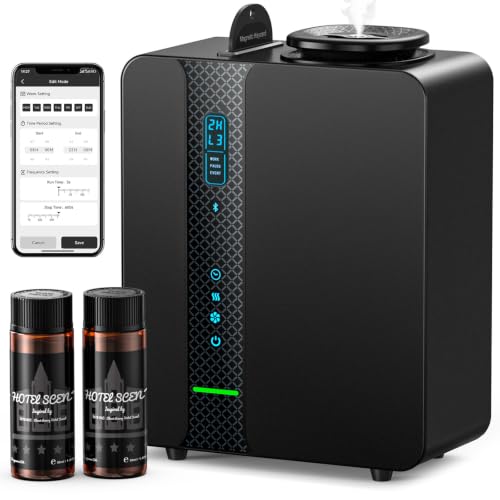
Best premium: FYNTRA 2026 Upgrade 5,500 Sq.Ft Jet. The jet atomizer and 5,500 sq ft rating make this the strongest residential-oriented unit here. It suits large, open-plan, or multi-zone homes where a 3,500 sq ft unit would have to run near maximum just to keep up.
Quick Comparison
The table below covers every diffuser in this guide. Price tiers are relative bands within this category rather than fixed figures, because retail pricing on scent equipment moves with promotions and bundle changes.
| Product | Best for | Key specs | Price tier |
|---|---|---|---|
| AROMADD 3500 Sq.Ft Smart Scent Diffuser – HVAC System | First-time whole-home scenting | Waterless, HVAC-inline, 3,500 sq ft stated coverage, smart scheduling and intensity control | Budget |
| FYNTRA Essential Oil Diffuser – HVAC System, 5,500 Sq.Ft Waterless | Large homes on a tight budget | Waterless, HVAC-inline, 5,500 sq ft stated coverage, essential-oil oriented | Budget |
| FYNTRA 2026 Upgrade 5,500 Sq.Ft Essential Oil Diffuser – Jet | Maximum coverage and output | Waterless nebulizing, 5,500 sq ft stated coverage, jet atomizer, 2026 revision | Premium |
| Ziweo Waterless 3500 Sq Ft HVAC Smart Scent Diffuser | Commercial and retail scenting | Waterless, HVAC-inline, 3,500 sq ft stated coverage, smart control, commercial scent focus | Budget |
| MQLMF HVAC Scent Diffuser, Waterless, Whole House Scent System | Simple set-and-forget installs | Waterless, whole-house HVAC connection, low-complexity control set | Budget |
| AROMELY ARO PRO HVAC Scent Diffuser – Nebulizing Waterless – Black | Best overall balance of control and build | Nebulizing waterless, HVAC-inline, commercial-grade black housing | Premium |
| Aromadd 2026 Upgraded 3500 Sq.Ft HVAC Scent Diffuser for Home | Mid-range upgrade with newer controls | Waterless, 3,500 sq ft stated coverage, 2026 revision, upgraded control set | Mid-range |
How We Chose
This roundup is a research exercise, not a test bench. We compared what each manufacturer publishes — stated coverage in square feet, form factor, whether the unit is waterless or water-based, how it connects to ductwork, and what kind of control interface it offers — then mapped those specs onto the situations shoppers actually describe: a 1,800 sq ft ranch house with one air handler, a 4,000 sq ft two-story with two zones, a small retail floor that needs consistent scent during business hours, and a rental where the least invasive install wins.
Three filters did most of the work. First, category fit: an HVAC-integrated diffuser has to inject into moving air, which in practice means a waterless nebulizing design rather than an ultrasonic or candle-style unit that needs a standing water reservoir. Second, coverage honesty: a manufacturer’s square-foot rating assumes standard ceiling height and regular blower runtime, so we treat 3,500 sq ft and 5,500 sq ft as classes rather than guarantees. Third, upgrade path and ownership cost: nozzle life, cleaning intervals, oil consumption, and whether the control set can be expanded or scheduled. No product here was tested, benchmarked, or owned by us.
1. AROMADD 3500 Sq.Ft Smart Scent Diffuser – HVAC System – Best for First-Time Whole-Home Scenting
As an Amazon Associate we earn from qualifying purchases at no extra cost to you.
This is the unit to buy when you have never put a scent device into ductwork and you want to find out whether you actually like whole-home scenting before spending premium money. AROMADD rates it at 3,500 sq ft, which is very close to the median size of a North American single-family home, so the coverage number is matched to the most common real-world install rather than inflated for the spec sheet. It is waterless, meaning there is no standing water tank to refill, spill, or clean biofilm out of — the oil goes in, the atomizer turns it into a fine mist, and the air handler carries it.
- Type: waterless (no water reservoir), HVAC-inline injection
- Stated coverage: up to 3,500 sq ft under standard ceiling height and normal blower runtime
- Control: the “Smart” designation in the listing points to app-based scheduling and intensity adjustment; confirm the exact interface on the product page before buying
- Installation: low-voltage connection at the air handler plus a nozzle placed in the supply ductwork
- Oil type: fragrance oil or essential oil, undiluted — waterless units do not accept water
- Price tier: budget
The practical strength here is proportionality. A 3,500 sq ft rating on a budget unit means the atomizer is not being asked to overreach, so you can run it at a low or medium setting and still get even distribution through the supply trunk. That matters because running any nebulizing diffuser at maximum output all the time is the single most common mistake owners make: it wastes oil, it over-saturates the first rooms off the trunk, and it puts more oil vapor onto the evaporator coil and filter than the system was designed to handle. A unit that is correctly sized lets you stay in the lower half of its output range, which is where these devices are happiest.
Installation is the part that separates a good experience from a frustrating one. You need a low-voltage trigger so the diffuser only runs when the blower runs — typically a tap into the fan circuit at the air handler, or a pressure or current-sensing switch that detects airflow. If the diffuser runs while the blower is off, the mist sits in the plenum and condenses. Budget units in this class usually ship with the essentials and leave the trigger wiring to you or your HVAC technician, so factor in a service call if you are not comfortable working near control wiring. On the duct side, the nozzle belongs in the supply plenum, downstream of the evaporator coil and before the first branch takeoff, so the mist reaches every zone instead of just the nearest one.
Ownership is straightforward but not maintenance-free. Nebulizing nozzles are consumables. They accumulate oil residue, and the residue thickens over months until the spray pattern narrows and output drops. A routine flush with isopropyl alcohol every two to three months keeps output stable, and most owners replace the nozzle roughly annually. Beyond that, the recurring cost is the oil itself, and a correctly sized 3,500 sq ft unit typically consumes less per month than a larger unit run at the same intensity because it never has to work at its ceiling.
Pros
- Coverage rating matches the median home size, so it is rarely over- or under-sized
- Waterless design eliminates the water tank, the biofilm risk, and the refill routine
- Smart control set gives scheduling and intensity adjustment at a budget price
- Low entry cost makes it a sensible way to test whether you enjoy whole-home scenting
Cons
- Requires a low-voltage trigger and a duct nozzle install, which is beyond a pure plug-and-play job
- 3,500 sq ft is a hard ceiling in practice — high ceilings or a second zone will stretch it
- Budget-tier atomizers generally have shorter nozzle service life than premium nebulizers
- No output headroom if you later want stronger scent in a larger home
How it compares: against the Aromadd 2026 Upgraded 3500 Sq.Ft model later in this list, this base version is the value play — same stated coverage, older control set, budget tier. Against the FYNTRA 5,500 Sq.Ft waterless unit, it gives up 2,000 sq ft of rated coverage for a lower price and a smaller atomizer that is easier to keep in its sweet spot. If your house is under about 3,000 sq ft and you want to spend as little as possible to get started, this is the more sensible of the two.
2. FYNTRA Essential Oil Diffuser – HVAC System, 5500 Sq.Ft Waterless Diffuser – Best for Large Homes on a Tight Budget

On paper this is the best coverage-per-dollar unit in the roundup: a waterless, HVAC-connected diffuser rated at 5,500 sq ft sitting in the budget price tier. That combination is unusual, and it makes the FYNTRA 5,500 the obvious candidate for someone with a large single-zone home — a 3,000 to 4,500 sq ft open-plan layout, a finished basement plus main floor, or a converted barn-style space — who cannot justify premium-tier spending. The listing name also makes the intended oil explicit: this one is marketed as an essential oil diffuser rather than a general fragrance unit, which matters if you already have a collection of oils you want to use rather than a commercial fragrance concentrate.
- Type: waterless, HVAC-inline injection
- Stated coverage: up to 5,500 sq ft — the largest rating in the budget tier here
- Oil type: essential oil (waterless, undiluted)
- Control: basic intensity and on/off scheduling typical of the tier; verify app support on the listing
- Installation: low-voltage trigger plus supply-duct nozzle
- Price tier: budget
The important nuance with a budget unit carrying a 5,500 sq ft rating is how that number is achieved. Coverage ratings assume the atomizer can deliver enough oil to reach a target concentration in the whole volume, and larger volumes demand more oil per hour to hit the same perceived strength. A budget-priced atomizer rated for 5,500 sq ft will therefore tend to consume more oil per hour at a given scent level than a premium nebulizer covering the same space, because it is working harder to produce the same plume. That does not make it a bad buy — it makes it a buy where the purchase price is low and the running cost is the trade-off. If you are scenting occasionally rather than continuously, that trade is clearly in your favor.
Installation follows the same rules as every other unit here: supply plenum, downstream of the coil, before the first takeoff, with a trigger that runs the diffuser only when the blower is moving air. The larger coverage rating changes one thing, though — distribution. Filling 5,500 sq ft evenly depends far more on blower runtime than on the diffuser itself. If your thermostat only calls for fan operation during heating and cooling, large parts of the day will pass with no air movement and the scent will stratify. Setting the thermostat fan to “Circulate” for 20 to 30 minutes per hour is the cheapest upgrade you can make to a big-house install, and it costs far less than stepping up to a bigger diffuser.
Because the unit is waterless, maintenance is limited to the atomizer and the oil path. Expect to flush the nozzle with isopropyl alcohol every two to three months and to replace it roughly once a year in normal residential use. Heavier, more resinous essential oils — vetiver, benzoin, myrrh, and similar thick oils — will shorten that interval noticeably. If you plan to run those, dilute them with a lighter carrier oil or accept more frequent nozzle service.
Pros
- 5,500 sq ft stated coverage at a budget price is the strongest value proposition in this roundup
- Explicitly set up for essential oils rather than proprietary fragrance cartridges
- Waterless operation means no reservoir cleaning and no risk of standing water
- Good fit for open-plan and multi-room single-zone homes that a 3,500 sq ft unit would strain to fill
Cons
- Likely higher oil consumption per hour than a premium nebulizer covering the same area
- Budget-tier control set is usually the least flexible part of the package
- Large coverage depends heavily on continuous or circulating fan runtime
- Nozzle service life is generally shorter than on commercial-grade atomizers
How it compares: the closest alternative is the FYNTRA 2026 Upgrade 5,500 Sq.Ft Jet, which shares the coverage rating but moves into the premium tier with a jet atomizer and a 2026 revision. If you want the same square footage with stronger output and better build, pay the premium. If you want the square footage and the lowest possible entry price, this version delivers it and the jet upgrade becomes a future decision rather than a current one.
3. FYNTRA 2026 Upgrade 5,500 Sq.Ft Essential Oil Diffuser – HVAC System, Jet – Best for Maximum Coverage and Output

This is FYNTRA’s premium take on the same 5,500 sq ft coverage class, and the word that changes everything in the listing name is “Jet.” A jet atomizer produces a stronger, more directional plume than a standard nebulizing nozzle, which matters in two situations: very large volumes where you need concentration to build quickly, and ductwork layouts with long runs where a weaker plume can drop out of the airstream before it reaches the far zones. The 2026 revision also implies an updated internal design over the earlier FYNTRA unit, though the specifics of that revision should be confirmed on the product page rather than assumed.
- Type: waterless nebulizing, HVAC-inline injection
- Stated coverage: up to 5,500 sq ft
- Atomizer: jet-type, producing a stronger plume than a standard nozzle
- Revision: 2026 upgraded model
- Oil type: essential oil, undiluted, waterless
- Price tier: premium
Who this suits: the owner of a genuinely large home — 4,000 to 5,500 sq ft, or a smaller footprint with vaulted ceilings that inflate the actual cubic volume well past what the square footage suggests — who wants scent that arrives quickly and holds steady. It also suits anyone whose ductwork includes a long trunk run or multiple zones fed from a single plenum, because a jet atomizer gives the mist more momentum to travel. It is overkill for a 2,000 sq ft house, and buying it for one wastes both money and oil, since you will end up running it at its lowest setting to avoid overwhelming small rooms.
The running-cost picture is where the premium tier earns its keep. A stronger atomizer delivering a finer, more consistent mist generally reaches a target scent level with less total oil than a weaker atomizer forced to run wide open. Over a year of daily use, that difference can offset a meaningful share of the higher purchase price — but only if you actually run the unit at moderate intensity. Owners who treat the jet output as a reason to crank it to maximum will find the opposite: premium oil consumption with no benefit, plus faster residue buildup on the nozzle and the coil.
Installation requirements are the same as the budget FYNTRA, with one addition worth noting: because the plume is stronger, nozzle placement matters more. Mounting too close to the evaporator coil risks depositing oil on a cold, wet surface, which is the worst place for it. Keep the nozzle well downstream of the coil, in the supply plenum or the main trunk before the first branch takeoff, and never in the return. If your system uses a variable-speed blower that idles at very low airflow, confirm the trigger keeps the diffuser off during those periods — a strong jet into near-still air will pool in the plenum.
Maintenance is the same routine as any nebulizing unit, with the same consumable: the nozzle. Jet nozzles can be more sensitive to residue than simple ones because the orifice geometry is tighter, so an alcohol flush every two months is a better habit than every three. Nozzle replacement intervals in residential use typically fall in the six-to-twelve-month range depending on oil choice and duty cycle.
Pros
- Strongest output in this roundup, suited to large volumes and long duct runs
- Jet atomization reaches target scent levels faster than standard nebulizing nozzles
- 5,500 sq ft rating gives headroom to run at moderate intensity rather than maximum
- Premium-tier build generally means longer service life between nozzle replacements
Cons
- Premium price is hard to justify in homes under roughly 3,000 sq ft
- Stronger plume demands more careful nozzle placement relative to the evaporator coil
- Jet nozzles are less forgiving of thick, resinous oils and need more frequent flushing
- Full output is easy to overuse, which wastes oil and accelerates residue buildup
How it compares: against the budget FYNTRA 5,500, this is the same coverage with a better atomizer and a newer revision — the upgrade you make when the budget version works but feels underpowered at the far end of the house. Against the AROMELY ARO PRO, it wins on raw coverage rating but gives up some of the commercial-duty refinement and the black housing that suits visible installations near mechanical equipment. Pick this one for maximum reach; pick the AROMELY for maximum polish.
4. Ziweo Waterless Essential Oil Diffuser, 3500 Sq Ft HVAC Smart Scent Diffuser – Best for Commercial and Retail Spaces
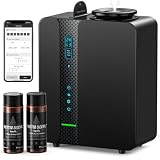
Ziweo’s listing positions this unit for commercial scent rather than residential use, and that framing is useful even if you are buying for a house. Commercial scenting means two things: consistent output across long operating hours, and a scent profile strong enough to register with people who are walking through rather than living in the space. A 3,500 sq ft rating combined with a budget price tier makes this a plausible fit for a small retail floor, a salon, a clinic waiting area, a gym studio, or a small office suite — places with a single air handler and a defined business day. It also works in a home where the owner wants a bolder, more noticeable scent than a residential-tuned unit produces at the same setting.
- Type: waterless, HVAC-inline, smart control
- Stated coverage: up to 3,500 sq ft
- Oil type: essential oil, undiluted
- Positioning: commercial scent use
- Control: smart interface for scheduling around operating hours
- Price tier: budget
The commercial angle changes the scheduling math more than the hardware. A business runs the diffuser on a predictable clock: on before opening, off after close, with weekends or slow days trimmed. That duty cycle is friendlier to the nozzle than round-the-clock residential operation, because the unit spends a defined number of hours running and a defined number idle. The flip side is that commercial spaces often need a stronger scent level, which means more oil per operating hour and faster residue accumulation. Budget-tier atomizers handle that workload, but they will want nozzle service on a tighter schedule than a home unit.
Installation is the standard configuration: a low-voltage trigger tied to blower operation and a nozzle in the supply ductwork. In commercial settings, one extra consideration applies — if the air handler serves multiple tenants or a shared corridor, scent will travel wherever the ducts go. Confirm that the zones you are scenting are actually fed by the air handler you are connecting to, and that you have the authority to add a scent device to the system. Landlord and lease terms sometimes restrict what can be introduced into a shared HVAC system.
For home buyers, the main reason to choose this over the AROMADD 3500 is scent intensity and control granularity. Commercial-oriented units tend to be tuned for a stronger perceived scent at the same nominal setting. If you have tried a residential diffuser and found it too subtle, this is the budget-tier option to try before jumping to premium. If you found residential output appropriate, the AROMADD is the better match.
Pros
- Commercial scent positioning means stronger perceived output at the same setting
- 3,500 sq ft coverage at a budget price suits small business floors well
- Smart control makes scheduling around operating hours straightforward
- Waterless design means no reservoir maintenance in a space where nobody wants to do chores
Cons
- Stronger output can be too much for a small home’s bedrooms and offices
- Budget-tier atomizer will need nozzle service more often under commercial duty cycles
- Scent travels through every duct the air handler serves, which is not always desirable
- Commercial installation may require landlord or building approval in shared systems
How it compares: against the AROMADD 3500, the coverage rating is identical and the price tier matches, so the decision comes down to tuning. The AROMADD reads as a residential unit — subtle at low settings, comfortable for living spaces. The Ziweo reads as a commercial unit — more assertive, better suited to a space people pass through. If your goal is a noticeable signature scent in a business, the Ziweo is the more natural choice; if it is background scent in a family home, the AROMADD is.
5. MQLMF HVAC Scent Diffuser, Waterless Diffuser, Whole House Scent System – Best for Simple Set-and-Forget Installs

Not every buyer wants an app, a schedule, and a learning curve. The MQLMF unit is positioned as a whole-house scent system with a waterless design and a deliberately simple feature set, and that simplicity is the point. It suits someone who wants to install a diffuser once, set an intensity level, and stop thinking about it — a rental property owner scenting a unit between tenants, a homeowner who finds elaborate control apps more annoying than useful, or anyone buying a first HVAC diffuser who would rather not manage a second smart-home device.
- Type: waterless, HVAC whole-house connection
- Coverage: rated as a whole-house system; treat the stated figure as a class rather than a guarantee
- Oil type: undiluted fragrance or essential oil
- Control: minimal — intensity adjustment and basic on/off, not an elaborate app ecosystem
- Installation: low-voltage trigger and supply-duct nozzle, same as the rest of this class
- Price tier: budget
The case for a simpler unit is reliability. Every control feature is a component that can fail, and a diffuser installed in a mechanical closet is not something you want to troubleshoot regularly. Units with lean control sets tend to have fewer failure points and fewer firmware quirks. The trade-off is real, though: without scheduling, you control scent by switching the unit on and off manually or by leaving it running whenever the blower runs. In a house where the thermostat fan is set to circulate continuously, that means the diffuser is effectively always on, which is the fastest way to burn through oil and coat the coil.
If you choose this unit, pair it with a thermostat that supports scheduled fan circulation. Running the blower 20 to 30 minutes per hour rather than continuously gives you scent distribution without continuous atomization, and it keeps oil consumption in a sane range. That single configuration choice does more for this unit’s running cost than any setting on the diffuser itself.
Installation and maintenance follow the standard pattern. Supply plenum placement, downstream of the evaporator coil, before the first branch takeoff, with the trigger wired so the diffuser only runs during airflow. Nozzle flushing every two to three months and annual replacement are the recurring tasks. Because the control set is minimal, there is no app to update and no account to manage — a genuine advantage for anyone who has grown tired of smart-home sprawl.
Pros
- Simple control set means fewer failure points and less troubleshooting
- Budget-tier price makes it easy to try HVAC scenting with minimal commitment
- Waterless design keeps maintenance to the nozzle and oil path only
- No app, account, or smart-home dependency required to operate it
Cons
- No scheduling means oil consumption depends entirely on how you run the blower
- Coverage rating is less precisely specified than the numbered units in this roundup
- Fewer control options if you want different scent levels at different times of day
- Limited intensity granularity compared with smart units in the same price tier
How it compares: against the AROMADD 3500, this unit gives up precise coverage specification and smart scheduling in exchange for simplicity. If you want to set a scent level and forget it — and you have a thermostat that already circulates the fan on a schedule — the MQLMF is the lower-fuss choice. If you want to control scent strength by time of day, the AROMADD’s smart control set is worth the small extra complexity.
6. AROMELY ARO PRO HVAC Scent Diffuser – Nebulizing Waterless Diffuser – Black – Best Overall

The ARO PRO is the pick for buyers who want one purchase to settle the question. It is a nebulizing waterless diffuser with a black housing, designed for HVAC connection, and positioned at the premium end of the category alongside commercial scent equipment rather than entry-level home gadgets. The nebulizing designation is the meaningful part: a true nebulizer atomizes oil mechanically into a very fine mist without heat, which is what allows a waterless unit to distribute scent through ductwork without leaving a heavy residue film behind. It suits a homeowner with a central system, a willingness to have the install done properly, and an expectation that the device will still be working in several years.
- Type: nebulizing waterless, HVAC-inline
- Finish: black housing, suited to visible installation near mechanical equipment
- Atomization: mechanical nebulizer, no heat, no water reservoir
- Intended use: residential whole-home and light commercial scenting
- Installation: low-voltage trigger plus supply-duct nozzle
- Price tier: premium
Why it wins the overall slot: it is the only unit here that combines a commercial-grade build with nebulizing atomization and a housing designed to look intentional rather than improvised. In a mechanical closet that a homeowner or technician opens regularly, that matters more than it sounds — a unit that looks and feels like equipment tends to be installed properly, and proper installation is what determines whether an HVAC diffuser works well or becomes a source of complaints. The premium price also buys a longer expected service life on the atomizer, which is the component that fails first on every unit in this category.
Running costs reward restraint. Because the nebulizer produces a fine, consistent mist, the ARO PRO reaches a comfortable scent level at a moderate setting, and the difference between running it at 30 percent and 80 percent output is roughly the difference between a 100 mL bottle lasting a month and lasting ten days. The practical approach is to start low, live with it for a week, and only step up if the scent is genuinely too faint at the far end of the house. Most owners overshoot on day one and then spend months wondering why their oil disappears so quickly.
Installation is where the premium tier pays off most clearly. The supply-plenum placement rules are the same — downstream of the coil, before the first branch takeoff, never in the return — but a well-built unit tolerates imperfect placement better than a budget atomizer, and its output remains consistent as the nozzle ages rather than tapering off gradually. Pair it with a fan-circulate schedule on the thermostat so scent distributes during the hours you are actually home. Maintenance is the standard routine: alcohol flush every two to three months, nozzle replacement roughly annually, and a filter change interval shortened slightly if you run high output.
Pros
- Nebulizing waterless atomization produces a fine mist with less residue than weaker designs
- Commercial-grade black housing suits visible installation and signals proper build quality
- Output stays consistent as the nozzle ages, unlike budget atomizers that taper
- Premium build generally extends the interval between nozzle replacements
Cons
- Premium price is the highest commitment in this roundup
- Overkill for homes under roughly 2,500 sq ft, where a budget unit performs comparably
- Still a consumable-nozzle device — no nebulizer in this class is maintenance-free
- Requires a proper low-voltage trigger install to perform as intended
How it compares: against the FYNTRA 2026 Upgrade Jet, the trade is coverage versus refinement. The FYNTRA carries a higher stated square-foot rating and a jet atomizer tuned for reach; the AROMELY carries a commercial-duty build and a housing that looks like equipment. If your home is genuinely large, take the FYNTRA. If your home is average-sized and you want the unit that will need the least attention over five years, take the AROMELY.
7. Aromadd 2026 Upgraded 3500 Sq.Ft HVAC Scent Diffuser for Home – Best for a Mid-Range Upgrade With Newer Controls

This is the middle path: the same 3,500 sq ft coverage class as the budget AROMADD, moved up to the mid-range tier with a 2026 revision and an upgraded control set. It suits the buyer who has decided that a 3,500 sq ft unit is the right size for their home but does not want the oldest control hardware in the lineup — someone who wants scheduling, app control, and intensity adjustment to work smoothly rather than adequately, and who would rather pay once for a better interface than replace a budget unit in two years.
- Type: waterless, HVAC-inline, home-oriented
- Stated coverage: up to 3,500 sq ft
- Revision: 2026 upgraded model with an updated control set
- Oil type: undiluted fragrance or essential oil
- Installation: low-voltage trigger plus supply-duct nozzle
- Price tier: mid-range
The value case for the mid-range tier rests entirely on the control set and the revision. Coverage is identical to the budget AROMADD, so you are not buying more scent — you are buying a better interface, presumably smoother scheduling, and whatever internal improvements the 2026 revision brought. Whether that is worth the step up depends on how you plan to use the unit. If you intend to set it once and leave it, the budget version does the same job for less. If you want to run different intensities at different times — stronger in the evening, lighter overnight, off during the workday — the improved control set is the feature you are paying for.
Coverage math matters here in a way that is easy to overlook. A 3,500 sq ft rating assumes standard ceiling height of roughly eight to nine feet. If your home has ten- or twelve-foot ceilings, the actual cubic volume is 25 to 50 percent larger than the square footage suggests, and a 3,500 sq ft rating will behave more like a 2,500 sq ft rating in practice. In that case, neither AROMADD is the right size and you should be looking at the 5,500 sq ft units instead. Measure volume, not floor area.
Installation and maintenance are unchanged from the rest of the AROMADD line: supply plenum placement, low-voltage trigger, alcohol flush every two to three months, nozzle replacement roughly annually. The mid-range price does not buy a longer nozzle life — that is a function of the atomizer design, and it is where premium units genuinely separate themselves. If nozzle longevity is your priority, the premium tier is the better spend; if control flexibility is the priority, this is the right tier.
Pros
- 2026 revision with an upgraded control set over the budget AROMADD
- Same well-matched 3,500 sq ft coverage class for typical single-zone homes
- Better scheduling and intensity flexibility if you want scent to vary by time of day
- Mid-range price avoids the premium premium while improving the daily experience
Cons
- No coverage advantage over the budget AROMADD — you pay for controls, not capacity
- Still a 3,500 sq ft ceiling that high ceilings or a second zone will exceed
- Nozzle service life remains a budget-class consumable rather than a commercial one
- Hard to justify if you plan to run the unit at one fixed setting
How it compares: against the budget AROMADD 3500, this is the same capacity with a newer brain — choose it if you will actually use the scheduling. Against the AROMELY ARO PRO, it costs less but gives up commercial-grade atomization and longer nozzle life. The clean way to decide: if you want finer control, buy this; if you want the unit to last longest with the least attention, buy the AROMELY; if you want the lowest cost for the same coverage, buy the budget AROMADD.
How to Choose
Four variables determine whether an HVAC-integrated diffuser works in your home: the volume of air you are scenting, whether your system can accept an inline nozzle and a low-voltage trigger, how much control you want over intensity and schedule, and how much oil you are prepared to buy every month. Work through them in that order and the product choice mostly makes itself.
Start with volume, not square footage
Manufacturers rate coverage in square feet, but scenting is a volume problem. Multiply your conditioned square footage by your ceiling height to get cubic feet, then compare that to what a rating assumes. The industry convention behind a “3,500 sq ft” figure is a home with roughly eight- to nine-foot ceilings, so the implied volume is about 28,000 to 31,500 cubic feet. A 3,500 sq ft home with twelve-foot ceilings is closer to 42,000 cubic feet — a 33 to 50 percent increase that a 3,500 sq ft-rated unit will not cover at a comfortable scent level.
| Conditioned floor area | Ceiling height | Approx. air volume | Coverage class to shop |
|---|---|---|---|
| 1,200–2,000 sq ft | 8 ft | 9,600–16,000 cu ft | 3,500 sq ft-rated unit run at low output |
| 2,000–3,200 sq ft | 8–9 ft | 16,000–28,800 cu ft | 3,500 sq ft-rated unit, mid output |
| 3,200–4,000 sq ft | 8–9 ft | 25,600–36,000 cu ft | 5,500 sq ft-rated unit, low to mid output |
| 2,500–3,000 sq ft | 12 ft (vaulted) | 30,000–36,000 cu ft | 5,500 sq ft-rated unit |
| 4,000–5,500 sq ft | 8–9 ft | 32,000–49,500 cu ft | 5,500 sq ft-rated unit at mid to high output |
The practical rule: buy one coverage class above what your square footage alone suggests, then run the unit below its maximum. Headroom is what