Best Professional Belt Grinders for Knife Making
What's inside
- Top 3 Picks
- Quick Comparison
- How We Chose
- 1. VEVOR 72 x 2-Inch Variable Speed Belt Polisher with VFD – Best for All-Round Knife Making
- 2. BUCKTOOL 2×42″ Belt Sander and 6″ Bench Grinder Combo – Best for Small-Shop Makers Who Need Two Stations
- 3. Sbestily Multifunctional Electric Knife and Tool Sharpener Belt Sander – Best Budget Pick for Sharpening
- 4. VEVOR Belt Grinder Sander with VFD and Protective Shield, 72–82 x 2-Inch – Best for Long-Platen Flat Grinding
- 5. VEVOR Belt Grinder Knife Jig, 85°–115° Adjustable – Best for Repeatable Bevel Angles
- 6. KFMK 2×42 in. Belt Sander and 6″ Disc Sander Combo – Best for a Compact Two-Station Bench
- 7. VEVOR 2IN1 2″ Belt Grinder for Knife Making with 6″ Belt Sander – Best for Fixed-Speed Vertical Grinding on a Budget
- 8. Benchmark Abrasives 2 x 72 Inch Zirconia Sanding Belts – Best Consumables for a 2×72 Grinder
- 9. SI FANG Mini Electric Belt Sander Knife-Sharpener – Best for Tiny Shops and Drawers
- 10. JLD Professional Belt Grinder Sander, 2×72-Inch, 1500W with 2.2KW VFD – Best Premium Pick for a Buy-Once Setup
- 11. LuYuLTONG 2 x 36 Inch Variable Speed Belt Polisher, 750W – Best for Compact Variable-Speed Polishing
- 12. Sunluway Upgraded Belt Grinder Tilt Table for 2×72″ Grinders – Best Upgrade for Bevel Control
- How to Choose
As an Amazon Associate I earn from qualifying purchases. This post may contain affiliate links at no extra cost to you.
The best professional belt grinder for knife making in 2026 is a 2×72 machine with a variable-frequency drive, and the most complete turnkey package in that class is the VEVOR 72 x 2-Inch Variable Speed Belt Polisher with VFD and its 1500W (2 HP) motor. It covers profiling, bevel grinding, slack-belt work and handle shaping without changing platforms, and its belt format has the deepest abrasive supply chain of any size. It suits a maker who has a permanent bench, a circuit that can carry a 1.5–2 HP motor, and the intention to grind more than a handful of knives a year. If that describes you, stop reading here and buy the VEVOR. Everyone else — the apartment sharpener, the woodworker who occasionally grinds a blade, the maker with a 2×42 bench and no room for anything bigger — should read on, because the right answer changes sharply with belt size, motor power, speed control and floor space.
Our Top Picks
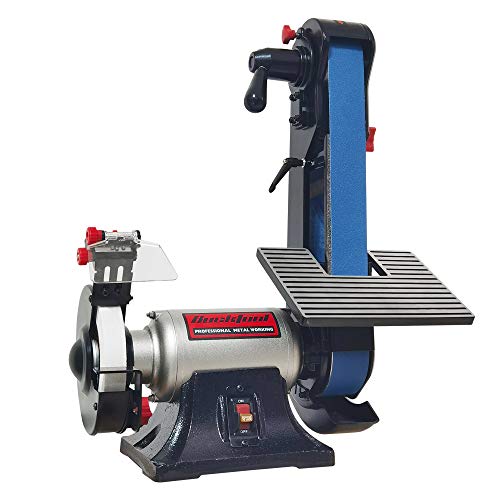 BUCKTOOL 2x42" Belt Sander 6" Bench Grinder Combo2" x 42" Belt + 6" Disc17.99 x 11.3 x 24.53 inchesCheck on Amazon
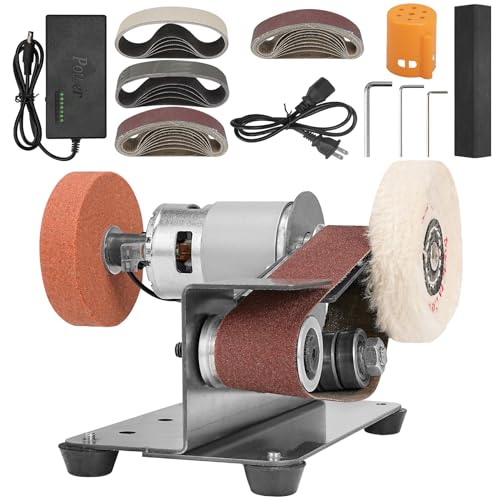 Sbestily Multifunctional Electric Knife and Tool Sharpener Belt6.3 x 3.5 x 4 inches4.6 PoundsCheck on Amazon
 VEVOR Belt Grinder Sander with VFD & Protective72-82x2in40.55 x 18.11 x 27.95 inches158.73 poundsCheck on Amazon
 VEVOR Belt Grinder Knife Jig7.68 × 3.94 × 3.35 in7.68 x 3.94 x 3.35 inches2.65 poundsCheck on Amazon


Top 3 Picks
Best overall: VEVOR 72 x 2-Inch Variable Speed Belt Polisher with VFD, 1500W. It is the full 2×72 format — the industry-standard belt size for blade work — paired with a 2 HP motor and true stepless speed control. It is the machine most makers should end up with if they have the space and the power circuit.
Best budget: Sbestily Multifunctional Electric Knife and Tool Sharpener Belt Sander. A compact benchtop belt sander aimed at sharpening rather than blade making. It will restore an edge on kitchen knives, chisels and garden tools for a fraction of a 2×72’s cost, and it stores on a shelf.
Best premium: JLD Professional Belt Grinder Sander, 2×72-Inch Belt, 1500W Motor with 2.2KW VFD, three sets of grinding kits. The JLD takes the 2×72 platform and pushes the electronics and the accessory bundle further, with a higher-rated VFD and a starter kit of grinding wheels and arms. It is the pick for a maker who wants to buy once and tool up immediately.
Quick Comparison
| Product | Best for | Key specs | Price tier |
|---|---|---|---|
| VEVOR Belt Grinder Sander, 72 x 2-Inch Variable Speed with VFD | All-round knife making on the standard 2×72 platform | 2 x 72 in belt; 1500W / 2 HP motor; VFD variable speed; platen and contact wheel | Premium |
| BUCKTOOL 2×42″ Belt Sander & 6″ Bench Grinder Combo | Small-shop makers who also need a bench grinder | 2 x 42 in belt; 6 in bench grinder; 3.5 A motor; two stations on one base | Mid-range |
| Sbestily Multifunctional Electric Knife and Tool Sharpener | Sharpening, not blade making | Compact benchtop belt sander; narrow belt; single-speed; light-duty motor | Budget |
| VEVOR Belt Grinder Sander with VFD & Protective Shield, 72–82 x 2-Inch | Long-platen flat grinding and makers who want a shield | Accommodates 72 in and 82 in belts; 2 in width; 1500W motor; VFD; protective shield | Premium |
| VEVOR Belt Grinder Knife Jig, 85°–115° Adjustable | Repeatable bevel angles without freehand skill | Adjustable 85°–115°; dual handles; 7.68 in working length; fits belt grinder platens | Budget |
| KFMK 2×42 in. Belt Sander & 6″ Disc Sander Combo | A compact two-station bench for wood and metal | 2 x 42 in belt; 6 in disc; 3.5 A motor; 1/2 HP belt drive rating | Mid-range |
| VEVOR 2IN1 2″ Belt Grinder for Knife Making, 6″ Belt Sander | Fixed-speed vertical grinding on a tight budget | 2 in belt plus 6 in disc; 3450 RPM; 90° belt holder; bench-mount base | Mid-range |
| Benchmark Abrasives 2 x 72 Inch Zirconia Sanding Belts | Keeping a 2×72 grinder fed | 2 x 72 in; zirconia grain; resin bond; multiple grits in packs | Budget |
| SI FANG Mini Electric Belt Sander Knife-Sharpener | Very small shops, drawers and toolboxes | Mini benchtop format; narrow belt; low-power motor; single speed | Budget |
| JLD Professional Belt Grinder Sander, 2×72-Inch, 1500W with 2.2KW VFD | Buy-once setups with tooling included | 2 x 72 in belt; 1500W motor; 2.2 kW VFD; three sets of grinding kits | Premium |
| LuYuLTONG 2 x 36 Inch Variable Speed Belt Polisher | Compact variable-speed polishing and light grinding | 2 x 36 in belt; 750W motor; variable speed; bench format | Premium |
| Sunluway Upgraded Belt Grinder Tilt Table for 2×72″ Grinders | Adding tilt and bevel control to an existing grinder | Fits popular 2×72 in grinders; tilting table; adjustable angle; steel construction | Mid-range |
How We Chose
This roundup is built from published manufacturer specifications, the established conventions of the knife-making community, and the supply realities of each belt format — not from any physical evaluation of the machines. The first filter was belt size, because it determines what the grinder can physically do and what abrasives you can buy. The 2×72 format dominates professional blade work for a reason: it offers the widest selection of grits, abrasive types and backing materials, and the longest belt life per unit of cutting. The 2×42 format is a genuine step down in belt availability but a real step up in affordability and footprint. Anything smaller is a sharpening tool, not a blade-making machine.
The second filter was motor power and speed control, judged together rather than separately. A 1.5–2 HP motor with a VFD can run a coarse belt slowly for control and a fine belt quickly for finish; a fixed-speed machine of the same power is far less versatile. The third was tooling and upgrade path — whether a platen, contact wheel, tooling arm and aftermarket accessories exist for the machine. The final filter was category fit: grinders, combination bench machines, accessories and consumables all earn a place here only if they solve a specific knife-making or sharpening problem, and each product is described by its stated specification class rather than by invented numbers.
1. VEVOR 72 x 2-Inch Variable Speed Belt Polisher with VFD – Best for All-Round Knife Making
As an Amazon Associate we earn from qualifying purchases at no extra cost to you.

This is the machine that answers the question the roundup is named after. The VEVOR 72 x 2-Inch Variable Speed Belt Polisher is built on the 2×72 belt platform that essentially every professional knife maker works on, and it pairs that format with a 1500W (2 HP) motor and a VFD for stepless speed control. That combination — the right belt size plus real speed variation — is what separates a blade-making grinder from a generic belt sander.
It suits the maker who wants one machine to do everything: profiling a blank from bar stock, hogging bevels with a coarse belt, refining the grind with progressively finer grits, setting a plunge line against the platen, and then slack-belt polishing or handle shaping on a contact wheel. Because the belt size is the industry standard, every abrasive, platen liner, contact wheel and jig on the market is potentially compatible, which is a genuine long-term advantage over proprietary formats.
Key specs
- Belt size: 2 x 72 inches — the professional knife-making standard
- Motor: 1500W, rated at 2 HP
- Speed control: VFD (variable-frequency drive) for stepless adjustment
- Tooling: flat platen for bevel grinding plus a contact wheel for hollow grinds and slack-belt work
- Tracking: adjustable belt tracking and tension
- Format: benchtop machine, typically mounted to a stand or bench for stability
Strengths
The headline strength is the combination of a 2 HP motor and a VFD. Two horsepower is enough to remove steel quickly with a 36- or 60-grit ceramic belt without stalling, and the VFD lets you drop the belt speed when you are working a fine grit near a finished edge, where heat and loss of control ruin work. On a fixed-speed machine you get one belt speed for everything, which forces you to choose between slow, safe grinding and fast material removal. The 2×72 belt also means long belt life: there is simply more abrasive in contact with the work and more abrasive in reserve per belt, so your cost per knife in consumables stays low relative to smaller formats.
The second strength is the upgrade path. A 2×72 machine is a platform, not a closed product. You can add an adjustable tilt table, a knife-sharpening jig, small-wheel attachments for finger grooves, and a range of contact wheel diameters. Nothing about the machine locks you in.
Pros
- Industry-standard 2×72 belt format with the widest abrasive selection available
- 1500W / 2 HP motor has enough torque for coarse hogging without bogging
- VFD gives stepless speed control for both fast removal and delicate finishing
- Ships with both a platen and a contact wheel, so it works for flat and hollow grinds
- Excellent aftermarket support for jigs, tables and wheels
Cons
- Premium tier — the largest single outlay in this roundup
- Needs a sturdy bench or stand and a circuit that can carry a 1.5–2 HP motor
- Occupies real floor or bench space; not a shelf machine
- Overkill if you only sharpen knives rather than make them
How it compares
Against the JLD 2×72 with its 2.2 kW VFD and bundled grinding kits, the VEVOR is the leaner purchase: you get the same belt format and the same 1500W motor class, but the JLD throws in more tooling and a higher-rated drive. If you already own contact wheels and platens, the VEVOR is the better value. If you are starting from nothing and want to grind on day one, the JLD bundle saves you a round of shopping. Against the VEVOR 72–82 model with the protective shield, this version is the more conventional choice — the 72–82 accepts longer belts and adds a shield, which matters most if you do a lot of flat platen work and want the extra coverage.
2. BUCKTOOL 2×42″ Belt Sander and 6″ Bench Grinder Combo – Best for Small-Shop Makers Who Need Two Stations
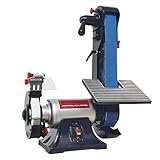
The BUCKTOOL combo takes a different approach to the same problem. Instead of a single-purpose 2×72 grinder, it puts a 2×42-inch belt sander and a 6-inch bench grinder on one base, driven by a 3.5 A motor. It is a workshop machine that happens to be useful for knives, rather than a knife grinder that happens to be useful in a workshop.
It suits the maker who works in a garage or a shared shop, has limited bench space, and needs general metalworking capability as much as blade capability. The 6-inch bench grinder handles tool sharpening, deburring, weld cleanup and lawn-mower blades; the 2×42 belt handles blade profiling, handle shaping, and light bevel work. For someone who makes a few knives a year and does a lot of other fabrication, that combination is more useful per square foot than a dedicated 2×72.
Key specs
- Belt size: 2 x 42 inches
- Bench grinder: 6-inch wheels, one station
- Motor: 3.5 A, 120V class
- Format: combination bench machine on a single base
- Speed control: fixed speed
Strengths
The obvious strength is two functions on one footprint. A 2×42 belt sander plus a 6-inch grinder covers a surprising amount of small-shop work, and the belt format is a genuine compromise rather than a toy — 2×42 belts are widely available in aluminum oxide, zirconia and ceramic, in grits from coarse to fine, and a 42-inch belt still has enough length to run reasonably cool compared with a 1×30. The 3.5 A motor is modest, so you work with lighter pressure and let the belt cut rather than leaning into it, which is a discipline that actually produces better bevels on thin stock.
The bench grinder side is genuinely useful in a knife shop: dressing handle pins, cleaning up bolsters, and grinding tangs and shoulders. Many makers end up buying a separate bench grinder anyway, so bundling it is not wasted capacity.
Pros
- Two machines’ worth of function in one bench footprint
- 2×42 belts are widely stocked in multiple abrasive types
- 3.5 A motor is adequate for profiling and light bevel work
- Bench grinder station handles tool and hardware tasks beyond knife making
- Mid-range tier, far cheaper than a 2×72 setup
Cons
- No variable speed — one belt speed for hogging and finishing alike
- Smaller motor means slower steel removal on thick stock or hardened steel
- 42-inch belts wear out faster than 72-inch belts, raising cost per knife
- Fewer aftermarket platens, contact wheels and jigs fit this format
- Fixed bench grinder wheels may need dressing or replacement for finer work
How it compares
Against the KFMK 2×42 and 6-inch disc combo, the BUCKTOOL’s advantage is the grinding wheel rather than a disc — a bench grinder is more useful for shaping hardware and tools, while a disc sander is better for flattening and squaring. If your work leans toward flattening handle scales and squaring blocks, the KFMK is the more natural fit; if it leans toward metalwork and tool maintenance, the BUCKTOOL wins. Against the VEVOR 72 x 2 with VFD, the BUCKTOOL is a different category of tool: half the belt length, no speed control, but half the footprint and a much lower entry price.
3. Sbestily Multifunctional Electric Knife and Tool Sharpener Belt Sander – Best Budget Pick for Sharpening

The Sbestily is a compact benchtop belt sander built around a narrow belt, sold as a knife and tool sharpener rather than a blade-making grinder. That distinction matters: it is designed to restore an edge on a finished knife, not to grind a bevel into a bar of steel. Judged as a sharpener, it does a lot for a budget-tier price.
It suits the home cook who is tired of pull-through sharpeners, the woodworker with a drawer of dull chisels, the gardener with pruning shears and mower blades, and the hobbyist who wants to clean up a knife edge without committing bench space to a full grinder. It also suits a knife maker as a secondary machine — a dedicated, always-set-up station for touching up the edge after the primary grind, so you do not have to re-rig a 2×72 for a two-minute job.
Key specs
- Format: compact benchtop belt sander / sharpener
- Belt: narrow abrasive belt, single speed
- Motor: light-duty, mains-powered
- Footprint: small enough to store on a shelf
- Intended use: knife and tool edge maintenance
Strengths
The main strength is the ratio of capability to footprint and cost. A powered belt sharpener removes the two biggest problems with manual sharpening: the time it takes, and the difficulty of holding a consistent angle by hand. Because the belt is narrow, it can follow a curved blade — a chef’s knife or a skinner — more easily than a wide belt or a grinding wheel, and it will reach into a recurve where a flat stone struggles. The low belt speed typical of this class of machine also means less heat at the edge than a bench grinder, which is the single most important factor in not ruining a tempered blade during sharpening.
It is also genuinely low-commitment. No stand, no special circuit, no dedicated bench. You plug it in, sharpen, and put it away.
Pros
- Very low entry cost relative to any grinder in this roundup
- Small and light — stores on a shelf, needs no permanent station
- Narrow belt follows curved blades and reaches recurves
- Lower heat at the edge than a bench grinder during sharpening
- Useful as a secondary touch-up station even in a full knife shop
Cons
- Not a blade-making machine — cannot hog bevels from bar stock
- Single speed with no VFD or stepped control
- Light-duty motor means you work slowly and with light pressure
- Belt selection is narrower than the 2×72 or 2×42 formats
- No platen, contact wheel or jig ecosystem to grow into
How it compares
Against the SI FANG Mini Electric Belt Sander, the Sbestily is the more general-purpose sharpener — a multifunctional tool station rather than a mini grinder, and it handles kitchen knives and garden tools with a bit more presence. The SI FANG is smaller and more specialized, better suited to a drawer or a very tight bench. Against the VEVOR 2IN1 2-inch belt and 6-inch disc machine, the Sbestily is a different class entirely: the VEVOR has the disc and the speed to do real shaping and profiling work, while the Sbestily is the sharper, simpler, cheaper answer for edge maintenance alone. If you want one machine for knives and tools and no ambition to make blades, the Sbestily is the sensible purchase.
4. VEVOR Belt Grinder Sander with VFD and Protective Shield, 72–82 x 2-Inch – Best for Long-Platen Flat Grinding

This VEVOR variant takes the same 2-inch belt, 1500W, VFD-equipped formula and stretches it: it accepts both 72-inch and 82-inch belts, and it adds a protective shield over the working area. The longer belt option is not a gimmick — it changes how the machine behaves under load.
It suits the maker who does a lot of flat platen work and wants the extra belt length for cooler running and longer abrasive life, plus the safety coverage that a shield provides when you are grinding hard and throwing sparks. It also suits a maker who wants a single machine that can be configured for different jobs, since the longer belt allows a longer platen contact area and more room for jigs and fixtures.
Key specs
- Belt size: accepts 2 x 72 in and 2 x 82 in belts
- Belt width: 2 inches
- Motor: 1500W class
- Speed control: VFD, variable speed
- Safety: protective shield over the belt
- Tooling: platen and contact wheel configuration
Strengths
The 82-inch belt capability is the differentiator. A longer belt has more abrasive surface passing the work per revolution, which spreads heat over a larger area and gives each section of grit more time to cool between passes. In practice that means less heat built up at the edge of a thin bevel — the failure mode that turns a promising blade into a re-temper job — and longer belt life because the abrasive is not working as hard in any one spot. It also gives you a longer unsupported span for slack-belt work and more room to mount jigs.
The shield is a practical addition rather than a marketing line. Belt grinding throws sparks, swarf and, when a belt fails, fragments. A shield between the working zone and the operator is the kind of feature you appreciate exactly once, and it costs nothing in usability if it is positioned well.
Pros
- Accepts both 72-inch and 82-inch belts, so you are not locked into one supply chain
- Longer belt runs cooler and lasts longer than a 72-inch belt of the same grit
- VFD gives full stepless speed control
- 1500W motor handles coarse grits without stalling
- Protective shield adds spark and debris containment
Cons
- Premium tier pricing
- Longer belt path means a slightly larger machine footprint
- 82-inch belts are less commonly stocked than 72-inch, so you may need to plan orders
- Shield can obstruct some very close-in work unless it is adjustable
How it compares
Against the standard VEVOR 72 x 2 with VFD, this is the same machine with more belt flexibility and a shield. If you only ever buy 72-inch belts, the standard version is the simpler buy. If you want the option of longer belts for heat control on thin, hard stock, or you value the shield, this version earns its premium. Against the JLD 2×72, the JLD wins on bundled tooling and VFD rating while this VEVOR wins on belt-format flexibility — the 82-inch capability is something the JLD does not offer.
5. VEVOR Belt Grinder Knife Jig, 85°–115° Adjustable – Best for Repeatable Bevel Angles

This is not a grinder. It is the accessory that fixes the single hardest problem in knife making: holding a consistent angle while grinding a bevel freehand. The VEVOR knife jig clamps to a belt grinder platen and holds the blade at a set angle, adjustable across an 85° to 115° range, with dual handles for control. The 7.68-inch working length accommodates most kitchen and utility blade profiles.
It suits two groups. The first is the beginner who has the grinder but not the muscle memory — a jig converts a variable, error-prone freehand grind into a repeatable operation, which means the second knife looks like the first. The second is the experienced maker who grinds production runs and wants a reference setup for consistent bevels across a batch.
Key specs
- Angle range: 85° to 115°, adjustable
- Control: dual handles for two-handed guidance
- Working length: 7.68 inches
- Mounting: fits belt grinder platen setups
- Category: grinding jig / sharpening fixture, not a powered machine
Strengths
Angle consistency is the whole point. On a belt grinder, a one-degree drift in grind angle across a bevel is visible immediately — the bevel looks wavy, the edge thickness varies, and you spend extra time fixing what you just did. A jig removes the drift by mechanically locking the angle while your hands only manage pressure and travel. That converts grinding from a test of nerve into a test of patience, which is a much better trade for a beginner.
At budget-tier pricing it is also the cheapest meaningful upgrade to grind quality available. You get more improvement in your first ten knives from a jig than from moving up a motor size, because consistency of angle matters more than speed of removal when you are learning.
Pros
- Budget-tier price for a genuine capability upgrade
- 85°–115° range covers common bevel geometries
- Dual handles give two-handed control and better feel
- Makes bevels repeatable across a batch of knives
- Complements any platen-equipped belt grinder in this roundup
Cons
- Not a machine — requires a belt grinder you already own
- Jig grinding is slower than confident freehand work once you are skilled
- Very small or very large blade profiles may not sit well in the fixture
- Setup time between knives adds up on single-piece work
- Adds a layer between your hands and the steel, which some makers dislike
How it compares
Against the Sunluway tilt table, the two solve related but different problems. The VEVOR jig controls the blade’s angle relative to the belt; the Sunluway tilt table controls the belt’s angle relative to the work, letting you present a flat platen at a chosen tilt. Many makers use both: the tilt table for consistent flat grinding of handle scales and tangs, the jig for bevels. If you can only buy one and your priority is even bevels on blades, the jig is the more direct fix.
6. KFMK 2×42 in. Belt Sander and 6″ Disc Sander Combo – Best for a Compact Two-Station Bench

The KFMK combo mirrors the BUCKTOOL concept with a different second station: a 2×42-inch belt sander paired with a 6-inch disc sander, on a 3.5 A motor, with the belt drive rated at 1/2 HP. Where the BUCKTOOL gives you a grinding wheel, the KFMK gives you a flat disc — and for a lot of knife-adjacent work, the disc is the more useful of the two.
It suits the maker who works with both wood and metal: handle scales, spacers, liners and bolsters alongside blade blanks. A disc sander is the tool for flattening a scale, squaring a block, truing a spacer and cleaning up a tang, and having it on the same base as a 2×42 belt means you move between operations without moving between machines.
Key specs
- Belt size: 2 x 42 inches
- Disc: 6 inches
- Motor: 3.5 A, belt drive rated 1/2 HP
- Format: combination bench machine, two stations
- Speed control: fixed speed
Strengths
The disc is the strength. A 6-inch disc with a fresh abrasive gives you a genuinely flat reference surface, which matters enormously when you are fitting handle scales or truing a block of stabilized wood. Belt sanders, particularly narrow ones, tend to round over edges and dish slightly under pressure; a disc holds flat much better. For handle work, that difference shows up directly in how well your scales fit.
The 2×42 belt side then handles shaping — roughing the handle profile, blending the transition from scale to tang, and light blade profiling. The two stations share a footprint and a motor, so a small shop gets a lot of capability for a modest bench area. The 1/2 HP belt drive rating is honest about the machine’s class: it is a light-duty machine, best used with moderate pressure and sharp abrasives.
Pros
- Disc sander station is genuinely useful for handle scales and spacers
- 2×42 belt format has broad abrasive availability
- Two stations on one bench footprint
- Handles both wood and metal tasks in a small shop
- Mid-range pricing with no stand or special circuit required
Cons
- Fixed speed only — no VFD or step pulley
- 3.5 A motor limits steel removal speed on thick or hardened stock
- Disc abrasive loading is a constant maintenance issue on wood and resin
- 42-inch belts wear faster than 72-inch belts
- Not a substitute for a 2×72 for serious blade production
How it compares
Against the BUCKTOOL combo, the choice comes down to disc versus grinding wheel. If your bottleneck is fitting handle scales and squaring blocks, the KFMK’s disc is the more valuable second station. If your bottleneck is tool maintenance, hardware shaping and cleanup, the BUCKTOOL’s 6-inch grinder wins. Against the VEVOR 2IN1 2-inch belt and 6-inch disc machine, the KFMK offers a longer belt — 42 inches versus a short 2-inch belt path — which means cooler running and better belt life, while the VEVOR offers higher spindle speed at 3450 RPM. For handle-heavy work, the KFMK is the more comfortable machine.
7. VEVOR 2IN1 2″ Belt Grinder for Knife Making with 6″ Belt Sander – Best for Fixed-Speed Vertical Grinding on a Budget

The VEVOR 2IN1 combines a 2-inch belt grinder with a 6-inch belt sander and a 3450 RPM spindle, mounted on a bench base with a 90° belt holder. It is a mid-range bench machine that covers two belt widths and a vertical grinding position in one unit.
It suits the maker or fabricator who wants vertical grinding capability — the belt running vertically so you can present work against a platen and see the grind line — plus a wider 6-inch belt for surface work. The 3450 RPM spindle speed gives fast belt surface speed, which translates to quick material removal with coarse grits. It is a machine for someone who wants a versatile bench grinder-sander rather than a dedicated knife grinder.
Key specs
- Belt sizes: 2-inch belt plus 6-inch belt sander
- Spindle speed: 3450 RPM
- Belt holder: 90°, vertical grinding position
- Format: bench-mounted combination machine
- Speed control: fixed speed
Strengths
The 3450 RPM spindle is the defining feature. High spindle speed with a modest drive wheel diameter produces a high belt surface speed, which is exactly what you want for rapid stock removal with a coarse belt and exactly what you have to manage carefully with a fine belt. For profiling a blade blank or roughing a bevel, that speed is an asset. The vertical belt holder gives you the platen-style presentation that makes it possible to grind a straight, consistent bevel line — you work the blade against a vertical belt rather than trying to hold it against a horizontal one.
The dual belt format is the second strength. A 6-inch belt is useful for flattening larger surfaces and cleaning up flat stock; the 2-inch belt handles detail work, plunge lines and curved profiles. For a shop that does general fabrication as well as knife work, that breadth is worth more than specialization.
Pros
- High 3450 RPM spindle speed for fast stock removal
- Vertical 90° belt holder allows platen-style bevel grinding
- Two belt widths cover detail work and surface work
- Bench-mount format with a modest footprint
- Mid-range pricing with no VFD to maintain
Cons
- No variable speed — high RPM is a liability on fine grits and heat-sensitive work
- Short belt path on the 2-inch side means belts run hotter and wear faster
- Not a 2×72, so professional-grade abrasives and jigs do not fit
- Fixed 90° belt position limits angle work without an added table
- Less rigid under heavy pressure than a dedicated knife grinder frame
How it compares
Against the LuYuLTONG 2 x 36 variable speed belt polisher, the tradeoff is speed control versus belt length. The VEVOR gives you 3450 RPM and two belt widths but no speed adjustment; the LuYuLTONG gives you a 36-inch belt and variable speed with a 750W motor. For blade work — where the ability to slow the belt down at fine grits is what protects your heat treatment — the LuYuLTONG’s variable speed is the more important feature. For fabrication and fast roughing, the VEVOR’s higher spindle speed wins. Against the KFMK combo, the VEVOR offers vertical belt presentation and higher RPM, while the KFMK offers a disc for flat reference work.
8. Benchmark Abrasives 2 x 72 Inch Zirconia Sanding Belts – Best Consumables for a 2×72 Grinder

A belt grinder is only as good as the belts you feed it, and this is where the ownership math lives. Benchmark Abrasives sells 2 x 72-inch belts with zirconia grain in a resin bond, in a range of grits and pack sizes. If you own or are planning to own any of the 2×72 machines in this roundup, this is the consumable line that determines your real cost per knife.
It suits anyone running a 2×72 grinder — the VEVOR 72 x 2, the VEVOR 72–82, or the JLD. It also suits the maker who is still deciding between belt formats, because the availability and price of abrasives in a given size is the strongest argument for or against that size.
Key specs
- Belt size: 2 x 72 inches
- Abrasive grain: zirconia
- Bond: resin
- Grits: coarse through fine, sold in multiple packs
- Application: metal grinding, sanding and knife making
Strengths
Zirconia is the pragmatic middle of the abrasive hierarchy for knife work. Aluminum oxide is the cheapest and the shortest-lived; ceramic is the hardest, cuts coolest on hardened steel, and costs the most. Zirconia sits between them: it is tougher than aluminum oxide, self-sharpens reasonably well under pressure, and handles the heat of grinding steel without glazing as quickly as a basic oxide belt. For a maker grinding annealed stock, zirconia in coarse grits is the sensible workhorse, with ceramic reserved for the fine grits and for hardened steel where heat control matters most.
The real value here is supply. A 2×72 grinder consumes belts steadily — a single knife can go through several coarse belts in profiling and bevel setting before you even reach the finishing grits. Having a stocked grit progression means you are never tempted to keep using a dead belt, which is a common cause of burned edges and wavy bevels.
Pros
- Zirconia grain is a good balance of life, cut rate and cost
- 2 x 72 is the most widely supported belt size for knife making
- Multiple grits and pack sizes let you build a progression
- Budget tier — the cheapest way to improve grind quality is a fresh belt
- Fits every 2×72 machine in this roundup
Cons
- Consumable, not a tool — the cost recurs
- Zirconia is not the longest-lived option on hardened steel compared with ceramic
- Belt performance varies with storage conditions; damp belts degrade
- Only useful if you own a 72-inch-belt machine
How it compares
Against buying belts piecemeal from a general hardware source, a dedicated abrasive line like this gives you a consistent grit progression and predictable quality, which matters more than it sounds: a belt that sheds grain early leaves a scratch pattern you then have to grind out with the next grit, costing you time and steel. Against ceramic belts, zirconia is the better default for coarse profiling on annealed steel and the worse choice for fine finishing on hardened blades. The practical approach most makers settle on is zirconia for the heavy lifting and ceramic for the last two grits before hand finishing.
9. SI FANG Mini Electric Belt Sander Knife-Sharpener – Best for Tiny Shops and Drawers

The SI FANG mini belt sander is the smallest powered option in this roundup: a bench-format machine with a narrow belt and a low-power motor, sized for edge maintenance on knives and small tools. It is the machine you buy when you have no bench at all.
It suits apartment dwellers, hobbyists working on a kitchen table, and anyone whose sharpening needs are occasional and light. It also suits a knife maker as a dedicated edge-touch-up station — a small machine permanently set up for the final hone so the big grinder is never re-rigged for a thirty-second job.
Key specs
- Format: mini benchtop belt sander
- Belt: narrow abrasive belt
- Motor: low-power, mains-driven
- Speed control: single speed
- Footprint: very small, storable in a drawer or cabinet
Strengths
Size is the entire proposition. This machine fits where nothing else in this roundup fits, and it runs off a standard household circuit with no dedicated wiring. For someone who has been sharpening on stones and wants to stop spending twenty minutes per knife, a mini belt sander is a large quality-of-life improvement at a small cost.
The narrow belt is also an advantage for curved edges. It follows the sweep of a chef’s knife or a curved skinner more naturally than a wide platen, and it lets you work the tip and the belly of a blade without changing your presentation. With a fine belt and a light touch, you can produce a serviceable edge quickly.
Pros
- Smallest footprint in this roundup — stores anywhere
- Lowest cost of entry among powered options
- Narrow belt handles curved blades well
- Runs on a standard household circuit
- Useful as a dedicated touch-up station in a full shop
Cons
- Cannot profile or bevel a blade blank — sharpening only
- Low-power motor requires very light pressure
- Single speed with no control over belt surface speed
- Small belts wear quickly and are the main recurring cost
- No platen, contact wheel or jig ecosystem
How it compares
Against the Sbestily sharpener, the SI FANG is smaller and more specialized — a mini grinder rather than a multifunction tool station, and better suited to a drawer or a cramped bench. The Sbestily has more presence for kitchen knives and garden tools. Against the LuYuLTONG 2 x 36, the difference is one of category: the LuYuLTONG is a real variable-speed machine with a 750W motor and a 36-inch belt, capable of light grinding and polishing work; the SI FANG is a sharpening appliance. Buy the SI FANG if space is your binding constraint, and the LuYuLTONG if capability is.
10. JLD Professional Belt Grinder Sander, 2×72-Inch, 1500W with 2.2KW VFD – Best Premium Pick for a Buy-Once Setup

The JLD is the other serious 2×72 in this roundup: a 2 x 72-inch belt grinder with a 1500W motor, a 2.2 kW VFD, and three sets of grinding kits included. Where the VEVOR gives you the platform, the JLD gives you the platform plus a starting tool kit and a higher-rated drive.
It suits the maker who has decided this is the machine for the next decade and wants to grind on the day it arrives, without a second shopping round for arms, wheels and platens. It also suits a small production shop where the grinder runs for hours at a time and the VFD’s thermal headroom matters.
Key specs
- Belt size: 2 x 72 inches
- Motor: 1500W class
- Drive: 2.2 kW VFD for variable speed
- Included: three sets of grinding kits (arms and wheels for different operations)
- Format: benchtop or stand-mounted 2×72 machine
Strengths
The 2.2 kW VFD is the standout number. A VFD rated above the motor’s continuous draw has headroom, which means it is not running at its limit during long grinding sessions — the failure mode that kills cheap drives. If you grind for an hour at a stretch, that margin translates into a drive that lasts rather than one that cooks. Combined with the 1500W motor, the machine has both the torque for coarse ceramic belts and the speed range for delicate finishing.
The three grinding kits are the second strength, and they are worth more than they look. Setting up a 2×72 from scratch involves choosing a contact wheel diameter, a platen, a tooling arm and often a small-wheel attachment — decisions that are easy to get wrong and expensive to correct. Bundling three configurations shortens the learning curve substantially.
Pros
- Oversized 2.2 kW VFD gives thermal headroom for long sessions
- 1500W motor handles coarse hogging and fine finishing
- Three sets of grinding kits included, so you can start work immediately
- 2×72 platform with full aftermarket compatibility
- Premium build intent aimed at long-term ownership
Cons
- Premium tier — the highest outlay here alongside the VEVOR 72–82
- More machine than a beginner needs before skills develop
- Needs a stable stand and an adequate power circuit
- Bundled kits may include configurations you would not have chosen yourself
- Heavier and bulkier than any bench combo in this roundup
How it compares
Against the VEVOR 72 x 2 with VFD, the JLD’s advantages are the higher-rated VFD and the included tooling; the VEVOR’s advantage is a lower entry price for the same belt format and motor class. If you already own contact wheels and platens, the VEVOR is the better buy. If you are starting from zero, the JLD’s bundle closes the gap. Against the VEVOR 72–82, the JLD does not offer 82-inch belt capability, but it does offer the stronger drive and the tool kit. Choose the JLD for the electronics and the accessories; choose the VEVOR 72–82 for belt-format flexibility and the shield.
11. LuYuLTONG 2 x 36 Inch Variable Speed Belt Polisher, 750W – Best for Compact Variable-Speed Polishing

The LuYuLTONG occupies an unusual position: a 2 x 36-inch belt machine with a 750W motor and variable speed, in a bench format. It is smaller than a 2×42 and larger than a 1×30, and it is one of the few machines in that middle ground with genuine speed control.
It suits the maker who needs variable speed but cannot accommodate a 2×72, and the woodworker or metalworker who does polishing, deburring, blending and light grinding. It is also a sensible choice for someone whose work is more about finishing than about removing large volumes of steel — handle shaping, blending, satin finishing and edge polishing.
Key specs
- Belt size: 2 x 36 inches
- Motor: 750W
- Speed control: variable speed
- Format: bench machine
- Application: belt polishing, light grinding, deburring
Strengths
Variable speed on a compact machine is the whole point. Polishing and finishing operations — where you are blending a scratch pattern or bringing up a satin finish — need a slower belt than rough grinding does, because a fast belt with a fine grit burns the surface and loads the abrasive. Being able to dial the speed down without stepping up to a full 2×72 is a real advantage for a small shop. The 750W motor is modest but adequate for the light work this machine is designed around: it is a polisher that can grind a little, not a grinder that happens to polish.
The 36-inch belt is also a reasonable compromise. It is long enough to run cooler than a 1×30 or a very short belt, and short enough to keep the machine compact and the belt changes quick.
Pros
- Variable speed in a compact bench format — rare in this size class
- 750W motor suits polishing, blending and light grinding
- Smaller footprint than a 2×42 or 2×72 machine
- 2-inch belt width gives decent surface contact for blending
- Good fit for handle finishing and satin work
Cons
- Not enough power or belt length for serious blade profiling
- 36-inch belts are less widely stocked than 42- or 72-inch
- Premium tier pricing for a compact machine
- No jig or accessory ecosystem comparable to the 2×72 world
- Belt life is shorter than on longer-belt machines
How it compares
Against the VEVOR 2IN1 2-inch belt machine, the LuYuLTONG trades spindle speed for control: the VEVOR runs at 3450 RPM fixed, which is fast and uncompromising, while the LuYuLTONG lets you slow the belt down for finishing. For blade work, where heat management at fine grits determines whether your heat treatment survives, variable speed is the more valuable feature. Against the BUCKTOOL and KFMK combos, the LuYuLTONG gives up the second station and the belt length but gains speed control and a smaller footprint. It is the right machine for someone whose work is finishing-heavy and space-limited.
12. Sunluway Upgraded Belt Grinder Tilt Table for 2×72″ Grinders – Best Upgrade for Bevel Control

The Sunluway tilt table is the accessory that turns a 2×72 grinder into a more controllable flat-grinding platform. It fits most popular 2×72-inch knife grinders and provides an adjustable tilting table for presenting work to the platen at a chosen angle — the standard method for producing consistent bevels and flat surfaces.
It suits the maker who already owns a 2×72 and has hit the limits of freehand work, and the maker who grinds a lot of flat surfaces: tangs, handle scales, bolsters and ricasso flats. It is the upgrade you buy after the grinder, not instead of it.
Key specs
- Compatibility: fits most popular 2×72-inch belt grinders
- Function: tilting work table with adjustable angle
- Construction: steel
- Application: knife bevels, flat grinding, squaring
- Category: grinder accessory, not a powered machine
Strengths
A tilt table solves a specific geometry problem. When you grind a bevel freehand against a vertical platen, your hands control both the angle and the pressure, and any wobble shows up in the bevel. With a tilt table, the angle is set mechanically and the work rests on the table — you control only feed and pressure, which removes an entire axis of error. That is why almost every experienced maker eventually adds one.
The secondary benefit is flat work. Setting the table level and running a tang or a handle block against it produces a genuinely flat reference surface, which is what you need for a clean fit between scales and tang. Doing that freehand is possible but slow and inconsistent.
Pros
- Removes angle drift from bevel grinding by setting the angle mechanically
- Fits most popular 2×72 grinders, so it is not brand-locked
- Steel construction holds up to grinding grit and heat
- Also useful for flat work — tangs, scales and bolsters
- Mid-range price for a meaningful capability jump
Cons
- Requires a 2×72 grinder you already own
- Not compatible with smaller formats like 2×42 or 2×36
- Setup and angle adjustment take time between operations
- Adds a fixture in front of the platen that can restrict access for some curved work
- Does not replace skill — it standardizes it
How it compares
Against the VEVOR knife jig, the tilt table controls the angle of the work surface while the jig controls the angle of the blade itself. They are complementary: a tilt table is better for flat grinding and for makers who want to keep their hands on the blade, while a jig is better for producing identical bevels across a batch of knives with less practice. If you grind a lot of flat surfaces and want a general-purpose upgrade, the tilt table earns its place first. If your only goal is even bevels on blades and you are just starting out, the jig is the more direct purchase.
How to Choose
The right belt grinder for knife making is determined by four variables, in this order: belt size, motor power, speed control, and tooling. Everything else — frame material, brand, color, whether it comes with a stand — is secondary. Get those four right and you will not outgrow the machine for years. Get them wrong and no amount of accessories will fix it.
P