Angle Grinder Price Guide: What to Expect
What's inside
- Angle grinder price tiers at a glance
- Disc size changes both price and capability
- Power and control features worth paying for
- Corded versus cordless: compare the ownership cost
- Safety features and included equipment
- Consumables: the hidden cost of owning a grinder
- Decision matrix: which price tier fits your situation?
- Durability and maintenance realities
- Bottom line
- Related Guides
- Angle grinder price tiers at a glance
- Disc size changes both price and capability
- Power and control features worth paying for
- Corded versus cordless: compare the ownership cost
- Safety features and included equipment
- Consumables: the hidden cost of owning a grinder
- Decision matrix: which price tier fits your situation?
- Durability and maintenance realities
- Bottom line
- Related Guides
As an Amazon Associate I earn from qualifying purchases. This post may contain affiliate links at no extra cost to you.
An angle grinder typically costs $30–$70 for a basic corded 4½-inch model, $70–$150 for a better-built corded or compact cordless tool, and $150–$350 or more for a professional cordless kit with batteries and a charger.
This angle grinder price guide explains what to expect beyond the sticker price: disc size, motor power, battery platform, safety equipment, included accessories, and the consumables that determine the real cost of ownership.
As an Amazon Associate we earn from qualifying purchases at no extra cost to you.


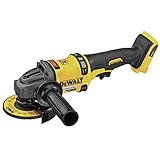
Angle grinder price tiers at a glance
| Typical price | Common configuration | Best suited to | What you usually get |
|---|---|---|---|
| $30–$70 | 4½-inch corded, 6–8 amp motor | Occasional cutting, sharpening, and surface cleanup | Basic guard, side handle, spindle lock, one or two discs |
| $70–$130 | 4½- or 5-inch corded, 8–13 amp motor | Frequent homeowner and light workshop use | Better gearing, improved switch, adjustable guard, more durable case |
| $100–$220 | 4½- or 5-inch cordless tool-only | Mobile repairs and jobs without convenient power | Brushless motor, electronic protection, variable speed on some models |
| $180–$350+ | Cordless kit with battery and charger | Regular professional or construction use | High-capacity battery, charger, stronger controls, often a case |
| $120–$300+ | 7- or 9-inch corded grinder, 12–15 amp motor | Deep cutting and heavy material removal | Larger guard, powerful motor, greater disc capacity, higher weight |
These are broad U.S. market ranges for new tools in 2026. Promotions, regional pricing, and whether a battery or charger is included can move the final price substantially.
Disc size changes both price and capability
4½- to 5-inch grinders: the practical default
The 4½-inch grinder is usually the best value for a homeowner. It is compact enough for controlled work but can cut steel rod, remove welds, clean rust, sharpen tools, and grind masonry with the correct disc. Most models weigh about 4–6 pounds before a battery, and corded versions commonly use 6–13 amp motors.
A 5-inch model may accept larger or thicker accessories and can offer a little more cutting depth, but discs are often less universally available than 4½-inch accessories. Expect to pay roughly $10–$40 more for comparable construction and features.
7- to 9-inch grinders: more capacity, more fatigue
Larger grinders can use discs around 7 or 9 inches in diameter and cut deeper in one pass. Their 12–15 amp motors are appropriate for substantial steel, masonry, and concrete work, but the tools commonly weigh 10–16 pounds. They also create more torque, noise, sparks, and kickback potential.
For occasional household repairs, the additional $50–$150 over a compact grinder is rarely worthwhile. Choose this size when depth and removal rate matter more than maneuverability.
Power and control features worth paying for
- Motor power: A 6–8 amp corded motor handles intermittent light work. An 11–15 amp model resists slowing under heavy cutting or grinding.
- Brushless construction: On cordless tools, a brushless motor usually improves efficiency and reduces a wear part. It commonly adds $30–$80 compared with a brushed equivalent.
- Variable speed: Useful for flap discs, wire wheels, polishing accessories, and heat-sensitive materials. It is less important if the grinder will only cut steel.
- Soft start: The motor reaches speed more gradually, making the tool easier to control when starting a cut.
- Overload and thermal protection: These features can shut down the tool before excessive heat damages the motor or battery.
- Constant-speed electronics: More expensive grinders can maintain speed as pressure changes, improving consistency during demanding work.
Do not compare amperage and battery voltage as if they were equivalent measurements. A corded motor receives continuous power from the outlet, while cordless runtime depends on battery voltage, amp-hours, load, temperature, and the accessory being used.
Corded versus cordless: compare the ownership cost
A corded grinder usually provides the lowest entry price. A $45–$90 corded tool can run as long as the user can safely supply power, making it economical for workshop use. Its drawbacks are the cable, the need for an outlet or suitable extension cord, and less convenient work around vehicles, rooftops, or construction sites.
A cordless grinder may cost $100–$220 without a battery. A compatible battery can add $60–$150, while a charger may add $30–$90. A complete kit can therefore cost twice as much as a corded tool before buying a single disc. In return, it offers easier positioning and eliminates the risk of cutting through a power cord.
Battery capacity affects runtime more than the tool’s advertised voltage alone. As a rough planning figure, a 4.0 Ah battery may provide approximately 15–30 minutes of intermittent heavy grinding or 30–60 minutes of lighter cutting. Continuous trigger time is much shorter than elapsed job time because users normally reposition material and change discs.
A simple cordless cost calculation
Suppose a cordless kit costs $240 and includes one battery. A second battery costs $100, and batteries last about 300–500 substantial charge cycles when stored and used properly. If the tool is used 40 times per year, the batteries may remain serviceable for several years, but their replacement still matters.
At $340 for the tool and two batteries over 400 uses, the equipment cost is about $0.85 per use before discs and electricity. A corded setup costing $75 used 400 times costs about $0.19 per use before consumables. The cordless option can still be the better choice when carrying a cord would slow the work or create a safety problem.
Safety features and included equipment
Safety features often explain why two apparently similar grinders differ by $40 or more. Look for a tool-free or easily adjustable wheel guard, a two-position side handle, a lock-off switch, a paddle switch that stops when released, soft start, and electronic kickback or overload control.
A basic package may include only a grinding guard and side handle. A more complete package could include a cutting guard, wrench, several abrasive wheels, a diamond masonry blade, a case, and dust-control accessories. Treat included discs as starter accessories rather than a major saving: inexpensive discs may wear quickly or be unsuitable for demanding work.
Budget at least $25–$60 for appropriate eye protection, hearing protection, gloves suited to the task, and a suitable dust mask or respirator when the material and workplace require it. Do not use a general-purpose face covering as a substitute for properly selected respiratory protection.
Consumables: the hidden cost of owning a grinder
| Accessory | Typical price per item | Approximate service life | Common use |
|---|---|---|---|
| Thin metal cut-off wheel | $1–$5 | Several to dozens of cuts | Sheet, rod, bolts, and tubing |
| Depressed-center grinding wheel | $3–$10 | Hours of intermittent work | Weld removal and edge shaping |
| Flap disc | $5–$15 | Several hours, depending on pressure | Blending welds and finishing metal |
| Wire cup or wheel | $8–$25 | Several hours or less in harsh rust | Rust, paint, and scale removal |
| Diamond masonry blade | $15–$60 | Dozens to hundreds of cuts | Brick, block, tile, and concrete |
Replacing discs when they are worn, cracked, warped, or loaded with material is cheaper than forcing a dull accessory through the work. Excessive pressure increases heat, slows the cut, and can damage both the disc and the grinder.
Decision matrix: which price tier fits your situation?
| Your situation | Recommended choice | Reasonable budget |
|---|---|---|
| First grinder, fewer than 10 jobs per year | 4½-inch corded, 7–10 amp | $40–$90 |
| Small workshop with frequent metalwork | 4½- or 5-inch corded, 10–13 amp, soft start | $80–$160 |
| Remote repairs or outdoor work | Brushless cordless, preferably with a 4.0 Ah or larger battery | $180–$350 for a kit |
| Deep cuts in heavy steel or masonry | 7- or 9-inch corded model with overload protection | $150–$300+ |
| Limited storage and occasional use | Compact 4½-inch tool with a slim case | $50–$130 |
Durability and maintenance realities
The parts that usually wear first are abrasive accessories, carbon brushes on brushed motors, spindle bearings, switches, guards, and battery packs. Grinding dust can enter ventilation openings, so brush the tool clean after use and avoid blowing debris deeper into the housing with high-pressure air. Keep the spindle, guard, and accessory flange free of packed dust.
Use the wheel size, maximum revolutions per minute, and material rating specified for the grinder. Never fit a disc with a lower rated speed than the tool, remove the guard for extra access, or use a cutting wheel for side grinding. Let the disc reach full speed before contacting the work, keep both hands on the tool, and position yourself outside the wheel’s likely plane if it breaks.
Bottom line
For most buyers, a well-built 4½-inch corded grinder in the $60–$120 range offers the lowest total cost and enough capability for routine workshop tasks. Pay more for cordless convenience, brushless efficiency, electronic protection, or a larger disc only when your working conditions justify it. Include batteries, charger, guards, safety equipment, and recurring discs in the budget; the cheapest grinder is not always the cheapest tool to own.