Best CPU Cores for Gaming, Work, and Everyday Use
What's inside
- The best CPU core for most people is a modern 6-core processor with simultaneous multithreading; choose 8 cores for heavier multitasking and production work, and 12 or more only when your workloads can use them.
- Choose by workload, not by the biggest number
- Core and thread counts at a glance
- How many cores do you actually need?
- Platform checks before you buy
- Decision matrix: match the CPU to your situation
- When extra cores are worth the money
- Bottom line
- The best CPU core for most people is a modern 6-core processor with simultaneous multithreading; choose 8 cores for heavier multitasking and production work, and 12 or more only when your workloads can use them.
- Choose by workload, not by the biggest number
- Core and thread counts at a glance
- How many cores do you actually need?
- Platform checks before you buy
- Decision matrix: match the CPU to your situation
- When extra cores are worth the money
- Bottom line
As an Amazon Associate I earn from qualifying purchases. This post may contain affiliate links at no extra cost to you.
The best CPU core for most people is a modern 6-core processor with simultaneous multithreading; choose 8 cores for heavier multitasking and production work, and 12 or more only when your workloads can use them.
Core count is a useful starting point, not a performance score. A core handles work, while threads let a core keep more than one task moving when software and the processor support simultaneous multithreading (SMT) or Intel Hyper-Threading. More threads can improve throughput, but they do not equal the same number of full-strength cores. Architecture, clock speed, cooling, memory, and the software you run all matter.
Choose by workload, not by the biggest number
- Everyday use and budget gaming: A current 6-core CPU is a sensible baseline for web browsing, office apps, and gaming. It leaves room for background tasks without paying for cores most games will not use heavily.
- Gaming while streaming or multitasking: Look at 8 cores, especially if you run a stream encoder, voice chat, recording software, or several demanding applications alongside a game.
- Video editing, software builds, and frequent content creation: 8 to 16 cores can shorten workloads that scale across many threads. Check benchmarks for the specific program; some editing tasks depend more on GPU acceleration or single-core speed.
- Rendering, simulation, and professional parallel workloads: 16 or more cores may pay off when your application keeps them busy. For occasional use, a faster lower-core-count CPU can be a better-value choice.
Core and thread counts at a glance
The figures below are representative configurations, not a guarantee of performance. Mainstream desktop processors commonly use SMT or Hyper-Threading on many core designs, but hybrid CPUs may mix core types and thread counts. Confirm the exact model before buying.
As an Amazon Associate we earn from qualifying purchases at no extra cost to you.



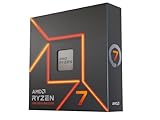
| CPU class | Typical physical cores | Typical logical threads | Best fit | Trade-off |
|---|---|---|---|---|
| Entry-level mainstream | 4–6 | 8–12 | Everyday use, light gaming, tight budgets | Less room for demanding games plus background work |
| Midrange | 6–8 | 12–16 | Gaming, general productivity, multitasking | Heavy rendering may take longer than on higher-core models |
| Upper mainstream | 8–16 | 16–32 | Streaming, editing, compiling, frequent creation work | Higher cost and cooling demands; gains vary by application |
| High-end desktop | 16–64 or more | Varies by design | Well-parallelized professional workloads | Platform, motherboard, memory, and cooling can raise total system cost substantially |
How many cores do you actually need?
For gaming
For a gaming PC, a strong 6-core or 8-core processor is usually a better starting point than chasing a very high core count. Many games still depend heavily on a handful of fast cores, while newer titles can spread work across more cores. At high resolutions, the graphics card often becomes the limiting component, so paying extra for additional CPU cores may make little difference to frame rates.
If you play competitive games at high refresh rates, prioritize strong per-core performance and check results for the games you play. If you also stream or record, 8 cores give more headroom, though a separate GPU encoder can reduce the CPU burden.
For multitasking and productivity
Threads help when several tasks can run at once: for example, compiling code while using a browser, or exporting video while keeping other applications responsive. SMT can improve utilization by giving a physical core another thread to schedule when one thread is waiting. The gain is workload-dependent, and two threads on one core do not perform like two independent cores.
For video exports, 3D rendering, and large software builds, compare completion times in the software you use. If the task scales efficiently, extra cores can save time. If it relies on one main thread, a higher-core-count CPU may offer little advantage over a less expensive chip with stronger single-thread performance.
Platform checks before you buy
- Socket and motherboard: The CPU must match the motherboard socket, and the board’s chipset and BIOS must support that exact processor. A compatible socket alone is not always enough.
- Memory type: Some platforms support DDR4, others DDR5, and some motherboard families offer different memory options. Check the board specification before reusing RAM.
- Cooling and power: Higher-core CPUs can sustain heavier power draw under long workloads. Verify cooler compatibility and case clearance, and do not assume a basic cooler is sufficient for every model.
- Integrated graphics: Some processors include graphics for display output and basic troubleshooting; others require a discrete graphics card. Check the specific CPU rather than inferring from its brand or series.
- Upgrade path: Consider the cost of the full platform—CPU, board, memory, and cooling—not just the processor. An upgrade may also require a BIOS update.
Decision matrix: match the CPU to your situation
| Your situation | Good starting point | What to prioritize |
|---|---|---|
| Low budget; browsing, school, or office work | 4–6 cores | Platform value, adequate memory, and a CPU with graphics if you do not have a separate GPU |
| Gaming most of the time | 6–8 cores | Game-specific performance, graphics-card balance, and cooling |
| Gaming plus streaming or many open apps | 8 cores | Thread support, sustained performance, and whether your encoder uses the CPU or GPU |
| Regular editing, compiling, or rendering | 8–16 cores | Benchmarks in your application and the value of time saved |
| Professional work that scales across many cores | 16+ cores, if supported by the budget and platform | Measured workload gains and total system cost |
When extra cores are worth the money
Estimate how often a workload runs and how much a faster CPU would save. For example, if a processor upgrade saves 10 minutes on an export you run four times each week, that is about 34.7 hours saved over a year: 10 minutes × 4 × 52 ÷ 60. That benefit matters more to someone who exports routinely than to someone who renders a project once every few months. The calculation is only useful if the application actually scales with the added cores, so compare relevant benchmarks before spending more.
Also account for the rest of the system. A high-core-count CPU may need a stronger cooler or motherboard, and money spent there could sometimes improve gaming more if put toward a faster graphics card or a larger SSD.
Bottom line
For a balanced PC, start with a modern 6-core CPU; move to 8 cores if you game while multitasking or regularly create content. Choose 12–16 or more cores when a specific, frequent workload benefits from parallel processing and the platform cost makes sense. Check exact thread support, motherboard compatibility, memory type, cooling needs, and application benchmarks before choosing a model—the best CPU core count is the one your software and budget can use.