Best Affordable Angle Grinder for Home Metalworking
What's inside
As an Amazon Associate I earn from qualifying purchases. This post may contain affiliate links at no extra cost to you.
For home metalworking, a sensible first angle grinder is usually a corded 4½-inch model with a side handle, a guarded wheel, and a standard 5/8-inch-11 spindle. Basic corded grinders commonly cost less than cordless kits and have enough power for cutting mild-steel bar, cleaning welds, and removing rust. The best value is not the grinder with the most features; it is one that feels controllable and accepts common wheels you can replace locally.
As an Amazon Associate we earn from qualifying purchases at no extra cost to you.


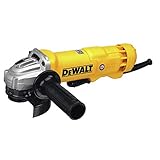

Choose 4½ inches for general work
A 4½-inch grinder is compact enough for brackets, bolts, angle iron, and small repair jobs. It typically runs a wheel at roughly 10,000 to 12,000 rpm. That speed makes it useful for cutting and grinding, but it also means a thin cut-off wheel can break if twisted or pinched. Keep the wheel straight in the cut and let the tool’s weight do the work rather than leaning hard on it.
A 5-inch grinder can take a larger wheel and may cut deeper, but its extra size and weight are less convenient for occasional work. Larger grinders are usually unnecessary for home projects unless you regularly work with thick stock. For a first purchase, compare corded 4½-inch angle grinders rather than paying more for a size you may rarely use.
What matters on a budget grinder
Look for a tool with a two-position side handle, a wheel guard that can be adjusted without removing it, and a spindle-lock button for changing wheels. A lower price is reasonable if the grinder has those basics and runs smoothly. A tool that vibrates heavily, has a loose-feeling switch, or makes grinding noises at no load is a poor bargain, even if the motor starts.
Variable speed is useful for some polishing and finishing accessories, but it is not essential for ordinary steel cutting and grinding. Likewise, a tool-free guard is convenient, not a substitute for a properly secured guard. Some inexpensive grinders use a slide switch that can be awkward to shut off quickly; others use a paddle switch that stops when released. Try the switch position and grip before buying if you can.
Budget grinder choices compared
| Type | Best fit | Value trade-off |
|---|---|---|
| Basic corded 4½-inch | Occasional cutting, weld cleanup, and rust removal | Lowest entry cost; cord limits reach |
| Better-equipped corded 4½-inch | Frequent home projects or longer work sessions | Costs more, but may offer better handling, switch design, or vibration control |
| 18V cordless 4½-inch bare tool | Work away from outlets, especially if you own matching batteries | Convenient, but batteries and charger can make a new kit much more expensive |
| 5-inch grinder | Occasional need for a deeper cut | More reach per pass, with added bulk and larger accessories |
For most first-time buyers, the basic corded option is the value pick. If you already own batteries from a tool platform, a matching 18V cordless bare tool can make sense. Do the arithmetic on the full kit: a grinder sold without a battery is not a low-cost choice if you also need a battery and charger.
Budget for the right wheels
Cheap grinders often arrive with few useful accessories, so account for consumables before comparing prices. A thin 4½-inch cut-off wheel can slice mild steel quickly but is not meant for side grinding. Use a grinding wheel or flap disc to shape and smooth; using the face of a cut-off wheel can cause it to shatter. Check each wheel’s maximum rpm against the grinder’s rated speed, and reject wheels that are cracked, damp, or past their marked expiry date.
For general home use, buy a small assortment of reputable cut-off wheels and one flap disc rather than a large bulk pack of unknown quality. A flap disc is usually easier to control for blending a weld, while a grinding wheel removes material faster but leaves a rougher finish. Neither replaces a proper sanding or finishing process when appearance matters.
Avoid the common failure modes
Clamp the work securely, fit the guard, and wear safety glasses plus a face shield, hearing protection, and suitable gloves. Keep sparks away from fuel, sawdust, cardboard, and other combustibles. Position yourself so a caught wheel is less likely to pull the grinder into your body. Unplug a corded tool before changing wheels; remove the battery from a cordless one.
Do not force the cut. If the motor slows sharply, the wheel may be binding, the material may be too thick for a comfortable pass, or the disc may be worn. Release the trigger, let the wheel stop, and reposition the work. Pinching a cut-off wheel is a common cause of breakage. Also inspect the cord and plug regularly: damaged insulation near the tool’s strain relief is a reason to stop using it, not tape over it.
When to pay more—and when not to
Pay extra for cordless convenience if your work is outdoors, up a ladder, or far from power. For repeated long sessions, better vibration control and a more comfortable grip can matter more than a small difference in motor wattage. A modest corded grinder is fine for a few short cuts or weld-cleanup jobs each month, provided it feels stable and has a sound guard and switch.
Watch for seasonal promotions around major holiday sales, but compare the tool’s price with its normal price and the cost of any required battery. Bundles are good value only when you will use the included accessories. If the discounted grinder has a proprietary spindle or takes uncommon wheels, the lower checkout price can turn into higher running costs. For a straightforward home setup, start with a standard 4½-inch grinder with a guard and side handle, then spend the remaining budget on suitable wheels and protective gear.