Best Affordable Tool Bag for Home Repair Supplies
What's inside
As an Amazon Associate I earn from qualifying purchases. This post may contain affiliate links at no extra cost to you.
A good home-repair tool bag does not need to be large, rigid, or expensive. For most apartments and houses, the useful range is a soft-sided bag between 12 and 18 inches wide, with enough structure to stay open and enough pockets to keep screwdrivers, pliers, and fasteners from becoming one heavy pile.
The best value is usually a mid-priced open-top tote rather than the cheapest pouch or a professional rolling bag. Expect to spend about $20 to $45 for a practical household bag. Below that, zippers, stitching, and handles are more likely to fail. Above $60, you are often paying for specialized storage, heavy-duty fabric, or a brand system that a casual homeowner may not need.
As an Amazon Associate we earn from qualifying purchases at no extra cost to you.



What Size Tool Bag Do You Need?
Start with the tools you already own, not the bag’s advertised capacity. A basic home-repair load generally includes a hammer, adjustable wrench, two pliers, several screwdrivers, a tape measure, utility knife, level, hex keys, flashlight, and a small selection of screws and anchors. That kit fits comfortably in a 12- to 14-inch open tote.
Choose a 16- to 18-inch bag if you also carry a drill, charger, electrical tester, caulk gun, or plumbing tools. A larger bag is useful for moving supplies to a repair site, but it becomes awkward when filled with metal tools. A 20-pound load is tiring to carry and can pull stitching loose on inexpensive bags.
For a compact starter setup, compare current prices on small open-top tool bags. Avoid buying a deep bag just because it has a high pocket count. Deep compartments hide tools and make it harder to see what is missing.
Features That Matter More Than Brand Names
An open top is the most useful feature for household repairs. You can drop in a drill or grab a screwdriver without opening a zipper. A zippered lid is better for transport in a vehicle, but it slows down repeated access and can fail if the bag is overstuffed.
A rigid or semi-rigid base keeps the bag upright on a floor or ladder. It also prevents wet grass, garage dust, and small spills from immediately reaching the tools. Molded plastic bases offer the best protection, while stitched fabric bottoms cost less but can soak through.
Exterior pockets should hold the items you use most. Look for at least six pockets, including narrow slots for drivers and a wider pocket for a tape measure. More pockets are not automatically better. Very shallow pockets let tools fall out; narrow pockets may not accept tools with wide rubber handles.
Handle construction is a common failure point. Prefer handles that wrap underneath the bag or extend several inches down the sides. Handles sewn only into the top edge place too much stress on one seam. A padded shoulder strap is helpful for a full bag, but it is not essential for a small household kit.
Best Value Bag Types Compared
| Bag type | Typical price | Best for | Main drawback |
|---|---|---|---|
| Basic fabric tote | $15–$25 | Light household tools and occasional repairs | Weak base and stitching on the cheapest versions |
| Open-top contractor tote | $25–$45 | Most homeowners; larger mixed tool kits | Can become heavy and cluttered when overfilled |
| Tool backpack | $35–$80 | Stairs, commuting, or carrying tools hands-free | Tools are harder to see and reach |
| Rolling tool bag | $60–$130 | Large collections or long walks between work areas | Bulky and unnecessary for small repairs |
For most home use, the open-top contractor tote offers the best balance. A $20 basic tote is fine if it will stay in a dry closet and carry fewer than 10 pounds. Spend more when the bag will live in a garage, travel outside, or carry sharp and heavy tools every week.
How Budget Brands Compare
Store brands and discount-tool brands can be good values in the $15 to $30 range. Their fabric may be thinner, but that does not matter much for occasional screwdriver, wrench, and tape-measure work. The usual failure is not the fabric itself; it is a handle seam or a base that collapses after repeated loading.
Established tool brands often charge $30 to $60 for a similar tote. You are more likely to get reinforced handles, better zippers, a firmer opening, and a warranty. That premium makes sense for tradespeople or homeowners who use the bag weekly. It is harder to justify if the bag will hold a hammer and a few screwdrivers four times a year.
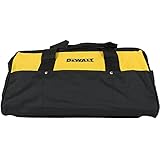
Consider a heavy-duty open-top tool tote when you need a reinforced base or expect to carry a drill and batteries. For a lighter kit, a simple budget canvas tool bag with pockets is usually sufficient.
Common Buying Mistakes
The first mistake is choosing by pocket count. A bag with 30 tiny pockets can be less useful than one with 10 properly sized pockets. Check the pocket width against your actual tools, especially pliers with thick handles and modern screwdrivers with oversized grips.
The second is ignoring weight. An empty 5-pound bag can turn a small repair kit into a nuisance. A bag weighing 1.5 to 3 pounds is generally enough for home repairs. If you need more capacity, divide tools between two lighter bags instead of carrying one overloaded container.
The third is using a soft bag for parts storage. Loose nails, anchors, and screws migrate into the bottom and can damage small tools. Use a small latching organizer inside the tote, or choose a bag with a dedicated hard compartment. A basic small parts organizer case often costs $8 to $15 and prevents a lot of searching.
When to Buy for the Best Price
Tool bags are commonly discounted during spring home-improvement sales, Father’s Day promotions, Black Friday, and the weeks around Christmas. Discounts of 15% to 30% are realistic, but compare the sale price with the bag’s normal price rather than trusting a large “percent off” label.
Prices also drop when a brand refreshes packaging or changes a color. A previous version is usually fine if the dimensions, base, and handle construction match your needs. For a basic home-repair kit, buy the bag that has durable handles, a useful opening, and a stable base—not the one with the most logos or pockets.