Best Budget Plumbing Tool Kit for Common Household Repairs
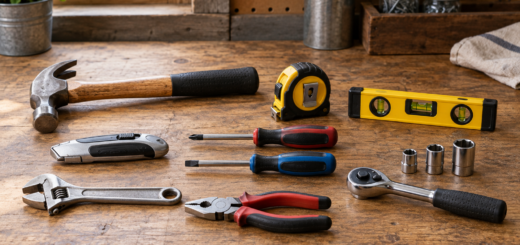
What's inside
As an Amazon Associate I earn from qualifying purchases. This post may contain affiliate links at no extra cost to you.
What You Actually Need in a Budget Plumbing Kit
Most household plumbing repairs do not require a professional tool chest. A leaking supply line, slow sink drain, loose faucet nut, or running toilet can usually be handled with a small set of hand tools. The goal is not to buy every plumbing tool; it is to cover the fittings and fasteners found under a typical kitchen or bathroom sink.
A practical starter kit should include an adjustable wrench, tongue-and-groove pliers, a basin wrench, a drain tool, a compact hacksaw or tubing cutter, screwdrivers, a flashlight, and a small bucket. Add thread-sealing tape, replacement washers, and a few common supply-line sizes. Expect to spend roughly $45 to $90 for a useful budget setup, depending on whether you buy individual tools or a kit.
As an Amazon Associate we earn from qualifying purchases at no extra cost to you.


For a basic set, compare budget plumbing hand tool kits, but check the contents carefully. Some inexpensive kits contain several low-value screwdrivers while omitting the basin wrench that makes faucet work much easier.
Best Tool Combination for Common Repairs
| Tool | Useful for | Budget price | What to watch for |
|---|---|---|---|
| 10-inch adjustable wrench | Supply lines, compression nuts, shutoff valves | $10–$20 | Loose jaws can round brass nuts |
| 10- or 12-inch tongue-and-groove pliers | Slip nuts, traps, large fittings | $12–$25 | Thin teeth and weak pivots slip under load |
| Basin wrench | Faucet mounting nuts in tight spaces | $15–$30 | Very cheap heads may flex or lose grip |
| Drain auger or sink snake | Hair and soft clogs near the drain | $8–$25 | Short cables cannot reach deep blockages |
| Compact hacksaw or tubing cutter | Removing corroded bolts and cutting plastic pipe | $8–$20 | Blades dull quickly on metal |
| Bucket, flashlight, and towels | Containing leaks and seeing under cabinets | $5–$20 | Do not skip these basic items |
Where Cheap Tools Are Fine
An inexpensive adjustable wrench is usually fine for occasional work, provided the jaws close evenly and do not wobble. The same is true for screwdrivers, a plastic drain snake, and a small hacksaw. These tools see limited use in most homes, so paying $25 for a premium version may not produce a noticeable benefit.
Cheap tongue-and-groove pliers are more variable. They may work for loosening a plastic sink trap, but poor teeth can slip on a corroded metal fitting. A slipping tool damages the fitting and your knuckles at the same time. A mid-priced pair from a recognized hand-tool brand is a better value than a large no-name assortment.
Look for forged steel jaws, a smooth pivot, and a grip that does not flex when you squeeze it. Avoid kits that claim to include 20 or 30 pieces when most of those pieces are small bits or duplicate drivers. For a homeowner, three strong tools are worth more than a crowded case of weak ones.
The Two Specialty Tools Worth Buying
A basin wrench is the most commonly overlooked tool in a budget plumbing kit. It reaches the faucet mounting nuts that sit behind the sink, where an adjustable wrench often cannot turn. A cheap basin wrench can work, but the locking head should hold its position when the handle is rotated. If the head flips unexpectedly, it is difficult to apply force in the narrow space.
Buy a basin wrench before replacing a faucet, not after you are stuck under the cabinet. For one faucet replacement, a $15 to $25 tool is usually sufficient. Professional-grade versions make more sense for frequent use or heavily corroded fasteners.
For slow bathroom sinks, a small hand auger is often more useful than chemical drain cleaner. A 15- to 25-foot cable handles many clogs near the trap or branch drain. A 3-foot plastic hair-removal tool is cheaper and works well when the blockage is just below the stopper. Neither tool will reliably clear a collapsed pipe, a root intrusion, or a clog deep in the main line.
Brand Value Versus Generic Kits
Brand matters most on tools that take high force: pliers, wrenches, and cutters. Established brands generally provide better jaw alignment, harder teeth, and more consistent handles. You do not need the top professional line, but a recognizable midrange tool can last decades in household use.
Generic kits have one advantage: they lower the cost of getting started. They are reasonable when the kit includes an adjustable wrench, tongue-and-groove pliers, screwdrivers, a tape measure, and a drain tool for less than the cost of buying those items individually. Inspect reviews for complaints about rounded jaws, cracked handles, and missing sizes.
Do not use adjustable pliers on decorative chrome nuts unless you protect the finish with a thick cloth. Even good pliers can leave marks. For compression fittings, use two wrenches: one holds the valve body while the other turns the nut. Twisting the valve can loosen the connection inside the wall and create a more serious leak.
Small Consumables Prevent Bigger Problems
Keep plumber’s tape, a roll of paper towels, replacement faucet washers, spare toilet flapper hardware, and a few 3/8-inch compression supply lines on hand. Many modern faucets use 3/8-inch compression connections, but verify the size and length before buying. A 20-inch line cannot replace a 12-inch line neatly if the cabinet is cramped.
Use thread-sealing tape only on tapered pipe threads. Do not wrap it around compression threads; the rubber ferrule makes that seal. Wrap tape clockwise when looking at the pipe end, usually three to five turns. Too much tape can prevent fittings from tightening fully.
Before removing anything, close the shutoff valve and test it. If the valve will not stop the water, shut off the home’s main supply instead. Open the faucet to release pressure, put a bucket under the connection, and photograph the existing arrangement. Stop if a fitting begins twisting the pipe in the wall, if a shutoff valve leaks from its stem, or if you find black, brittle, or visibly damaged supply tubing.
Seasonal Buying Advice
Plumbing tools are commonly discounted during spring home-improvement promotions, Father’s Day sales, and November holiday events. Starter kits often receive deeper discounts than individual tools, but compare the kit contents before buying. A 20% discount on an unnecessary assortment is not a saving.
Buy specialty tools when you have a planned repair and buy consumables before winter. Frozen pipes and holiday guest use create the most inconvenient emergencies, while stores may have limited stock of shutoff valves, supply lines, and drain tools. For most households, a $60 to $80 targeted kit is a better value than a $150 all-in-one case with tools you will never use.