Best Budget Tools for a Basic Home Emergency Repair Kit
What's inside
As an Amazon Associate I earn from qualifying purchases. This post may contain affiliate links at no extra cost to you.
A basic home emergency repair kit does not need to cover every trade. It needs to handle the jobs that stop daily life: tightening loose hardware, shutting off water, hanging a temporary fix, cutting damaged material, and making safe electrical or plumbing repairs until a professional arrives. A sensible budget is about $75 to $150, depending on whether you already own a drill and flashlight.
Spend money on tools that must grip, cut, or measure accurately. Save money on duplicate screwdrivers, oversized sets, and specialized tools you may use once. For most homes, a compact hand-tool kit is more useful than a cheap 100-piece case filled with drivers and bits you will never use.
As an Amazon Associate we earn from qualifying purchases at no extra cost to you.


Core hand tools worth buying first
Start with a 16- or 20-ounce claw hammer. A smooth face is less likely to damage trim than a heavily textured framing hammer. A fiberglass handle is usually the best budget choice: it costs less than a premium wood handle and will not split if stored in a damp garage. Look for a hammer with a straight claw if you expect to pull nails or pry small pieces of wood.
Add a 25-foot tape measure with a readable blade, a strong hook, and a lock that holds without slipping. A basic model is fine for home repairs. The main failure mode is a bent or loose hook, which can put measurements off by 1/16 inch or more. That matters when cutting shelves or replacement trim.
For gripping and cutting, buy tongue-and-groove pliers around 10 inches long, slip-joint pliers, and diagonal cutters. Tongue-and-groove pliers handle supply-line nuts and awkward plumbing fittings; slip-joint pliers are better for general work. Do not use pliers on finished chrome fittings unless you protect the surface with a cloth. For many households, this 10-inch tongue-and-groove pliers category is more valuable than a large wrench collection.
A pair of adjustable wrenches, preferably 8 and 10 inches, covers most household nuts. Cheap jaws can loosen under load and round fittings. If the jaws visibly rock when closed, replace the wrench rather than forcing it. A 12-inch wrench is stronger but cumbersome under sinks and behind appliances.
Screwdrivers, bits, and fasteners
Buy one sturdy multi-bit screwdriver instead of six very cheap fixed drivers. It should include Phillips #1 and #2, slotted bits, Torx bits, and nut-driver sizes commonly found on appliances. A magnetic tip helps with cabinet hardware and electrical-box screws. If you already own a cordless drill, a household impact-driver bit set is useful, but avoid using impact bits as a substitute for a proper screwdriver when working on small screws.
Keep a small organizer of assorted wood screws, machine screws, washers, nuts, and wall anchors. Universal plastic anchors are acceptable for light picture frames, but they are not suitable for cabinets, shelves, or anything above a bed. A 50- to 100-piece fastener assortment is usually cheaper than buying individual packs during an emergency, though the included screws may be low quality. Replace stripped or rusty pieces rather than reusing them.
Budget kit comparison
| Tool or supply | Budget target | Where cheap is fine | Where to spend more |
|---|---|---|---|
| Hammer | $12–$25 | General picture hanging and small nails | Frequent prying or heavy demolition |
| Adjustable wrench pair | $15–$30 | Occasional household plumbing | Better jaw fit and smoother adjustment |
| Multi-bit screwdriver | $10–$25 | Cabinet, appliance, and hardware repairs | Frequent use or high-torque fasteners |
| Utility knife | $8–$18 | Cardboard, caulk, carpet, and packaging | Safer blade storage and one-hand adjustment |
| Flashlight or headlamp | $10–$30 | Basic inspection and power outages | Hands-free work and longer runtime |
| Digital multimeter | $15–$35 | Battery and simple low-voltage checks | Electrical troubleshooting where accuracy and safety matter |
Cutting, measuring, and seeing the problem
A retractable utility knife with replaceable blades handles opened packages, split caulk, carpet, plastic sheeting, and drywall paper. Retract the blade before putting it down; many inexpensive knives fail because the slider is loose. Add a small handsaw or hacksaw. A hacksaw is more versatile in an emergency because it can cut metal, plastic pipe, bolts, and threaded rod, although it is slower on wood.
Buy a 9-inch torpedo level for hanging shelves and checking appliances. A cheap level is fine if the vials are firmly seated. Check it before trusting it: place it on a surface, note the bubble, rotate it 180 degrees, and confirm the reading is the same. A five-gallon bucket is also useful as a tool carrier, water container, and temporary catch basin.
For outages and under-sink work, a headlamp is usually better than a handheld flashlight because it leaves both hands free. Choose one with a low setting for close work and a runtime of at least 4 to 6 hours. Keep spare batteries in the kit, not loose in a drawer where they can leak.
Small supplies that prevent bigger damage
Include PTFE thread-seal tape, a roll of quality duct tape, electrical tape, silicone or acrylic-latex caulk, a few hose clamps, zip ties, and nitrile-coated work gloves. Thread tape belongs on tapered pipe threads, not on compression fittings or flare connections. Over-tightening a plastic fitting can split it; hand-tighten, then add roughly one-half turn with pliers.
Add a water-shutoff key if your home has an exterior curb stop, and label the main water valve and electrical panel breakers. A basic non-contact voltage tester can identify an energized wire, but it is not proof that a circuit is safe. Test the tester on a known live source before and after checking a circuit. For a non-contact voltage tester with flashlight, spend a little more for a clear low-battery warning and a reliable power button.
Never open a pressurized refrigerant system, work on gas piping, or repair damaged service-panel wiring as a beginner. Shut off water before disconnecting plumbing, turn off the breaker before electrical work, and call a licensed professional when the repair involves fire risk, structural damage, sewage, or a leak that will not stop.
When to buy and what to skip
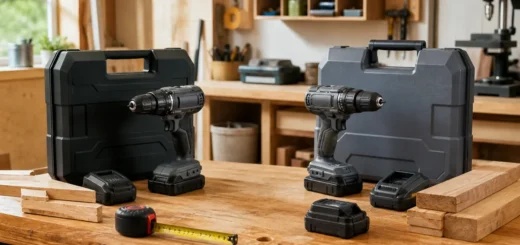
Spring hardware sales are a good time to buy pliers, levels, storage cases, and garden-related repair supplies. Cordless tool kits are often discounted around Father’s Day, July sales, and Black Friday. Buy a drill only if you will use it regularly; a cheap drill with a poor battery can cost more over time than a basic 12-volt kit from a reputable brand.
Compare warranty length, replacement battery prices, and whether the brand sells individual tools. For hand tools, a modest warranty and good jaw alignment matter more than a famous name. Skip giant kits with multiple duplicate pliers, tiny sockets, and decorative accessories. Build the kit around the failures your home actually has, then add specialized tools only after a repair proves you need them.