Best Budget Battery Tester for Cars and Small Equipment
What's inside
As an Amazon Associate I earn from qualifying purchases. This post may contain affiliate links at no extra cost to you.
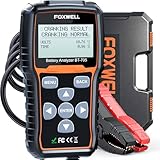
A good battery tester does not need to be expensive. For cars, lawn tractors, generators, motorcycles, and other small equipment, the best budget choice is usually a digital conductance tester that displays voltage, estimated cold-cranking performance, and battery condition. Expect to spend about $25 to $60 for a useful unit. A basic multimeter costs less, but it cannot judge battery capacity by itself.
As an Amazon Associate we earn from qualifying purchases at no extra cost to you.


Quick picks by job
| Tester type | Typical price | Best use | Main limitation |
|---|---|---|---|
| Digital conductance tester | $25–$60 | Routine car and equipment battery checks | Results can be misleading on badly discharged or unusual batteries |
| 12-volt load tester | $20–$45 | Simple pass/fail testing on starting batteries | Draws heavy current and usually does not test charging systems |
| Digital multimeter | $10–$30 | Voltage, wiring, parasitic drain, and charging checks | Cannot measure battery capacity without additional testing |
| Professional battery analyzer | $80–$200+ | Frequent shop or fleet diagnosis | Overkill for occasional household repairs |
For most owners, a 12V and 24V automotive battery tester is the most useful all-around purchase. If you only need to determine whether a lawn tractor battery is dead, a cheap load tester or multimeter may be enough.
Best budget choice: a digital conductance tester
Conductance testers send a small signal through the battery and estimate its available starting power. You enter the battery’s rated CCA, usually printed on the label, then connect the tester to the posts. The display may report the measured CCA, battery voltage, internal resistance, and a result such as “good,” “recharge,” or “replace.”
This is safer and more convenient than a large carbon-pile tester. It does not put a severe load on the battery, so it works well for repeated checks on several vehicles. It can also test batteries that are not fully charged, although the result is more trustworthy after charging.
Look for a tester that supports the battery type you own: standard flooded lead-acid, AGM, and gel batteries are common choices. A tester that handles 6-volt batteries is helpful for garden tractors and older equipment. Dual-voltage 12/24-volt models are useful for commercial equipment, but they generally cost more and add no value if every battery in your garage is 12 volts.
When a cheaper tester is fine
A $10 to $20 digital multimeter is the better value if you are troubleshooting more than batteries. With the engine off and the battery rested for several hours, a healthy, fully charged 12-volt lead-acid battery should measure about 12.6 to 12.8 volts. Around 12.4 volts indicates roughly 75 percent charge, while 12.2 volts is about half charged. Below 12.0 volts is significantly discharged.
Voltage alone does not prove that a battery is good. A weak battery can show 12.6 volts immediately after charging and still collapse during cranking. Use the multimeter while someone starts the engine: a drop below about 9.6 volts at approximately 70 degrees Fahrenheit is a warning sign. Temperature matters; cold batteries produce less power, and a borderline battery may fail in winter even when it passes a warm-weather test.
A multimeter is also the right tool for checking alternator output. With the engine running, many vehicles should show approximately 13.7 to 14.7 volts at the battery, though vehicle specifications vary. A battery tester cannot replace that check.
The trade-off with inexpensive load testers
A traditional load tester applies a heavy electrical load, commonly equal to about half the battery’s CCA rating, for 15 seconds. A fully charged battery should remain near or above 9.6 volts at room temperature. These testers give a direct, understandable result and can be excellent values at $20 to $45.
The drawbacks are important. Load testers get hot, their clamps and internal resistors wear out, and they are intended mainly for conventional 12-volt starting batteries. Do not use one casually on small lithium batteries, deep-cycle batteries, or a battery that is visibly cracked, leaking, frozen, or swollen. A frozen battery can be damaged or become dangerous when loaded.
A load tester also cannot tell you why a battery failed. It will not identify a parasitic drain, poor alternator, loose ground, or corroded cable. For that reason, a multimeter plus an inexpensive conductance tester is often more useful than a load tester alone.
Brand value and what to inspect
At the budget end, generic conductance testers often use similar basic electronics. The differences are usually clamp quality, screen readability, instructions, warranty, and consistency rather than dramatic testing technology. A no-name unit can be acceptable for one or two household vehicles, especially if it costs under $30 and has clear support for the battery chemistry you use.
Brands such as Schumacher, Clore Automotive, and Innova generally charge more, but their automotive tools tend to have clearer manuals, better leads, and easier-to-find replacement information. That premium is easier to justify if you test batteries for neighbors, maintain a fleet, or need a recordable result. For occasional lawn equipment maintenance, paying twice as much rarely makes the battery last longer.
Before buying, check that the tester has insulated clamps, reverse-polarity protection, an easy-to-read display, and a published operating range. Very cheap testers sometimes report a result even when the clamps are poorly connected. Clean the posts first and connect directly to the lead terminals, not rusty accessory hardware.
When to buy and how to avoid bad results
Battery testers are most useful before winter, not after the first freezing morning. Automotive battery promotions commonly appear in October and November, while lawn and garden equipment sales tend to bring discounts in late summer and fall. Buying during those periods lets you test an existing battery before spending money on a replacement.
Test after charging, then let the battery rest. If a conductance tester says “replace” on a battery below roughly 12.4 volts, charge it and test again before condemning it. A short drive may not restore a deeply discharged battery, and repeated testing will not fix sulfation or a failed cell.
For a single family car, buy a basic automotive digital multimeter if you also want to diagnose charging and wiring. For several 12-volt vehicles, choose a CCA battery conductance tester. Choose a load tester only when its simple pass/fail test and low price matter more than versatility.