Best Budget Electric Pressure Washer for Small Outdoor Jobs
What's inside
As an Amazon Associate I earn from qualifying purchases. This post may contain affiliate links at no extra cost to you.
What Makes a Good Budget Electric Pressure Washer?
For small outdoor jobs, the best budget electric pressure washer is usually a compact 1,300- to 1,800-PSI machine with a flow rate around 1.2 to 1.5 gallons per minute. That is enough for patio furniture, bicycles, trash cans, small decks, vinyl siding, outdoor steps, and light vehicle cleaning without paying for commercial power you will rarely use.
Pressure alone does not tell the whole story. A washer rated at 1,600 PSI and 1.2 GPM produces about 1,920 cleaning units, while a 2,000-PSI model flowing only 1.1 GPM may not feel dramatically stronger. Budget ratings are also usually maximum figures measured under ideal conditions. Expect less power at the spray tip and even less if you use a long, narrow garden hose or a restrictive water supply.
As an Amazon Associate we earn from qualifying purchases at no extra cost to you.

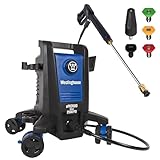
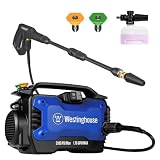

For most homeowners, a compact electric pressure washer around 1,600 PSI is the sensible starting point. Spend more only if you regularly clean larger driveways, heavily weathered concrete, or substantial fencing.
Specifications Worth Paying For
| Feature | Good budget target | Why it matters |
|---|---|---|
| Pressure | 1,300–1,800 PSI | Enough for light concrete, siding, furniture, and vehicles |
| Flow rate | 1.2–1.5 GPM | Moves dirt and rinses surfaces faster |
| Power cord | 25–35 feet | Reduces extension-cord hassle |
| Hose | 20–25 feet | Useful reach without constantly moving the machine |
| Spray tips | 15°, 25°, 40°, and soap | Provides both concentrated cleaning and safer rinsing |
| Weight | Under 25 pounds | Easier to carry around steps, decks, and vehicles |
Look for a universal quick-connect wand and standard hose fittings. Proprietary accessories are not an immediate problem, but they make replacement hoses, turbo nozzles, and surface cleaners more expensive later. A detachable detergent bottle is convenient, though onboard soap systems often dilute detergent heavily. For stubborn grime, applying a proper cleaner with a separate pump sprayer can work better.
Budget Picks by Job
For car washing and general household maintenance, choose a lightweight electric unit with adjustable or interchangeable nozzles. A 25° tip is a useful all-purpose setting, while a 40° tip is safer for painted surfaces and delicate furniture. Avoid using a 0° tip on siding, tires, wood, or painted metal. It can cut soft material, strip paint, or force water behind trim.
If your main job is a small concrete walkway or front step, prioritize flow rate and nozzle compatibility over the highest advertised PSI. A budget electric pressure washer with a surface-cleaner attachment can produce more even results than a bare wand. A surface cleaner also reduces the tiger-strip pattern that appears when the nozzle is held at inconsistent distances.
For occasional deck or fence cleaning, a compact machine is fine if you use a wide spray pattern and keep the nozzle moving. Wood is a common failure point for inexperienced users. Holding the wand too close can leave furred grain, visible stripes, and permanent gouges. Start 18 to 24 inches away with a 40° tip, then move closer only when necessary.
For vehicle cleaning, lower pressure is preferable. Use a wide fan, maintain several inches of distance, and do not aim directly at wheel-hub seals, window trim, badges, or damaged paint. An electric washer is useful for rinsing, but it does not replace hand washing if you want to remove traffic film safely.
Brand Value and Real Cost
The cheapest electric washers can be adequate for two or three uses per year. They become less attractive when replacement parts are unavailable, the hose connection leaks, or the pump will not restart after sitting over winter. Established tool and outdoor-power brands generally charge more, but they are more likely to offer replacement guns, hoses, nozzles, and warranty support.
Do not assume a familiar cordless-tool brand is automatically the best value. Cordless pressure washers are convenient where outlets are unavailable, but battery runtime and water supply limit them. They are often better for rinsing muddy equipment than for cleaning concrete. For stationary work near a house, corded electric power provides longer, steadier operation at a lower purchase price.
A corded electric pressure washer with standard quick-connect fittings is usually the safer long-term buy. Budget for replacement O-rings, a better garden hose washer, and possibly a longer high-pressure hose. A small leak at the inlet can starve the pump and cause pulsing; it is often a fitting problem rather than a failed washer.
Problems That Make Cheap Washers Seem Broken
Many electric pressure washers will not start if the trigger is not squeezed while the motor is switched on. Others pulse because air is trapped in the hose. Connect the water, turn on the tap, and squeeze the trigger for 30 to 60 seconds before starting the motor. This purges air and protects the pump from running dry.
Low pressure is commonly caused by a partly closed faucet, a kinked hose, a clogged inlet screen, or a blocked spray tip. Check these items before blaming the pump. Never run the washer without water, and do not leave it running with the trigger released for several minutes. The pump can recirculate hot water internally and suffer damage.
Extension cords require care. Use the shortest outdoor-rated cord practical, preferably 12 or 14 gauge for typical electric washers, and keep every connection off wet ground. A long, undersized cord can cause voltage drop, nuisance breaker trips, and poor motor performance. Do not use a lightweight indoor cord.
When to Buy and When to Upgrade
Pressure washers are often discounted in spring, around Memorial Day, and at the end of summer when retailers clear seasonal outdoor equipment. Fall can also bring good prices, but inspect the return policy and avoid buying a machine that has been stored in freezing conditions. Water left inside the pump can crack components when it freezes.
Buy the budget model when your work involves occasional cleaning, surfaces under roughly 500 square feet, and light-to-moderate dirt. Upgrade to a stronger electric unit when you clean large driveways repeatedly, need faster rinsing, or want to run a surface cleaner effectively. For heavy commercial-style work, an inexpensive electric washer is the wrong tool regardless of its advertised PSI.
Before storing any model, shut off the water, squeeze the trigger to relieve pressure, disconnect the hose, and drain the pump. In freezing weather, follow the manual’s storage procedure and use pump protectant if recommended. That simple maintenance often matters more to service life than paying an extra $50 at checkout.