Best Budget Cordless Pruner for Small Fruit Trees and Shrubs
What's inside
As an Amazon Associate I earn from qualifying purchases. This post may contain affiliate links at no extra cost to you.
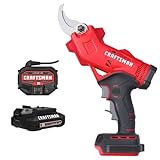
A budget cordless pruner makes sense for small fruit trees, grapevines, roses, and shrubs when hand shears are tiring but a full chainsaw is excessive. The best value is usually a compact electric bypass pruner with a replaceable or semi-replaceable battery, a safety lock, and enough capacity for branches around 1 inch thick. You do not need the most powerful tool for routine orchard cleanup, but buying the absolute cheapest model can create problems with cut quality, battery life, and replacement parts.
As an Amazon Associate we earn from qualifying purchases at no extra cost to you.


What to look for in a budget cordless pruner
Start with the cutting specification, but treat the advertised maximum as an upper limit rather than a normal working size. A pruner rated for 1 inch may cut a soft, straight branch at that diameter, while a dry, crooked, or hardwood branch may stall at 3/4 inch. For small fruit trees and shrubs, a practical target is 3/4 to 1 inch of cutting capacity.
Choose a bypass blade rather than anvil-style jaws for live wood. Bypass blades pass one sharpened blade against a fixed counterblade, leaving a cleaner cut that is less likely to crush stems. Anvil tools can be useful on dead wood, but they tend to pinch green branches and leave ragged wounds.
Weight matters more than a few extra millimeters of capacity. A tool weighing about 1.5 to 2.5 pounds with its battery is comfortable for repeated pruning. Heavier models become awkward above shoulder height, especially when you are reaching into a dense shrub. A narrow head is also valuable because it can reach between branches without removing more growth than intended.
Look for a battery indicator, a mechanical lock, and a trigger that requires a deliberate action before the blade closes. Two-handed activation is less convenient, but it reduces accidental cuts when carrying the tool or clearing branches. If the product uses a proprietary battery, check the cost of a replacement before buying. A cheap pruner is not cheap if a replacement battery costs nearly as much as the tool.
Budget options compared
| Type | Typical price range | Best use | Main compromise |
|---|---|---|---|
| Small integrated-battery pruner | $30–$60 | Light shrub work, roses, young fruit trees | Shorter runtime and limited battery replacement options |
| Compact kit with one removable battery | $50–$100 | Several small trees or a medium yard | Usually slower than professional tools |
| Tool-platform pruner, bare tool | $80–$150 plus battery | Frequent pruning and owners of matching batteries | Higher starting cost without an existing battery |
| Professional high-capacity pruner | $200 and up | Orchards, landscaping, daily use | Overkill for occasional household pruning |
For one or two small trees, an entry-level cordless electric pruning shear kit is often sufficient. These kits commonly include one battery and a charger, and many will handle hundreds of light cuts per charge. Runtime claims are difficult to compare because manufacturers may count partial trigger cycles rather than real pruning. Expect less if you are cutting thick hardwood, working in cold weather, or repeatedly opening the blade fully.
When the cheaper option is enough
The least expensive pruner is a reasonable choice if you prune fewer than 10 small trees per year, most branches are under 1/2 inch, and you can tolerate a slower cutting cycle. It is also useful for seasonal shrub trimming where the tool will spend most of the year in a drawer.
Do not automatically reject a model because it has a small battery. A 2.0Ah battery may be plenty for a homeowner who makes 100 to 300 cuts in a session. A compact battery also keeps the tool lighter. The bigger issue is whether it charges reliably and whether the battery remains available later.
Pay attention to the blade gap. Some inexpensive pruners advertise a wide opening but have difficulty closing cleanly on small branches. If the blade bends thin stems instead of slicing them, the tool is poorly suited to delicate fruit-tree pruning. A clean, progressive cut is more important than a dramatic maximum diameter in the specification sheet.
Brand value and battery platforms
A branded tool-platform pruner can be the better value when you already own compatible batteries. Buying a bare tool avoids paying for another charger and battery, and established platforms are more likely to offer replacement packs and blades. Search for a cordless pruning shear bare tool only after confirming the exact battery family; batteries from the same brand are not always interchangeable across voltage lines.
For a first purchase, compare the complete kit price rather than the tool price. A $70 pruner requiring a $60 battery is not a better bargain than a $90 kit that includes both. Also check the warranty period and parts availability. A replaceable blade is helpful, but a replacement blade that is difficult to source provides little practical value.
Generic tools can perform well for light work, but quality varies sharply between sellers. Common failure modes include a trigger that stops working after moisture exposure, a gearbox that strips when the blade is forced through hard wood, and batteries that lose most of their capacity after a season. Avoid using the pruner to twist branches sideways or cut nails, wire, and dead stakes. Those abuses damage inexpensive tools quickly.
When to buy and how to use it
Prices are often best during late fall, winter tool promotions, and major holiday sales, before spring pruning demand peaks. Spring is the most convenient buying season but can bring fewer kit discounts. Watch the complete kit price rather than a claimed percentage discount, and check whether the listing includes the battery, charger, blade cover, and carrying case.
Use the pruner on dry branches when possible. Hold the tool square to the branch, make a clean cut just outside the branch collar, and stop when resistance becomes excessive. For branches larger than the rated capacity, use a hand saw instead. Forcing the electric blade can stall the motor, overheat the battery, or leave a partially severed branch that tears bark.
For most homeowners, the best budget choice is a compact bypass pruner with a removable battery, a realistic 3/4-inch working capacity, and a total kit price under $100. If you already own batteries from a reliable tool platform, a battery-powered pruning shear compatible with your tool battery is usually the smarter purchase. Spend more only when you prune frequently, cut hardwood near the tool’s limit, or need dependable parts and batteries for several seasons.