Best Budget Sandpaper Assortment for Furniture Refinishing
What's inside
As an Amazon Associate I earn from qualifying purchases. This post may contain affiliate links at no extra cost to you.
Furniture refinishing does not require a large collection of premium abrasives, but it does require the right range of grits. A cheap assortment can be excellent value when it includes enough sheets, cuts cleanly, and does not shed grit after a few minutes. The wrong assortment leaves deep scratches, clogs quickly, or skips the grit needed to make a finish look even.
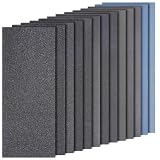
For most chairs, tables, dressers, and cabinets, a useful budget assortment runs from roughly 80 to 320 grit. You may use only three or four grits on one project, but having the intermediate steps prevents you from trying to remove 80-grit scratches with 220 grit alone. A practical starting point is this assorted aluminum oxide sandpaper pack with multiple sheets of the common grits.
As an Amazon Associate we earn from qualifying purchases at no extra cost to you.



What Grits You Actually Need
Use 80 or 100 grit only when you have a substantial removal job: thick paint, damaged finish, glue residue, or a rough repair. Coarser paper cuts quickly, but it can round edges and leave scratches that are difficult to remove from soft pine, poplar, or veneer.
Use 120 or 150 grit for general stripping and leveling. This is often the most useful range for a previously painted piece after the loose finish has been removed. It smooths without being as aggressive as 80 grit.
Use 180 or 220 grit before paint, stain, or clear finish. On bare wood, 180 grit is usually enough before applying stain. Many water-based finishes benefit from a final pass at 220 grit because it leaves a more uniform surface without polishing the wood excessively.
Use 320 grit between coats of finish, not usually for removing old paint. It knocks down dust nibs and minor roughness. Sand lightly by hand; pressing hard can cut through the new finish, especially on edges.
Best Budget Assortment Types
| Assortment type | Best use | Typical value | Main drawback |
|---|---|---|---|
| Basic aluminum oxide sheets | Hand sanding, paint removal, bare wood | Best for most furniture projects | Clogs faster on gummy finishes |
| Silicon carbide wet/dry sheets | Between finish coats and very fine smoothing | Good in small quantities | Usually costs more per sheet |
| Hook-and-loop discs | Random-orbit sanders and large flat panels | Fastest for tabletops and cabinet sides | Less economical for hand work and edges |
| Pre-cut sanding sponges | Profiles, moldings, and corners | Convenient for detail work | Wear quickly on broad surfaces |
For a first furniture project, standard aluminum oxide sheets are the safest budget choice. They are inexpensive, widely available, and suitable for wood, old paint, and primer. Look for packs containing at least 10 to 20 sheets, with several sheets each of 120, 180, and 220 grit. A pack advertised as “assorted” but containing only one sheet of each grit is poor value.
If you use a random-orbit sander, buy 5-inch hook-and-loop sanding discs instead of trying to hold full sheets against the pad. Discs remove material more evenly on large panels, but they cost more per usable sanding area. Keep sheets for edges, legs, trim, and hand sanding.
Brand Value and Sheet Quality
Brand matters less than the abrasive type and backing quality, but there are noticeable differences. Budget house-brand paper can be a good deal for rough work at 80 through 180 grit. It becomes less attractive when the backing tears at corners or the abrasive falls off before the wood is smooth.
Mid-priced name-brand aluminum oxide paper usually lasts longer per sheet and cuts more consistently. That matters when sanding a large tabletop: a paper that lasts twice as long may be cheaper even if the package price is 25 percent higher. Premium paper is most worthwhile for 180 grit and finer, where inconsistent abrasive grains can leave random scratches that show under stain or gloss finish.
Do not pay premium prices for a huge grit range you will not use. A 24-grit assortment containing everything from 40 to 2000 grit is often less useful than a 20-sheet pack concentrated between 100 and 320 grit. Very coarse grits are rarely necessary if you use a chemical stripper or a scraper first, and ultra-fine grits are unnecessary for most painted furniture.
How Much Paper to Buy
For a small nightstand, plan on roughly two sheets each of 120, 180, and 220 grit if sanding by hand. A six-drawer dresser may use 10 to 20 sheets, depending on the old finish and the amount of detail. A dining table can consume 10 or more discs when machine sanding, particularly if the finish is thick or gummy.
Replace paper when it stops cutting, not only when it looks worn. Dull abrasive makes you press harder, which creates uneven low spots and rounded edges. If the paper is loaded with white paint dust or sticky finish, brushing it off may help briefly, but a clogged sheet is usually finished. Sanding faster is not the same as sanding better.
Seasonal Buying and Storage
Sandpaper is rarely expensive enough for dramatic seasonal savings, but larger assortment packs often drop in price during spring workshop promotions, summer home-improvement sales, and November tool events. Compare the cost per sheet rather than the package discount. A 30-sheet pack at $12 is 40 cents per sheet; a 20-sheet pack at $7 is 35 cents per sheet and may be the better buy.
Buy before a project begins, especially if you need discs for a specific sander. Keep abrasive sheets flat in a sealed bag or drawer. Humidity can soften paper backing and curl the edges, while loose storage lets grit rub against other sheets. For occasional refinishing, a compact furniture sanding assortment with 120 to 320 grit is usually enough.
A Sensible Budget Setup
Start with aluminum oxide sheets in 120, 150, 180, 220, and 320 grit, plus a few 80-grit sheets for stubborn areas. Add 5-inch discs only if you own a random-orbit sander. For carved trim and rounded legs, include a couple of medium and fine sanding sponges; they conform better than folded paper and are less likely to dig into profiles.
The cheapest option is fine when you are sanding painted wood, working by hand, and willing to change sheets regularly. Spend more when the piece has veneer, a large flat surface, a glossy final finish, or a finish that will expose scratches. In those cases, consistent mid-priced paper is usually the best value because it reduces rework—the costliest part of furniture refinishing.