Best Value Portable Generator for Refrigerators During Short Outages
What's inside
As an Amazon Associate I earn from qualifying purchases. This post may contain affiliate links at no extra cost to you.
A refrigerator is an easy load for a portable generator—once the compressor starts. That startup surge is the reason a generator that appears large enough on paper can still trip its overload protection. For a short outage, the best value is usually a small gasoline inverter generator or a basic open-frame generator in the 2,000- to 3,500-watt range, rather than an oversized premium machine.
As an Amazon Associate we earn from qualifying purchases at no extra cost to you.


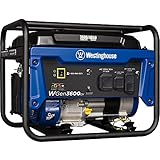
What size generator does a refrigerator need?
Most full-size refrigerators use roughly 100 to 400 running watts, but the compressor may briefly demand 800 to 1,500 watts when it starts. Older refrigerators, freezers, and units in a hot garage can require more. The rating plate or owner’s manual is the best source; a plug-in watt meter can measure running consumption, but it may not capture the highest startup surge.
For a refrigerator alone, a generator with at least 2,000 starting watts and 1,500 running watts is a sensible floor. If you also want a freezer, a few LED lights, a Wi-Fi router, a phone charger, or a gas furnace blower, move toward 3,000 starting watts and 2,000 running watts or more. Avoid sizing the generator to the refrigerator’s running watts only.
Do not connect a refrigerator and other appliances through a cheap power strip. Use a heavy-duty outdoor extension cord rated for the load, ideally 12-gauge for longer runs or combined loads. Keep the cord fully uncoiled and inspect its ends for heat or damage.
The best generator types for short outages
2,000-watt inverter generators are the best general value when the refrigerator is the main priority. They are comparatively quiet, produce clean power for modern electronics, and throttle down when the load is light. A 2,000-watt unit may be enough for one refrigerator, lights, and chargers, but it leaves little margin for a sump pump, microwave, or furnace blower.
A 3,000-watt inverter generator costs more and weighs more, but it is the safer choice if you want to run multiple refrigerator-related loads. It also reduces nuisance overload trips when the compressor and another appliance start close together.
Open-frame portable generators often deliver more watts per dollar. They make sense if price matters more than noise, the generator will run outdoors far from living areas, and you need enough capacity for a refrigerator plus tools or larger appliances. Their drawbacks are louder operation, higher fuel use at light loads, and usually less convenient portability.
| Generator type | Useful output range | Best use | Main trade-off |
|---|---|---|---|
| Small inverter | 1,500–2,000 running watts | One refrigerator, lights, chargers | Limited headroom for pumps and heating appliances |
| Mid-size inverter | 2,000–3,000 running watts | Refrigerator, freezer, router, lights, small appliances | Higher purchase price and weight |
| Open-frame portable | 2,500–4,000 running watts | Lowest cost per watt and larger mixed loads | Loud, less fuel-efficient, usually less refined |
| Battery power station | 1,000–2,000 watts typical | Quiet indoor backup for brief outages | Limited runtime and high cost for usable capacity |
When a battery power station is better
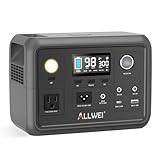
A battery power station is attractive when the outage usually lasts only a few hours and silence matters. It produces no exhaust at the point of use, starts instantly, and can be used indoors. However, the watt rating is only half the story. Check its watt-hours and surge rating.
A refrigerator averaging 100 watts might use about 800 watt-hours over eight hours, although actual consumption varies with room temperature and compressor cycling. A 1,000-watt-hour battery will not deliver all 1,000 watt-hours because of inverter and battery losses. A unit with a weak surge rating may shut down when the compressor starts even if its continuous watt rating looks adequate.
For repeated outages or overnight operation, gasoline usually provides more affordable energy. A battery is the cheaper option only when outages are short, usage is occasional, and the convenience of indoor operation is worth the higher upfront cost.
Features worth paying for
Prioritize an electric-start system only if the user has difficulty with recoil starting; it adds cost and requires keeping the starter battery charged. A fuel shutoff, overload reset, low-oil shutdown, and a clear runtime display are more broadly useful. CO shutoff protection is valuable, but it is not permission to run a generator in a garage, basement, porch, or near an open window.
Parallel capability can be useful if you might later pair two compatible inverter generators, but buying one larger generator is often cheaper than buying two small units plus a parallel kit. Wheels and a folding handle matter on heavier open-frame models. For a small inverter, low weight may be more useful than extra outlets.
Do not pay a premium solely for a “clean power” label if the only load is an older refrigerator. A conventional generator can run that motor safely when it is properly sized. Inverter output becomes more valuable when you are also powering computers, networking equipment, battery chargers, or sensitive control boards.
Safe refrigerator-generator connection
Place a gasoline generator outdoors at least 20 feet from the house, with the exhaust pointed away from doors, windows, and vents. Carbon monoxide can collect indoors even when a door is open. Keep the generator dry and never refuel it while hot or running.
The simplest setup is a properly rated outdoor extension cord from the generator directly to the refrigerator. Never backfeed a wall outlet with a male-to-male cord. If you want selected circuits powered through the home wiring, use a code-compliant transfer switch installed by a qualified electrician.
During an outage, avoid starting every load at once. Let the refrigerator run by itself first, then add lights or chargers. If the generator overloads when the compressor starts, unplug other loads and try again. Persistent trips mean the generator lacks startup capacity, the refrigerator has a mechanical problem, or the cord is undersized.
Seasonal buying advice
Buy before forecasted storms, not during them. Prices and inventory commonly worsen when a heat wave, hurricane, or winter storm is approaching. Late spring and early summer are good times to compare inverter models, while fall clearance can produce strong open-frame-generator deals after peak storm season.
Compare the advertised running watts, not just the largest headline number. Also check oil-change intervals, fuel tank size, warranty terms, replacement parts, and local service availability. The cheapest generator is fine for an occasional three-hour refrigerator outage if it has adequate surge capacity and you are willing to tolerate noise. For frequent outages, spending more on a quiet inverter, better fuel economy, and easier starting can cost less in frustration over its useful life.