Best Rotary Tool Under $100
Our Top Picks
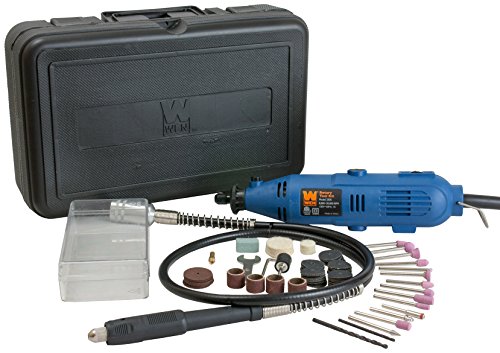
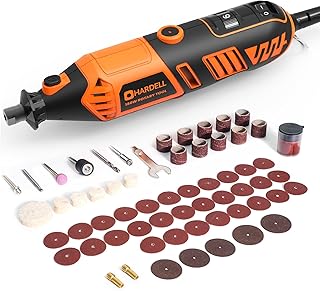
 HARDELL 12V Cordless Rotary Tool Kit 6-Speed 30000RPMLarge10 x 1.9 x 2.7 Inches1.1 PoundsCheck on Amazon



What's inside
As an Amazon Associate I earn from qualifying purchases. This post may contain affiliate links at no extra cost to you.
The rotary tool aisle is one of the most manipulated categories in power tools, because the tool itself is cheap and the accessories are where the margin lives. Finding the best rotary tool under 100 is less about picking a winner and more about not overpaying for a kit stuffed with sanding bands you will never use. A corded rotary tool with variable speed, a flex shaft, and thirty useful bits can land comfortably in the double digits during a real sale. The same tool with a bloated 200-piece accessory box and a nylon bag can be listed above three figures with a crossed-out “was” price that was never the going rate.
Two things drive real value here: speed control and runtime. Everything else is packaging. Below are the price bands as they actually behave over a year, the specific tricks to watch, and where the sweet spot sits if you want a tool that still works in five years.
As an Amazon Associate we earn from qualifying purchases at no extra cost to you.



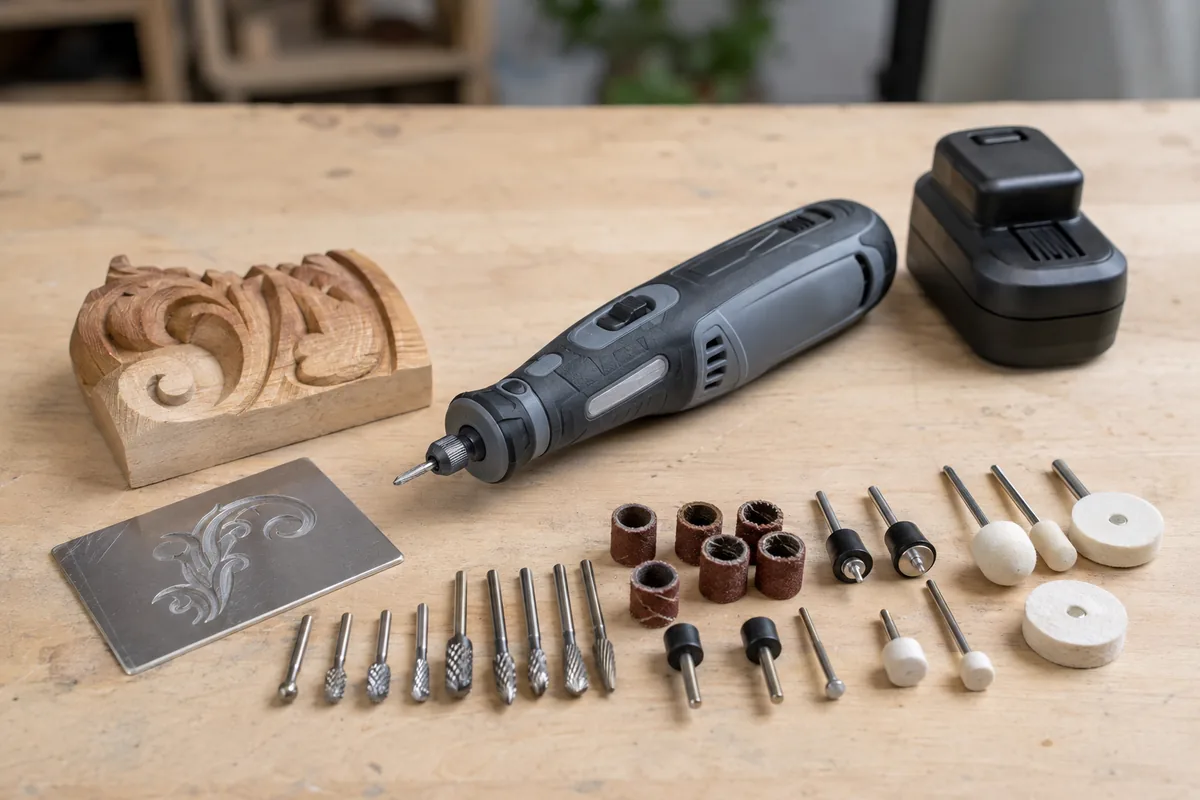
Price bands: what your money actually buys
Rotary tools cluster into fairly predictable tiers. Knowing which tier you are shopping stops you from paying tier-three money for tier-one hardware.
| Price band | What you typically get | Who it suits |
|---|---|---|
| Under $30 | Single-speed or two-speed corded, generic accessories, plastic collet nut, short warranty | Occasional light sanding, one-off craft jobs |
| $30-$60 | Variable-speed corded from a name brand, metal collet, decent bit assortment, flex shaft sometimes included | Most DIY users, best value in the category |
| $60-$100 | Cordless 4V/8V or 12V class, or a corded kit with router base, cutting guide, and a real case | Regular hobby use, detail work away from an outlet |
| Over $100 | Pro-grade corded, brushless cordless, or a padded mega-kit | Daily users, or buyers who did not check the band below |
The uncomfortable truth is that the $30-$60 band solves most jobs. Once you cross $60, you are usually buying either untethered convenience or attachments, and attachments are frequently cheaper bought separately later.
How to spot a fake discount before you click buy
Rotary tool listings lean hard on two tricks, and both are easy to defeat once you know the pattern.
The inflated “was” price. A crossed-out list price on a rotary kit is frequently a manufacturer’s suggested figure the tool has never actually sold at. If a kit shows a big percentage off but the discounted number matches what the tool has hovered at for months, that is not a deal, it is the shelf price with decoration. Check the price history with a browser tracker extension or simply watch the listing for a week. Genuine sales in this category tend to run 20 to 40 percent below the trailing average and they cluster around Prime Day, Black Friday, and post-holiday clearance in January.
The battery downgrade. This is the sharper one. Cordless rotary tools in the sub-$100 range often ship with a small-capacity pack, and manufacturers quietly swap the included battery between kit revisions. A 12V-class kit that used to include a 2.0Ah pack may reappear at the same price with a 1.5Ah pack, or with a compact pack that has fewer cells and lower sustained output. The tool number looks familiar, the box art looks familiar, the runtime is not. Read the bullet points for the actual amp-hour figure rather than trusting the photo, and be skeptical of any listing that describes the battery only as “lithium-ion” or “long lasting.” Same problem in reverse: a bare tool listed at a tempting price is a bad buy unless you already own packs from that platform.
A related pattern is the accessory-count arms race. A 100-piece kit and a 300-piece kit often contain the same eight useful items, with the difference being sanding bands and cutoff wheels that cost a few dollars per pack. Pay for the tool, not the count.
Corded variable-speed rotary tool kits
This is where the real deals live. A corded variable-speed unit from an established line, ideally with a metal collet nut and a stated RPM range starting near 5,000, covers engraving, deburring, sharpening, and light grinding without any runtime anxiety. Look for kits in the $30-$60 band and ignore the piece count on the box.
The specs that matter, and the ones that do not
Variable speed range. The single most important spec. A tool that only runs near its top speed will burn wood, melt plastic, and chatter on metal. A range that starts around 5,000 RPM and tops out in the 30,000-35,000 range covers essentially every hobby task. Anything advertising only a maximum RPM with no low end is a red flag.
Collet versus keyless chuck. Collets are more accurate and hold better, but you swap them for different shank sizes. A keyless chuck is faster and more forgiving of odd shanks, at the cost of a little runout. For most users under $100, a keyless chuck is a genuine convenience. Metal collet nuts beat plastic every time.
Amps or volts. Corded units in this class typically sit in the 1 to 2 amp range, and the difference is less meaningful than the speed control. On cordless, the 12V class holds speed under load noticeably better than 4V and 8V pencil-style tools, which are excellent for nail work and light craft but bog down on metal.
Flex shaft compatibility. Cheap and transformative. A flex shaft turns a bulky tool into something you can hold like a pen, which matters enormously for carving and detail sanding. If it is not included, check the tool has a threaded nose cap that accepts one.
What does not matter: the bag, the LED work light, the piece count, and any marketing language about “industrial grade” on a tool this size.
Compact cordless rotary tools
Cordless makes sense if you work on a ladder, in a car, or on projects away from an outlet. Verify the included pack’s amp-hour rating in the listing text, not the image, and check whether the battery fits a platform you already own. A bare tool plus an existing battery is often the cheapest honest path into this band.
Best rotary tool under 100: how to pick your band
If you already own 12V or 18V/20V batteries from a major line, look for a bare cordless rotary tool or a compatible unit first. That single decision can drop your out-the-door cost by a third or more versus buying a kit with a redundant charger.
If you have no battery platform and you work near an outlet, buy corded and spend the savings on quality accessories: real carbide burrs, decent cutoff wheels, and a diamond point or two. Generic accessory sets wear out fast and wobble, which is the actual source of most “this tool is inaccurate” complaints.
If you need both, the disciplined move is a corded variable-speed kit in the $30-$60 band now, then a bare cordless pencil-style tool later when it dips. Two tools for less than one padded mega-kit.
- ✔ Variable speed from roughly 5,000 RPM up is the whole ballgame
- ✔ Corded units in the $30-$60 band handle the vast majority of DIY tasks
- ✔ Flex shaft transforms control for carving and detail work
- ✔ Accessories bought separately outperform bundled generics
- ✘ Piece counts on kit boxes are marketing, not value
- ✘ Included battery capacity can change between kit revisions at the same price
- ✘ Crossed-out list prices in this category are frequently meaningless
- ✘ Bare tools are only a deal if you already own compatible packs
When to wait and when to buy
Buy now if the listing sits 25 percent or more below its own trailing average, the battery capacity is clearly stated, and the kit includes a flex shaft or a genuinely useful attachment like a cutting guide or router base.
Wait if the only evidence of a discount is a struck-through list price, if the accessory count is doing the heavy lifting in the title, or if you are within a few weeks of a major sale event. Rotary tools are perennial promotional items. They go on sale repeatedly, and the tool you want will almost certainly discount again within a quarter.
Skip entirely the single-speed sub-$20 units unless you have a genuinely disposable one-off task. The lack of speed control will cost you materials, and the bearings tend to develop play quickly under any real load.
Rotary tool accessory kits and carbide burrs
Buying the tool lean and the accessories well is the smarter split. Carbide burrs cut faster and last far longer than the aluminum oxide points bundled in mega-kits, and a decent diamond set handles glass, tile, and sharpening. Budget $15-$30 here and the same tool feels like a tier upgrade.
Frequently asked questions
Are cheap rotary tools compatible with brand-name accessories? Mostly yes, as long as the shank size matches. The common hobby shank is 1/8 inch, with 3/32 and 1/16 collets available for finer bits. Check whether the tool accepts standard collets or uses a keyless chuck, then buy accessories by shank diameter rather than by brand.
Is cordless worth it under $100? Only if you actually need the mobility or already own the batteries. Below $100 the cordless money goes into the pack and charger, which means less tool for the same spend. If most of your work happens at a bench near an outlet, corded gives you more capability per dollar and no runtime ceiling.
When do rotary tools actually go on sale? They discount more often than most power tools because they are a popular gift item. The deepest cuts cluster around mid-summer sale events, Black Friday through Cyber Monday, and January clearance. Outside those windows, watch for retailer-specific promotions and compare against the listing’s own trailing price rather than the manufacturer’s list figure.
The short version
Set your target in the $30-$60 band for corded, verify the amp-hour rating if you go cordless, and treat any crossed-out list price as noise until you have seen the trailing average yourself. The variable-speed range and a flex shaft matter far more than a three-digit piece count. Spend what you save on carbide burrs and you will end up with a setup that outperforms kits selling for twice as much.
Check prices on Amazon →