Best Power Tools Under $100: Where Cheap Still Means Good
Our Top Picks
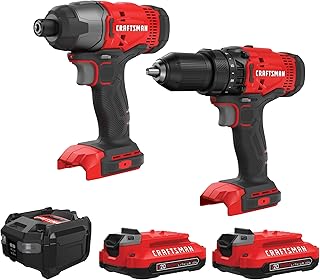
 Power Drill Cordless: DEKOPRO Cordless Drill 20V Electric20v drill2 x 2 x 2 inches2.5 poundsCheck on Amazon
 BLACK+DECKER 20V MAX* POWERCONNECT Cordless Drill Driver KitDrill Project Kit15.5 x 5.6 x 14.4 inches6.1 poundsCheck on Amazon
 KingTool 276-Piece Tool Set Kit with 12V Cordless276 Count (Pack of 1)16.4 x 13.1 x 6.57 Inches1.76 PoundsCheck on Amazon


What's inside
As an Amazon Associate I earn from qualifying purchases. This post may contain affiliate links at no extra cost to you.
Under $100 is a real budget and there is no shame in it. Plenty of good work comes out of shops that were built one cheap tool at a time. But value at this price is wildly uneven: some categories are genuinely well served, and others are places where a cheap tool costs you more in ruined material than you saved.
The dividing line is not brand loyalty and it is not luck. It is how much of a tool’s job depends on precision, and how much of the price buys engineering you can actually feel. A sander that vibrates a little more still sands. A miter saw with a fence that flexes half a degree ruins every joint it touches. Once you can tell which side of that line a category sits on, the shopping gets simple.
As an Amazon Associate we earn from qualifying purchases at no extra cost to you.



Here is the honest split.
| Category | Under $100? | Verdict |
|---|---|---|
| Random orbital sander | Yes | Cheap ones work fine |
| Jigsaw | Yes | Good value at $60–90 |
| Oscillating multi-tool | Yes | Corded models are a bargain |
| Brushed drill | Yes | Fine for light use |
| Circular saw | Borderline | Cheap ones flex and wander |
| Miter saw | No | Accuracy costs money |
| Impact wrench | No | Torque claims are fiction at this price |
| Rotary hammer | No | You will replace it |
Where sub-$100 genuinely works
These categories share one trait: the expensive versions are better, but not better in a way that decides whether your project succeeds.
Random orbital sanders. The mechanism is simple and mature. A $60 sander from a known brand does 90% of what a $180 one does. Spend the difference on better discs.
Weigh three things, in this order. First, a 5-inch hook-and-loop pad, because that is the size every store stocks and cheap consumables are the whole point of buying here. Second, vibration, which is what actually separates a good budget sander from a bad one — a tool that numbs your hand in ten minutes does not get used. Third, a dust port that fits a shop vac hose or ships with an adapter. Everything else is noise. Ignore orbit-per-minute headlines and treat a pad brake as a nice bonus rather than a dealbreaker.
Who should skip it: anyone sanding for hours at a stretch, or chasing a flawless finish on figured hardwood. That is where a premium sander’s balance and extraction earn the money. Everyone else, buy cheap and buy discs by the pack.
Random orbital sanders under $100
5-inch, hook-and-loop, dust port. This is the category where budget buying is genuinely smart.
Jigsaws. Blade quality matters more than the tool here. A decent corded jigsaw at $80 plus good blades will out-cut a premium saw with cheap blades.
The specs worth paying for: tool-free blade change, variable speed on a dial rather than only in the trigger, orbital action settings, and a base plate that does not flex when you lean into a cut. A bevel that needs a hex key is fine. A base that quietly shifts out of square is not. The bad budget jigsaws give away their blade under load, so the cut wanders even though the tool feels solid in your hand.
The common mistake is judging the saw by the blade in the box. Buy a T-shank set — fine-tooth for clean wood cuts, down-cut for veneered plywood and laminate, coarse for fast rough work — and most of the gap to a premium saw closes. Who should skip it: nobody at this budget, honestly. A jigsaw is the most forgiving cutting tool you can own.
Corded jigsaws under $100
Tool-free blade change, variable speed, orbital action. Add a quality blade set and you are done.
Oscillating multi-tools. Corded models are cheap and the tool is used in short bursts. Ideal budget category.
Look for a standard blade interface so you are not locked into one brand’s accessories, tool-free blade changes, and variable speed. Short bursts are also why corded makes sense here: the tool spends most of its life switched off, so the cord costs you nothing in convenience and saves you the price of a battery.
Oscillating multi-tools under $100
Undercutting, plunge cuts, grout removal. Buy blades separately — the included ones are usually poor.
Shop vacuums. Suction is suction. A $70 6-gallon unit is fine.
Judge it on hose diameter and consumables, not on peak horsepower claims, which are close to meaningless. A wide hose moves chips and water; a narrow one connects to tool dust ports. Check that filters and bags for that model are actually available on the shelf, because a vacuum you cannot re-filter is disposable.
The borderline calls
Brushed drills. Fine for light use, and the honest comparison at this budget is a brushed kit from a known brand with a battery and charger included, against a brushless bare tool that needs both. Take the kit. Want a two-speed gearbox, a keyless chuck, a working clutch, and a battery platform you intend to stay in — the platform decision outlives the drill.
Circular saws. Cheap ones flex and wander, and the flex is in the base plate and the blade, not the motor. A thin stamped base that twists under hand pressure will not hold a line freehand. Paired with a clamped straightedge, the same saw breaks down sheet goods perfectly well. So this one comes down to how you work: guided cuts, buy cheap; freehand accuracy, save up. Either way, replace the included blade.
Where cheap costs you more
Miter saws. A cheap miter saw with a flexing fence and a wobbly detent plate makes every trim cut slightly wrong, and you pay for it in filler and frustration. Save up. The error compounds too: a fraction of a degree off at each end of a piece of casing becomes a visible gap at the corner, and no amount of technique fixes a fence that will not stay put.
Impact wrenches. The torque figures on budget impact wrenches are marketing fiction. If you need to remove lug nuts, buy a real one. Peak numbers on a spec sheet are not the same as sustained breakaway torque on a rusted fastener, and the cheap tools fail exactly when you need them.
Rotary hammers. Concrete tools live or die on impact mechanism quality. Cheap ones fail early and drill slowly. If you have one wall to anchor into, rent instead of buying.
Table saws. This is a safety category as much as an accuracy one. Do not buy the cheapest. A fence that will not lock parallel to the blade is not just inconvenient, it is how kickback happens.
Mistakes that turn a bargain into a waste
- Buying a bare tool for a battery platform you do not already own — the battery and charger cost more than the tool.
- Judging the deal against the crossed-out price instead of what that tool normally sells for.
- Spending the entire budget on the tool and nothing on blades, discs and bits.
- Buying a multi-piece combo kit where half the tools are filler you will never charge a battery for.
- Choosing an unknown brand with no replacement pads, filters or brushes available anywhere.
- Buying cordless for a tool that never leaves the bench.
How to spend $100 well
- ✔ One good tool beats three bad ones
- ✔ Spend a third of the budget on consumables — blades, discs, bits
- ✔ Buy corded when the tool stays in one place
- ✔ Buy last-generation models when a new one launches
- ✔ Watch for open-box and refurbished from reputable sellers
If two options are close, take the one with cheaper, more available consumables. Over a year of use that decides the real cost, not the sticker.
Timing matters more than hunting
US tool prices swing hard around Black Friday, Cyber Monday, Father’s Day and Prime Day. On combo kits especially, the difference between a random Tuesday and Black Friday is often 30–40%. If the job can wait, the money is real.
The corollary is more useful: decide what you want before the window opens. Shoppers who pick a category and a spec list in advance buy well during a promo. Shoppers who start browsing when the banner goes up buy whatever is discounted.
FAQ
Are refurbished tools safe?
From manufacturer-authorised refurb programmes, yes, and they usually carry a warranty. From unknown sellers, no. Check who did the refurbishing and how long the cover runs before you compare the price to a new unit.
Are budget brands worth it?
For occasional use, often yes. For anything you use weekly, no. The tell is parts support: if you cannot buy a replacement pad, filter or set of brushes, you are buying a disposable tool, which is fine as long as you priced it that way.
Is corded still worth buying?
Absolutely, at this budget. Corded gives you far more tool per dollar, because you are not paying for a battery and charger inside a $100 ceiling. Reserve cordless for the tools that genuinely move around.
What if I need something from the “no” list right now?
Rent it, or buy a used tool from a real brand rather than a new one from a brand nobody stocks parts for. A one-day rental on a rotary hammer or a good miter saw beats owning a bad version of either.
See tools under $100 →