Best Cordless Drill for the Money: Value Ranked, Not Specs Ranked
Our Top Picks
 Power Drill Cordless: DEKOPRO Cordless Drill 20V Electric20v drill2 x 2 x 2 inches2.5 poundsCheck on Amazon
 COMOWARE 20V Cordless Drill & Bits Set w/Charger10L x 7W x 6H inches11 x 3 x 9 inches5.2 poundsCheck on Amazon
 BLACK+DECKER 20V MAX* POWERCONNECT Cordless Drill Driver KitDrill Project Kit15.5 x 5.6 x 14.4 inches6.1 poundsCheck on Amazon


What's inside
As an Amazon Associate I earn from qualifying purchases. This post may contain affiliate links at no extra cost to you.
Drill reviews usually rank by torque. That is a terrible way to spend money, because past a certain point extra torque buys you nothing you will ever use. Ranking by value instead produces a very different list. The best cordless drill for the money is rarely the tool at the top of a torque chart, and it is rarely the cheapest kit on the shelf either.
Torque leads every spec sheet because it is the easiest number to print, it always goes up, and nobody can disprove it in a store aisle. Watch what actually stops a drill in a home workshop instead. The clutch slips. The bit skates, burns or snaps. Your wrist gives out before the motor does. The battery sags under load and the speed drops long before the tool stalls. Peak torque is the last link in that chain to fail, which makes it the worst place to put an extra hundred dollars.
As an Amazon Associate we earn from qualifying purchases at no extra cost to you.


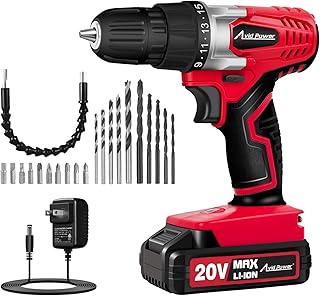


Four things decide whether you still like a drill two years from now: the motor, the batteries in the box, the chuck and clutch, and whether it is light enough that you reach for it without thinking. Price bands track those four things fairly closely, which is what the table below is really describing.
| Budget | What you get | Best for |
|---|---|---|
| $70–100 | Brushed compact, small battery | Very occasional use |
| $120–170 | Brushless compact, 2 batteries | Most people — sweet spot |
| $180–250 | Full-size brushless hammer drill | Daily / masonry work |
| $250+ | Pro-tier, 3-speed, big packs | Trade use only |
Read those bands as descriptions of what arrives in the box rather than of power. Every band drills a hole in a stud. What changes as you move up is how long the tool runs, how hot it gets, how well it holds a bit, and how much of the kit you keep when the drill itself is eventually replaced.
The sweet spot: $120–170
This is where brushless motors arrive in combo kits. A brushless compact drill at $150 will outperform a brushed drill at $110 in every way that matters — runtime, heat, longevity — and the price gap has narrowed every year.
Inside this band the headline figures barely separate the kits. The box contents do. Two batteries rather than one, two different capacities rather than two identical compacts, an all-metal chuck instead of a plastic-sleeved one, a charger that is not the slowest the brand makes. Two kits can share a price and a torque rating, and the gap between their contents will matter to you far longer than the gap in their specs.
Skip this band in one case: you already own batteries on a platform. Then a bare tool plus your existing packs beats any kit, and the difference belongs in bits. Everyone else — first drill, hobby use, or replacing one that died — should start here and stop here.
Brushless compact drill kits
The purchase most people should make. Two batteries, brushless motor, all-metal chuck, a case you will actually use.
What to compare, in the order that matters
Motor first, because it is the only upgrade that changes the tool rather than the spec sheet. Brushless motors run cooler, waste less charge as heat and hold speed as the load builds, which is why a brushless drill on a small pack often out-works a brushed drill on a big one.
Batteries second, and this is where kit pricing hides. A kit that looks aggressively cheap during a promo often carries the smallest packs in the lineup, or two compacts instead of a compact plus a higher-capacity pack. The tool is identical; the runtime is not. Compare amp-hours before you compare price.
Chuck and clutch third. A single-sleeve all-metal chuck holds round-shank bits without creeping and stays true after the drill gets dropped, which plastic-sleeved chucks stop doing early. The clutch matters the moment you drive screws into softwood, MDF or hinges: usable low settings save more fasteners than any amount of torque.
Size and weight last, but only just. The drill that lives in a kitchen drawer gets used; the heavy one stays in the garage while you make do with a screwdriver. A compact head fits cabinet interiors and a light tool can be held overhead, and in a house both are worth more than a longer, stronger drill.
When two of these pull against each other, the order above is the tie-breaker, with one exception. Brushless plus one small battery beats brushed plus two big ones as a tool, but not as a working day — no spare pack means you stop when it dies. If a kit forces that choice, take the brushless tool and buy the second battery later, because the tool is the part you cannot upgrade.
The $70–100 band, and who it honestly suits
The cheap band is not a trap, it is just narrow. A brushed compact with one small battery is the right buy if you hang pictures, assemble flat-pack furniture and tighten a hinge a few times a year. At that duty cycle both tools outlive their batteries anyway, and the savings do more good in a decent bit set.
What makes a bad buy down here is a platform with nowhere to go. If replacement packs are hard to find, or the brand sells nothing else you would ever want, the drill is disposable at any price. Check that spare batteries exist and cost less than the kit did — that one check separates a cheap drill from a cheap mistake.
When to spend more
Three reasons justify going past $200: you drill masonry (buy hammer function), you use the drill several hours a week (buy pro tier for heat handling), or you need a specific feature like a three-speed transmission for large auger bits.
“It has more torque” is not one of the three reasons.
Take them in turn. Masonry needs percussion, not power: a drill without hammer function polishes a hole in concrete rather than cutting one. Hours a week is a heat problem, and heat is what the pro tier manages with better electronics and better airflow. A three-speed transmission earns its keep only if you actually swing large auger or self-feed bits, where the low range does work a compact drill will not.
Who should skip the top tier: anyone whose honest answer to “how many hours a week” is “a couple of hours a month”. At that rate the pro drill and the mid drill do identical work, and the price difference buys a full set of quality bits, a spare charger and a bag.
Brushless hammer drills
Adds percussion mode for brick and block. Worth the extra only if you actually have masonry to drill.
Where the money is wasted
Overspending on a drill is rarely one big mistake. It is a stack of small ones that each looked reasonable at the till.
- ✘ Buying peak torque you will never load
- ✘ Buying a 60V/40V platform for drilling and driving
- ✘ Paying for tool-tracking Bluetooth on a home drill
- ✘ Buying a premium drill and cheap drill bits
The Bluetooth and high-voltage entries share a cause: buying the feature set of a job site you do not work on. The last one is the expensive habit, though. A blunt twist bit in a good drill cuts worse than a sharp bit in a cheap drill, and it wears out the chuck and the battery while doing it.
The battery maths nobody does
A 5Ah battery often costs $90–110 on its own. That means a kit including two 5Ah packs at $220 is effectively giving you the tools for almost nothing. Always price the kit against the batteries it contains — it flips a lot of “expensive” kits into the best deal on the shelf.
Run the sum the other way before you buy anything bare. A bare tool is only a saving if you already own packs and a charger that keeps up; if you do not, it is the more expensive route by the time you have bought both. When you compare two kits, subtract the battery value from each price first. What is left is what you are paying for the drill, and that number is the honest one.
Battery multi-packs
Price a 2-pack of batteries on your platform, then re-evaluate every kit on the shelf. The maths surprises people.
FAQ
Is a brushed drill ever the right buy? If you will use it under ten times a year, yes, and spend the savings on bits. Below that duty cycle you never reach the point where brushless pays you back.
What amp-hour should I get? One 2Ah for light and overhead work, one 4–5Ah for everything else. Two moderate packs beat one huge one, because you can keep working while the other charges.
Do premium drills last longer? Under heavy use, meaningfully. Under light use, both will outlive their batteries — which is why the platform you buy into matters more than the tier you buy.
Do I need an impact driver as well? If you drive long screws, lags or deck boards, yes. A two-tool combo often costs barely more than the drill kit alone, which makes it the best value upgrade on this page.
Compare drill kit value →