Best Value Welding Machine for Occasional Steel Repairs
What's inside
As an Amazon Associate I earn from qualifying purchases. This post may contain affiliate links at no extra cost to you.
For occasional repairs to gates, brackets, mower decks, and other mild-steel parts, a small 120-volt stick welder is often the best value. It is inexpensive, runs from a common household outlet, and handles the sort of short welds most homeowners actually need. Its limits matter: it is less comfortable on thin sheet, depends on clean joints, and may need a proper 20-amp circuit for higher output.
As an Amazon Associate we earn from qualifying purchases at no extra cost to you.


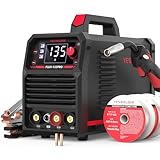
Match the welder to the repair
Start with the material and thickness you expect to fix. A 120-volt stick machine is a sensible choice for steel roughly 1/8 inch and thicker, including many brackets, angle iron, and small equipment repairs. With the right electrode and careful fit-up, it can work on thinner stock, but burn-through becomes easier. For sheet metal or repeated work on steel under about 1/8 inch, a small MIG welder is easier to control.
Stick welding uses a consumable electrode that melts into the joint. The coating creates shielding, so there is no gas cylinder to buy or store. That keeps the initial setup simple, but the process makes more spatter and slag than MIG. You will need to chip and brush the slag away before inspecting the bead, and a poor start or dirty metal can leave a weak, porous weld.
Best-value options
| Welder type | Typical fit | Value advantage | Main trade-off |
|---|---|---|---|
| 120V stick | Short repairs on medium or thicker steel | Low entry cost; no shielding gas | Harder on thin metal; more cleanup |
| 120V MIG, gasless flux-core | Light fabrication and thinner steel | More forgiving bead control for many beginners | Wire and tips add cost; flux-core is smoky and spattery |
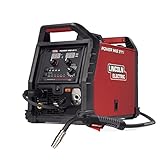
| 120/240V multiprocess | Mixed jobs or likely future upgrades | Can cover more processes and input voltages | Costs more; extra capability may sit unused |
For the lowest-cost capable setup, compare 120-volt inverter stick welders. Look for a stated output range, duty cycle, and clear input-current requirements rather than relying on a large peak-amp number. A machine advertising 200 amps may not deliver that output from an ordinary 120-volt outlet.
If your repairs include thin sheet, light tubing, or repeated short welds, a 120-volt flux-core MIG welder can be worth the higher purchase price. Gasless wire avoids cylinder rental, but flux-core is not a clean substitute for gas MIG: expect smoke, slag, and spatter. If you already own a gas bottle or plan to make cleaner work a regular habit, compare machines that support gas-shielded MIG as well.
What to check before buying
Check your outlet and breaker before choosing a machine. Many compact welders can run on 120 volts, but their highest settings may require a 20-amp branch circuit. Do not assume a normal 15-amp garage outlet can support full output just because the plug fits. Follow the manufacturer’s input requirements, use a properly rated extension cord if one is permitted, and avoid long, light-gauge cords that cause voltage drop.
Duty cycle is another practical limit. A rating of 20 percent at a given output means about two minutes of welding in a ten-minute period, followed by cooling time. That is usually acceptable for occasional repairs made in short passes. It becomes frustrating if you are building a long fence section or joining many pieces in one session. Compare duty-cycle figures only at the same amperage; a high percentage at low output does not promise long runs at maximum power.
Do not spend the entire budget on the power source. You also need a welding helmet, gloves, suitable clothing, a ground clamp, electrodes or wire, and a wire brush or chipping hammer. A helmet with a variable shade and a clear viewing area is easier to use than a very basic fixed-shade model. Buy from a seller with a workable return policy, and check whether replacement consumables are easy to find locally.
When the cheaper machine is fine
A basic 120-volt stick welder is good value when the job is a few short repairs a year, the steel is thick enough to tolerate the process, and you are willing to practice on scrap first. You do not need a multiprocess machine simply because it offers more settings. If you mainly repair a cracked bracket or tack a gate hinge, extra processes may never repay their cost.
Pay more for a 120/240-volt machine if you have a suitable 240-volt outlet and expect to weld thicker material or work for longer periods. Higher input voltage can give more usable output and reduce the need to push a small machine to its limit. But do not buy a dual-voltage unit expecting it to run from any outlet at full power; the circuit and the machine’s settings still set the ceiling.
Before buying, compare the 120/240-volt multiprocess welder price with a simpler unit plus the consumables you actually need. Brand value is not just the sticker price: accessible service, a clear manual, and available parts can matter more than extra modes. For a one-off repair, a reputable basic machine may be the better deal than an inexpensive feature-heavy unit with unclear support.
Seasonal buying and safe use
Prices on welding machines and protective gear often soften around major holiday sales and during periods when home-improvement retailers clear seasonal inventory. Compare the total package, not just a claimed discount: some low prices exclude a helmet, consumables, or shipping. If you can wait, track the price for a few weeks and buy when the machine and required safety gear fit your budget together.
Welding is a fire and eye hazard even when the repair is small. Remove fuel, dry leaves, paint, and other combustibles from the work area; keep a suitable fire extinguisher nearby; and check for smoldering material after the weld cools. Wear a properly rated helmet and gloves, protect people nearby from the arc, and provide ventilation. Do not weld a tank, sealed container, or unknown metal part. For vehicle frames, lifting points, pressure-containing parts, or other safety-critical repairs, use a qualified professional rather than treating a budget welder as a shortcut.