Best Power Tools Under $500: Building a Real Shop on One Budget
Our Top Picks
 DEWALT 20V MAX Cordless Drill and Impact DriverOne Size15.06 x 6.4 x 9.88 inches3.6 PoundsCheck on Amazon
 Power Drill Cordless: DEKOPRO Cordless Drill 20V Electric20v drill2 x 2 x 2 inches2.5 poundsCheck on Amazon



What's inside
As an Amazon Associate I earn from qualifying purchases. This post may contain affiliate links at no extra cost to you.
$500 is enough to build a genuinely capable small shop — if you resist the urge to buy the exciting tools first. The trap is that the exciting tools are the ones that look like progress: the big machine with a flat top you can photograph. Spend the whole budget there and you own one impressive tool and still cannot finish a project. The best power tools under $500 are the ones that unlock the widest range of work per dollar, and that list is boring on purpose. Here is the allocation that produces the most capability per dollar.
Two rules before the list. First, pick one battery platform and stay in it, because the batteries and charger are the real cost of cordless ownership, not the bare tool. Second, treat the budget as fixed and the timeline as flexible. Tool pricing swings hard around early-summer and late-autumn promo windows, and waiting for one of those on the largest line item is worth more than shaving a few dollars off everything else.
As an Amazon Associate we earn from qualifying purchases at no extra cost to you.




The allocation at a glance
In buying order, not in order of excitement. Treat the figures as ceilings you are allowed to come in under, not targets you have to hit.
| Priority | Tool | Budget | Why |
|---|---|---|---|
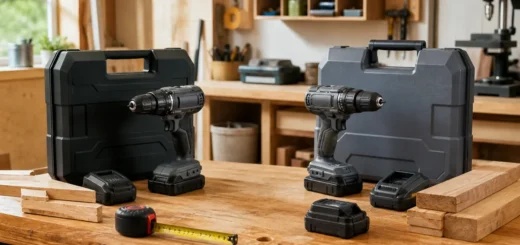
| 1 | Brushless drill + impact combo | $180 | Everything depends on it |
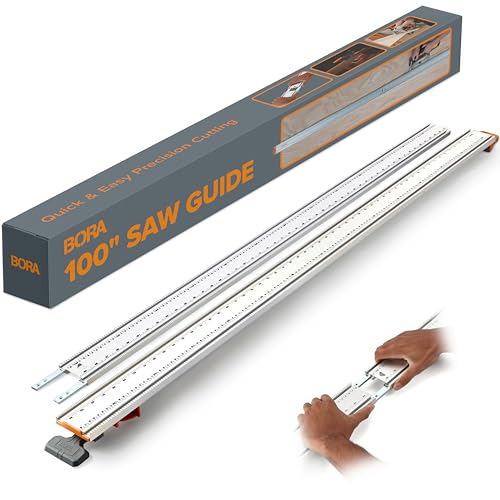
| 2 | Circular saw + guide | $110 | Sheet goods, straight cuts |
| 3 | Random orbital sander | $70 | Finish quality |
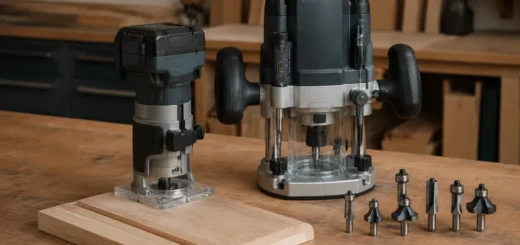
| 4 | Compact router | $90 | Makes work look finished |
| 5 | Clamps and consumables | $50 | The invisible essentials |
That order is a dependency chain, not a ranking of how much fun each tool is. The combo kit assembles and disassembles everything else. The saw produces parts. The sander decides how those parts look. The router is what makes them look intentional. The consumables are what let all four work as designed. Buying out of order is the single most common way a first shop budget disappears without producing furniture.

1. Combo kit — $180
Brushless drill and impact driver, two batteries, a charger. Non-negotiable first purchase. Buy on sale if you can wait; this category discounts hard.
What separates a good kit from a bad one here is rarely the tool. Check the amp-hour rating of the included packs before you compare price, because two small compact batteries and a compact plus a higher-capacity pack are very different purchases at the same sticker. Then check the charger: a slow trickle charger costs you afternoons. After that, look at the platform rather than the kit — how many bare tools exist on it, and what a spare battery costs, because that is the number you will pay repeatedly.
On the tools themselves, want a two-speed gearbox and a metal ratcheting chuck on the drill, and a driver with more than one speed setting so you can start a screw without burying it. Brushless earns its price in runtime and heat, not raw power.
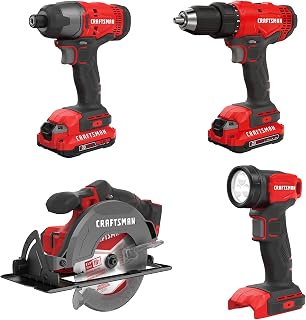
The mistake is the four- or five-tool kit at the same money. The extra tools are a work light, a saw with a flexing shoe and a throwaway blade, and the smallest batteries in the range. Buy two good tools. Skip this line entirely if you already own a platform — put the $180 into better versions of the tools further down the list.
Brushless drill + impact combo
Everything else in this plan assumes you own these two tools and a working battery pair.
2. Circular saw and a straight edge — $110
With a clamped guide rail, a circular saw does most of what a beginner needs a table saw for, at a fifth of the price and none of the floor space.
Judge the saw by its shoe first. A thin stamped base that flexes when you lean into a cut will never give you a square edge no matter how carefully you set the guide. A rigid base, a depth lever that actually holds its setting, and a bevel stop that returns reliably to zero matter far more than motor specification. Corded gives you more saw per dollar; a bare tool on the platform you just bought gives you fewer cords to trip over. Either is defensible at this budget.
Then replace the blade. The blade in the box is a framing blade, and a decent higher-tooth-count blade is the cheapest quality upgrade in this entire plan. Support the sheet fully on foam or scrap rather than bridging two sawhorses and cutting into the gap, and measure your guide offset once, write it on the saw, and stop re-deriving it. Skip this line only if you already own a track saw.
Circular saw + clamp-on guide
Straight, repeatable cuts in plywood without a table saw. The most space-efficient decision in a small shop.
3. Random orbital sander — $70
Surface preparation decides how your work looks. This is the cheapest big win available.
Five-inch is the size to buy, because disc availability and price are best there and you will burn through discs faster than you expect. Look for a hook-and-loop pad that holds its grip, a dust port that accepts a shop vacuum hose without a homemade adapter, and low enough vibration that you can hold it for an hour without numb hands. Variable speed is pleasant and not essential. Corded is the sensible choice: sanding is long-duration work and it will drain batteries you would rather spend on the saw.
The mistakes are all technique. Skipping grits leaves scratches the finish will magnify, leaning on the tool stops the random orbit and creates swirls, and a clogged disc polishes rather than cuts. If everything you build gets painted you can defer this purchase by a few weeks, but not skip it.
4. Compact router — $90
Edges, dados, template work. The step from “built it myself” to “looks like furniture”.
Prioritise variable speed and soft start, a base that is quick to adjust and locks without drifting, and a collet that tightens cleanly. A clear sub-base and an LED are small features that meaningfully improve your odds of following a line. If the kit includes a plunge base, that is worth real money later for stopped grooves and mortises.
On bits, three good ones beat a boxed set of twenty-four: a round-over, a straight or flush-trim bit, and a chamfer or rabbeting bit. Check the shank size your collet takes before you buy anything. Take shallow passes rather than one full-depth cut, feed the router so the bit cuts into the work instead of climbing along it, and clamp narrow stock rather than trusting your hand. This is the tool most likely to ruin a nearly finished part, so practise on offcuts first.
Compact router kits
Variable speed and a plunge base if you can stretch. Add a three-bit starter set.
5. Clamps, blades, bits — $50
Boring, essential. Four bar clamps, a decent saw blade, a set of brad-point drill bits and impact-rated driver bits. This is where beginners under-spend and then blame their tools.
Buy clamps long enough for the widest case you actually intend to build, not the shortest ones on the shelf — eight small spring clamps will not hold a carcase square. Brad-point bits exist because twist bits wander and tear out in wood. Impact-rated driver bits exist because standard bits shear off inside screw heads at the worst possible moment. None of this is exciting and all of it is the difference between a glue-up that closes and one that does not.
Clamps and consumables bundle
The unglamorous 10% of the budget that determines whether the other 90% produces good work.
What this kit can build
Bookcases, workbenches, cabinets, floating shelves, a bed frame, garden furniture, built-in storage. Essentially any flat-panel and frame furniture. It will not resaw lumber or cut precise joinery at volume — you buy those capabilities later, once you know you need them.
That limitation matters less than it sounds, because the work that teaches you the most is exactly the work this kit does: cutting parts square, assembling them without racking, and finishing surfaces properly. Most people who outgrow this kit outgrow it in speed, not capability.
Where the $500 usually leaks
- A second battery platform. One good deal on the wrong system costs you every future bare-tool purchase.
- Padded combo kits. Five tools for the price of two means five compromises, and the batteries are usually the smallest available.
- Under-spending on blades and bits while over-spending on the tools that hold them.
- Buying dust collection before clamps. Shop-vac-and-adapter is enough for a long time.
- Buying for imagined projects. Buy for the next thing you have actually agreed to build.
What to add next, in order
- ✔ More clamps (always)
- ✔ A track saw, replacing the circular saw + guide
- ✔ A jobsite table saw
- ✔ A miter saw
- ✔ Dust collection
The trigger for each is the same: you have hit the limitation twice on real projects, not once in your head. Add tools in response to work you are already doing and you will never own a machine that collects dust.
FAQ
Should I buy a table saw instead of the router? Not at this budget — a $200 table saw is a compromise in a category where compromises hurt.
Can I do this cheaper? Yes, with corded tools and patience for sales, around $350. Cordless convenience is what the extra buys.
New or used? Used bare tools are excellent value. Used batteries are not.
Which battery platform should I pick? The one with the broadest bare-tool range and the cheapest spare packs you can buy locally. That combination matters far more at this budget than which badge is on the housing.
Price the full kit →