Best Affordable Tools for Fixing a Sticky Sliding Door
What's inside
As an Amazon Associate I earn from qualifying purchases. This post may contain affiliate links at no extra cost to you.
Why sliding doors stick
A sticky sliding door usually needs cleaning or a small adjustment, not a new roller assembly. Grit in the track, a loose adjustment screw, or a damaged roller can all make a door drag. Start by checking whether the door sticks along its full travel or only at one spot. That quick check can save you from buying parts you don’t need.
Before shopping, look at the track and the door’s lower edge. If the track is packed with dirt, clean it first. If the track is dented or the door wobbles, inspect the rollers. Use a screwdriver to locate adjustment screws, but don’t turn them blindly: mark the starting position and make small changes, about a quarter-turn at a time.
As an Amazon Associate we earn from qualifying purchases at no extra cost to you.
![WD-40 Specialist Silicone Lubricant, New Bigger Can, 13.3 OZ [1-Pack]](https://m.media-amazon.com/images/I/41MHMrtuoWL._SL160_.jpg)
![WD-40 Specialist Dry Lube, Long-Lasting, New Bigger Can, 12.1 OZ [1-Pack]](https://m.media-amazon.com/images/I/31LP2IokodL._SL160_.jpg)
![WD-40 Specialist® White Lithium Grease, New Bigger Can, 13.3 OZ [1-Pack]](https://m.media-amazon.com/images/I/41c233OiEDL._SL160_.jpg)
![WD-40 Specialist Gel Lube, Smart Straw, Sprays 2 Ways, 10 OZ [2-Pack]](https://m.media-amazon.com/images/I/41WzykaIf8L._SL160_.jpg)
Start with low-cost tools
A stiff brush, vacuum, and a clean rag are enough for many jobs. A narrow crevice attachment helps lift grit from the track; a small nylon brush can reach corners without scratching aluminum. If you already have these at home, there’s no reason to buy a specialized door-cleaning kit.
For a basic cleanup, use a nylon detail brush set or an inexpensive household brush. A set costing roughly $5–$12 is usually adequate. Avoid steel brushes on aluminum tracks: they can scratch the surface and leave metal particles behind. Vacuum out the loosened dirt, then wipe the track dry.
Don’t assume oil is the fix. Grease and heavy oil can trap dust, making the door sticky again. If the manufacturer allows lubrication, use a small amount of a dry, plastic-safe lubricant. Test it in an inconspicuous spot and wipe away overspray. A dry PTFE lubricant typically costs about $6–$12, but it is unnecessary if cleaning alone restores smooth movement.
A useful budget kit
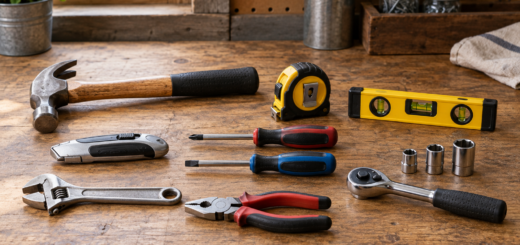
For most homeowners, the best-value setup is a screwdriver, a brush, a vacuum, and a small level. A basic screwdriver set costs around $8–$20; a magnetic bit set can be quicker if the adjustment screws are recessed. Match the bit carefully. A worn or incorrect driver can strip a screw head, turning a simple adjustment into a parts-replacement job.
A 9-inch torpedo level is handy for checking whether the door sits plumb, especially if one side rubs or the gap is uneven. Budget levels often cost $7–$15 and are accurate enough for this task. You don’t need a digital level or a large professional kit to adjust one door. If you already own a decent level, use it rather than buying another.
For lifting or repositioning a heavy glass door, a second person is a better value than a cheap suction cup. Suction cups can lose grip on dusty, textured, or damp glass. If the door must come out of its frame, consult its instructions first; some doors require removing a stop or adjusting the rollers before lifting. Don’t work alone with a heavy panel.
Tool cost comparison
These are typical U.S. price ranges for basic, non-professional tools. Prices vary by brand and season; a sale is useful only if the tool is appropriate for the job.
| Tool | Typical price | Best use | Skip it when |
|---|---|---|---|
| Nylon brush | $5–$12 | Loosening dirt in the track | You already have a soft brush |
| Screwdriver or bit set | $8–$20 | Adjusting accessible roller screws | You own a driver that fits correctly |
| Torpedo level | $7–$15 | Checking alignment and door lean | The door tracks evenly after cleaning |
| Dry lubricant | $6–$12 | Lubricating compatible rollers or track | The manufacturer prohibits lubricant |
Buying everything new could cost $26–$59 before tax, but a typical cleaning-and-adjustment job often needs only one missing item. Check your toolbox first. A low-priced tool that fits the screw and reaches the track is more useful than a premium set with features you won’t use.
When replacement parts make sense
If cleaning and careful adjustment don’t help, inspect the rollers for flat spots, cracks, corrosion, or seized bearings. A door that still scrapes after its rollers are raised may have a bent track or worn hardware. Replacing rollers can be inexpensive compared with replacing the door, but the part must match the door’s size and mounting style. Take clear photos and measurements before ordering, and check the manufacturer’s parts list where available.
Don’t keep turning adjustment screws if they reach their limit, spin without moving the roller, or begin to strip. Those are signs to stop and identify the hardware. For replacement, a sliding-door roller replacement kit may be cheaper than buying rollers individually, but generic kits can have incompatible wheel diameters or brackets. Confirm dimensions and return terms before purchasing.
Buying timing and value
Brushes and screwdriver sets are common sale items, but waiting for a seasonal discount rarely saves much on a basic tool. Spring home-improvement promotions and late-year clearance can bring modest discounts; compare the price against a typical budget range rather than the crossed-out list price. For a one-time repair, borrowing a level or using a ruler and visual checks may be more economical than buying one.
Spend more only where fit or durability matters. A screwdriver with a solid handle and correctly sized bit is worth choosing over the cheapest loose driver if the adjustment screws are tight. By contrast, there is little benefit in paying extra for a large brush assortment when one narrow nylon brush will reach the track. Fix the simplest likely cause first, then buy parts only after you have evidence the rollers are worn.