Best Budget Woodworking Hand Tool Kit for Beginners
What's inside
As an Amazon Associate I earn from qualifying purchases. This post may contain affiliate links at no extra cost to you.
A good beginner woodworking kit does not need a dozen specialty tools. It needs a small group of hand tools that are comfortable, repairable, and accurate enough to prevent frustration. The cheapest complete kits often look attractive but include dull saws, loose chisels, and a tape measure you will replace immediately.
For most beginners, a sensible first setup costs about $100 to $200 if you buy new and shop carefully. Spend more on the tools that determine accuracy—especially a square, marking tools, and a plane—and less on items such as a mallet or utility knife.
What to Buy First
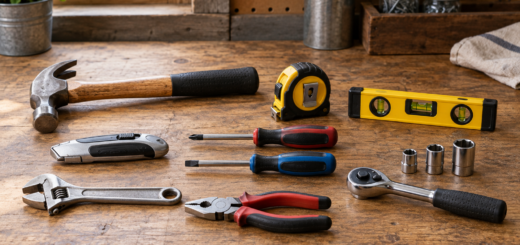
Start with tools that cover measuring, marking, cutting, shaping, and assembly. A practical starter list is a 12-inch combination square, marking knife or sharp pencil, 6-inch rule, block plane, 12-ounce claw hammer, utility knife, flush-cut saw, backsaw, three chisels, screwdriver set, clamps, and a sharpening method.
You will also need a work surface. A sturdy bench or even a sheet of 3/4-inch plywood clamped to a table is more useful than an expensive tool tote. Plan to spend at least $20 to $40 on two or four 12-inch woodworking clamps. Without clamps, glue joints slide and small parts become difficult to hold safely.
A hand-tool kit is only as good as its edge maintenance. Include a 1,000/4,000-grit combination waterstone or diamond plate, plus a simple honing guide if you have never sharpened before. A $20 sharpening setup can make a basic chisel work better than a premium chisel used dull.
Best Budget Kit by Tool
| Tool | Reasonable budget | What to check | Where cheap is fine |
|---|---|---|---|
| Combination square | $15–$35 | Rigid stock, readable rule, square blade | Fine for general furniture and shop work if verified |
| Bench chisels, 3-piece set | $20–$60 | Flat backs, straight edges, comfortable handles | Fine if you sharpen them before serious use |
| Block plane | $25–$70 | Adjustable mouth, flat sole, blade that seats securely | Fine for trimming edges and breaking corners |
| Backsaw or tenon saw | $20–$50 | Rigid spine, straight plate, comfortable handle | Fine for occasional joinery after tuning |
| Claw hammer | $15–$30 | Balanced head, secure handle, smooth face | Almost any reputable general-purpose hammer works |
| Clamps | $20–$50 | Strong pressure and jaws that stay parallel | Cheaper clamps work for light glue-ups |
Where to Spend and Where to Save
The combination square deserves more attention than its price suggests. A square that is off by 1/16 inch over 6 inches can transfer a visible error to every layout line. Test one in the store or immediately after delivery: draw a line against the blade, flip the square, and draw again from the same edge. If the lines do not meet, return it.
For chisels, a basic three-piece set—roughly 1/4, 1/2, and 3/4 inch—covers common work. Avoid buying ten inexpensive chisels when three usable ones will do. Check that the backs are reasonably flat and that the handles do not split around the ferrules. Budget chisels may require 15 to 30 minutes of flattening per blade before they perform well. That is acceptable; badly warped steel or loose handles are not.
A block plane is useful for removing glue squeeze-out, easing sharp edges, and fitting doors or drawers. Low-cost planes can be good values, but expect to flatten the sole slightly and sharpen the iron. If you want fewer setup problems, compare low-angle block planes from established tool brands rather than choosing the cheapest listing.
Do not overspend on a hammer. A 12- to 16-ounce claw hammer is sufficient for assembling small projects and driving finish nails. A smooth face prevents unnecessary dents. If you plan to chop mortises, buy a separate wooden or urethane mallet; using a steel hammer on chisel handles can mushroom or split them.
Saws and Marking Tools
A Japanese pull saw is often the easiest first handsaw for clean crosscuts in thin boards, while a traditional backsaw offers better control for repeated joinery cuts. Pull saws cut efficiently but have thin blades that kink if twisted. Once kinked, they are usually not worth repairing. A traditional backsaw is slower but more forgiving.
Buy a marking knife or a mechanical pencil with 0.5- or 0.7-millimeter lead. A carpenter’s pencil is useful for rough work, but its wide line can hide a 1/16-inch error. Add a small woodworking marking knife and gauge later when you begin cutting joints. Marking gauges are not essential for a first shelf or box, but they quickly become valuable for consistent shoulder lines.
Brand Value and Buying Strategy
At the budget end, brands such as Irwin, Stanley, Craftsman, and similar mainstream lines are usually safer than anonymous multi-tool bundles because replacement parts, reviews, and returns are easier to find. Midrange brands such as Bahco, Narex, and Spear & Jackson often offer better steel or fit without reaching premium prices. Premium tools can be excellent, but they rarely make a beginner’s first project proportionally better.
Be cautious with kits that advertise 30 or 50 pieces. The count often includes bits, duplicate screwdrivers, disposable blades, and low-quality accessories. A smaller kit with a good square, three chisels, and a serviceable saw is better value. If a set costs $40 and you would replace half of it, it is not a $40 bargain.
When to Buy
Tool prices commonly dip around Black Friday, the weeks before Christmas, and major spring home-improvement sales. January can be good for clearance, especially on boxed sets and storage, while late spring often brings discounts on clamps and workshop equipment. Do not wait for a sale on a single essential tool if a project is stalled; a 10% discount is not worth buying a warped square or missing a deadline.
Compare the final delivered price, including shipping, and check whether a “sale” price is based on an inflated list price. Keep the packaging until you test every square, plane, and saw. For online purchases, returns matter more than a small brand difference when buying budget tools.
A Sensible First Purchase
For the best balance of cost and usefulness, buy a combination square, three chisels, a backsaw or pull saw, block plane, hammer, utility knife, clamps, and sharpening stone first. Add screwdrivers and specialty gauges as projects demand them. This approach costs slightly more than a bargain kit but avoids paying twice for tools that fail at the tasks beginners notice first: straight lines, clean cuts, flat joints, and secure glue-ups.