Best Budget Pegboard Storage System for Hand Tools
What's inside
As an Amazon Associate I earn from qualifying purchases. This post may contain affiliate links at no extra cost to you.
A budget pegboard can be one of the cheapest ways to get hand tools off a workbench, but the lowest shelf price is not always the lowest cost. Thin hardboard can sag, short hooks can let tools fall, and poorly anchored panels may pull out of drywall when loaded with pliers and ratchets. For most home workshops, the best value is a standard 1/4-inch pegboard panel paired with a basic metal hook assortment and a properly spaced mounting frame.
As an Amazon Associate we earn from qualifying purchases at no extra cost to you.



The best budget setup
For general hand tools, start with a 2-by-4-foot or 4-by-4-foot pegboard panel. A 2-by-4-foot panel is usually enough for a small repair bench and costs less to install, while a 4-by-4-foot layout gives you room for screwdrivers, pliers, wrenches, clamps, and measuring tools without packing everything together.
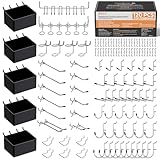
The most economical choice is usually 1/4-inch pegboard with a hook assortment. Look for panels with 1-inch hole spacing and a kit that includes straight hooks, angled hooks, double hooks, and small tool cups. A basic kit is fine if you mainly store tools under 3 pounds each. You can add specialty hooks later instead of paying for a large assortment full of pieces you will not use.
For a typical 4-by-4-foot board, budget roughly $25 to $60 for the panel, spacers, screws, and starter hooks. Prices vary by region and season, but this is generally less than a modular garage storage system and much easier to rearrange than a wall-mounted cabinet.
Pegboard materials compared
| Material | Typical cost | Best use | Main weakness |
|---|---|---|---|
| Tempered hardboard | Low | Light and medium hand tools | Can swell from moisture and split around overloaded holes |
| Metal pegboard | Medium to high | Heavier tools and busy workshops | Higher upfront cost; hooks may be less universal |
| Plastic pegboard | Medium | Utility rooms and damp areas | May flex under long or concentrated loads |
| Wood or plywood panel | Medium | Custom layouts and very strong mounting | Requires more cutting, finishing, and hardware |
Tempered hardboard is the value winner for a dry garage or indoor workshop. It is adequate for screwdrivers, combination wrenches, tape measures, and pliers. It is less suitable for a row of heavy pipe wrenches or a dense collection of cordless tool batteries. If your shop is unheated and humid, metal or plastic may cost more initially but avoid the swelling and edge damage that can ruin hardboard.
Choose hooks for the tools you actually own
Universal pegboard hook kits are inexpensive, but they are not interchangeable in every detail. Most 1/4-inch systems use holes spaced 1 inch apart, while some metal systems use proprietary slots or accessories. Confirm the hole size and spacing before buying replacement hooks.
Single straight hooks work for screwdrivers and small pliers. Double hooks are better for heavier wrenches because they resist twisting. Angled hooks help keep tools from sliding forward, while tool loops or spring clips are useful for tape measures, extension cords, and odd-shaped items. For deep tools such as ratchets or adjustable wrenches, choose hooks at least 4 inches long; short 2-inch hooks often allow the tool to tilt and fall when the board is bumped.
Do not treat the whole panel’s advertised load rating as the rating for each hole. A hardboard panel may support a substantial total load when distributed across many hooks, but one overloaded hook can tear out the surrounding fibers. Keep individual tools under about 5 pounds on standard hardboard unless the manufacturer gives a higher rating. Put heavier items near studs and use two hooks when possible.
Installation determines whether the system works
Never mount pegboard flat against drywall. Install 3/4-inch furring strips or spacers behind it so the hooks have room to pass through and lock. Fasten the spacers into wall studs with screws long enough to achieve at least 1 inch of penetration into the stud. For a 4-by-4-foot panel, use a frame around the perimeter plus one or two horizontal center supports. Without center support, the panel can bow when tools are removed from the middle.
If studs do not line up with your preferred layout, attach a 3/4-inch plywood backer to the studs first, then screw the pegboard to the plywood. Drywall anchors alone are a poor choice for a loaded tool wall. They may hold a light panel initially, but repeated pulling on hooks gradually loosens them.
Leave at least 2 inches of clearance above the workbench. This gives you room to lift tools off hooks and prevents handles from striking the bench. Before loading the board, test several hooks with a firm downward pull. Any flexing, cracking, or screw movement should be fixed before adding tools.
Where to spend and where to save
Spend money on mounting hardware and the hooks used for heavy or frequently handled tools. Saving $10 on a thin hook kit is not worthwhile if the hooks bend or release when you grab a wrench. On the other hand, premium metal panels are unnecessary for a light-duty home repair station. A hardboard panel is fine when it stays dry, has proper spacers, and carries ordinary hand tools.
For a more durable setup without moving to a full cabinet system, consider metal pegboard panels for garage tools. They cost more, but they resist moisture and handle repeated rearranging better. The trade-off is accessory cost: proprietary shelves and brackets can make a metal system more expensive over time.
Buy generic accessories when the system uses standard 1/4-inch holes. Search for 1/4-inch metal pegboard hooks rather than replacing an entire kit every time you need one bracket. Keep a few spare straight hooks and tool clips in a small bin; the accessories most likely to disappear are the short hooks used for screwdrivers and small pliers.
When to buy
Home-center pegboard panels and hook kits are often cheapest during spring garage-cleanup promotions and late-summer back-to-school sales. Hardware prices also tend to improve around major holiday promotions, but compare the complete installed cost rather than the panel price alone. A discounted board that requires separate spacers, screws, and hooks may cost more than a bundled kit.
Buy the panel first only if you already know your wall dimensions. Otherwise, measure the available space, count your tools, and sketch a layout. A cheap 2-by-4-foot board that is overloaded within a month is worse value than a slightly larger panel installed once. For most homeowners, standard hardboard, quality spacers, and a modest metal hook assortment deliver the best balance of price, capacity, and easy rearrangement.