Best Budget Tools for Replacing Interior Doors and Hardware
What's inside
As an Amazon Associate I earn from qualifying purchases. This post may contain affiliate links at no extra cost to you.
Replacing an interior door is usually a better-value project than repairing a badly warped slab or paying a carpenter to install one. The tools are not specialized, but the wrong budget tool can turn a two-hour job into a day of trimming, patching, and trying to make uneven hinges line up. Spend money on accurate layout and drilling tools first; save on tools that only remove waste or get occasional use.
As an Amazon Associate we earn from qualifying purchases at no extra cost to you.

What you actually need
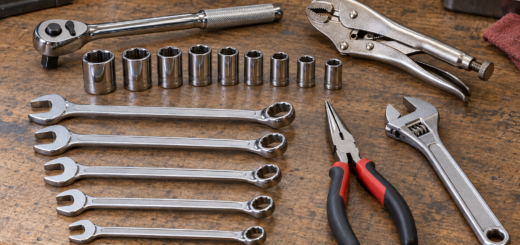
For a basic interior door replacement, plan on a tape measure, pencil, sharp utility knife, level, screwdriver set, drill/driver, combination square, hammer, chisel, and a way to cut the door. A cordless jigsaw can handle minor trimming, while a circular saw with a straightedge is faster and cleaner for larger cuts. You will also need a 2 1/8-inch hole saw for many standard locksets, plus a 1-inch spade bit for the latch bore.
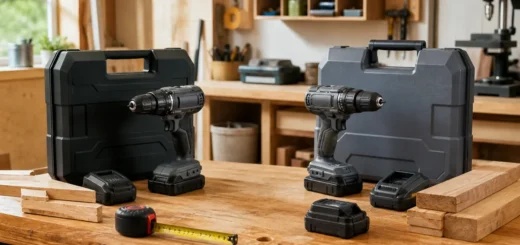
If you are replacing only a slab and reusing the existing hinges, add a hinge template or a sharp chisel. If you are installing a prehung door, a long level and a pack of shims matter more than an expensive saw. For a first-time project, a practical cordless drill/driver kit is usually the best first purchase because it also works for cabinet, shelving, and general household repairs.
Budget tool comparison
| Tool | Budget price | Good enough for | Where cheap tools fail |
|---|---|---|---|
| 20V cordless drill/driver | $40–$90 with battery | Lockset holes, screws, pilot holes | Wobble, weak clutch, short battery life |
| Jigsaw | $30–$80 | Trimming the bottom or edge of a slab | Blade wander and rough cuts |
| Circular saw | $50–$120 | Straight bottom cuts with a guide | Splintering and inaccurate cuts without support |
| Long level | $15–$45 | Checking jambs and a prehung frame | False readings from a poor vial or bent body |
| Lock installation kit | $15–$35 | Standard 2 1/8-inch lockset holes | Loose guide, wandering pilot bit |
| Chisel set | $15–$40 | Hinge mortises and strike plates | Soft steel, rounded edges, poor control |
These are typical street prices rather than fixed prices. A basic tool is fine for one or two doors, but buying a slightly better drill and level often costs less than replacing damaged trim or a misaligned lockset.
Drills, hole saws, and hardware installation
A drill/driver with a variable-speed trigger and a clutch is more useful than a high-power hammer drill for interior doors. Use low speed when starting a hole saw, moderate pressure, and drill from both sides if the kit’s pilot bit does not reach cleanly. Drilling all the way through from one side commonly blows out the veneer around the lock bore.
For a single lock replacement, an inexpensive door lock installation kit is usually sufficient. Check that it supports your backset, commonly 2 3/8 or 2 3/4 inches. A kit with a loose plastic guide can shift enough to leave the latch crooked. Clamp the guide firmly, mark the centerline carefully, and test the hole saw on scrap if the door has a thin veneer.
A magnetic bit holder is a small upgrade that saves time when driving hinge and strike-plate screws. Avoid using an impact driver for the final tightening of hinge screws. It can strip the screw head or bury the screw so deeply that the hinge leaf bends. An impact driver is useful for removing stubborn old screws, but a regular driver gives better control during installation.
Cutting and trimming the door
Measure the opening at the top, middle, and bottom. Interior doors often need 1/8 to 3/16 inch of clearance on the latch side and roughly 1/8 inch at the top. A bottom gap commonly ends up around 1/2 inch, though carpet may require more. Do not automatically cut the same amount from every edge; floors and jambs are frequently out of level.
A jigsaw is the lowest-cost cutting option, but use a fine-tooth blade designed for clean wood cuts and support the door on sacrificial boards. Cut with the finished face down when the blade cuts on the upstroke. Even then, expect some chipping. A circular saw with a straightedge produces a straighter bottom cut, especially on a solid-core door. A $10–$20 guide clamp or a carefully clamped board is often more important than upgrading the saw.
For small adjustments, a sharp block plane is safer than repeatedly attacking the edge with coarse sandpaper. Budget planes can work after sharpening, but many arrive dull. If you do not already own one, a sanding block and 80-, 120-, and 180-grit paper are adequate for removing a few thousandths of an inch. Do not sand a full 1/8 inch from a door edge; it is slow and likely to leave a tapered edge.
Hinges, mortises, and jamb alignment
Hinge work is where cheap tools cause the most visible problems. A blunt chisel crushes the door skin instead of slicing it, especially on hollow-core doors. A modest bevel-edge wood chisel set is worth buying if the existing hinge locations do not match. Sharpen the chisel before use, score the outline with a utility knife, and pare in shallow passes.
Do not use a power drill freehand to excavate a hinge mortise. It makes an uneven recess and can break through the thin face of a hollow-core door. A router with a hinge template is faster for several doors, but buying one solely for a single replacement rarely makes financial sense. For one door, a template and chisel normally cost less and give enough control.
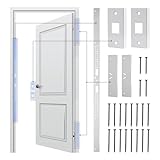
When installing a prehung unit, use pairs of shims behind each hinge and near the latch strike. Check the hinge-side jamb for plumb first. If that side is wrong, the door may swing open or closed by itself no matter how carefully the latch side is shimmed. Use 2 1/2- to 3-inch installation screws through shims into framing, but do not overtighten and bow the jamb.
Brand value and when to buy
For drills and saws, staying within one battery platform can save more than chasing the lowest tool price. A discounted bare tool is only a bargain if you already own compatible batteries. Entry-level lines from established brands generally have better chargers, replacement batteries, and warranty support than anonymous kits, while a basic hand-tool set from a reputable value brand is usually enough for occasional door work.
Buy cordless tools during November promotions, spring home-improvement sales, and holiday weekend events. Battery kits are often discounted more heavily than bare tools. Locksets, hinges, and hole-saw kits tend to see useful discounts during spring and fall renovation seasons. If you need one door immediately, do not buy an oversized kit just to capture a coupon: a $25 accessory bundle is not a saving if most of it stays unused.
For one replacement, borrow or rent the circular saw, long level, or router and buy the consumables. For several doors, invest in the drill, level, sharp chisel set, and a reliable cutting setup. Those are the tools most likely to prevent expensive mistakes.