Best Value Impact Driver for Deck Repairs and Everyday DIY
What's inside
As an Amazon Associate I earn from qualifying purchases. This post may contain affiliate links at no extra cost to you.
What “value” means for deck repairs
For fixing loose deck boards, replacing screws and handling ordinary home repairs, the best-value impact driver is usually a 12-volt brushless kit or a sensibly priced 18-volt kit—not the bare tool with the lowest sticker price. A complete kit includes a battery and charger, which matter because a driver without a compatible battery is not ready for work. Compare the full kit price, battery size and warranty, not just the tool’s advertised price.
Impact drivers deliver short bursts of rotational force, helping drive long screws without as much wrist-twisting as a regular drill. They’re useful for deck screws, but they aren’t a substitute for good technique: use the correct bit, keep the driver aligned, and stop when the screw head sits flush. Too much force can strip the head, snap a screw or bury it below the board surface.
As an Amazon Associate we earn from qualifying purchases at no extra cost to you.


The best buying target
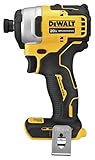
For a homeowner doing occasional repairs, look first at a 12-volt brushless impact driver kit with a battery around 2.0 to 4.0 amp-hours. It is generally lighter and easier to control overhead or in tight spaces than a full-size tool. Brushless motors can use battery energy efficiently, but they are not essential for a few short jobs each year; a discounted brushed kit can be a better buy if it includes a battery and charger.
Choose an 18-volt or 20-volt platform if you expect to drive many long structural screws, already own batteries in that system, or want one tool family for heavier jobs. The voltage labels are not directly comparable across every brand, and they do not tell you how much driving power a particular tool delivers. For deck repairs, a comfortable grip, speed control and a battery system you can keep using count more than a headline torque figure.
Compare the common choices
| Option | Best for | Trade-off | Value check |
|---|---|---|---|
| 12-volt brushed kit | Light DIY and occasional repairs | May slow down on long or large screws | Good if the kit price is low and batteries are included |
| 12-volt brushless kit | Most routine home and deck work | Can cost more than a brushed tool | Worth considering for a compact, frequently used setup |
| 18/20-volt brushed kit | Heavier, repeated driving and shared battery platforms | Typically bulkier; platform costs can add up | Strong value when you already own compatible batteries |
| 18/20-volt brushless kit | Frequent work and tougher fastening | Often the highest initial price | Buy for regular use, not just a spec-sheet advantage |
Prices shift with promotions, and kit contents differ. Before buying, check whether the package has one battery or two, the battery capacity, charger, carrying case and warranty terms. A two-battery bundle may be worthwhile for a large deck project; for replacing a handful of boards, the second battery may sit unused.
Set up for deck repairs
Use exterior-rated deck screws that match the decking material and the repair. For common deck-board work, screws around 2½ to 3 inches long are often used, but board thickness, joist condition and the screw maker’s instructions determine the right length. Don’t use drywall screws: they are not designed for outdoor exposure or the same loading. For pressure-treated lumber, use fasteners rated for that treatment, such as appropriately coated or stainless options.
Start with a fresh, correctly sized impact-rated driver bit. A worn bit is more likely to cam out and chew up the screw head. Set the driver to a lower speed or assist mode if available, then test on scrap wood. Drive the screw straight and ease off as its head reaches the surface. If a board is badly split, the joist is soft, or a screw spins without holding, a more powerful driver won’t fix the underlying problem.
Impact drivers can be loud, and their rapid hammering can loosen a bit from the chuck. Wear eye and hearing protection, especially when driving many fasteners, and check the bit periodically. If you need to drill clean holes or handle delicate hardware, a regular drill/driver usually gives better control.
Where to spend—and where not to
Don’t pay extra for the most powerful tool in a brand’s lineup unless you have a job that needs it. A typical repair involving a few dozen deck screws is well within the range of an ordinary consumer impact driver. An 18-volt brushless impact driver kit makes more sense if you will use it regularly or already own batteries and a charger from that platform. Otherwise, its added cost and bulk may deliver little practical benefit.
Brand value often comes from the battery system, not a single tool. If you already have compatible batteries, buying a bare tool can save money; check that the exact battery family fits, since brands sometimes have multiple incompatible lines. If this is your first cordless tool, compare the cost of a kit now with the price of a replacement battery later. A cheap tool with hard-to-find or expensive batteries can become poor value.
When to buy
Tool kits are often discounted around major holiday sales and during seasonal promotions, but a sale is only useful if the package fits your needs. Compare the same kit number across retailers when possible; one “deal” may have a smaller battery or omit a case. If the deck is safe to leave until a promotion, waiting can help. If boards are loose enough to create a trip hazard or the structure appears damaged, address the hazard promptly rather than postponing a repair for a discount.
For a first impact driver used mainly on deck boards and household jobs, buy the least expensive complete kit from a battery platform you expect to keep using, provided the tool has controllable speed and a comfortable grip. Spend more for brushless construction or an 18/20-volt system when frequent work, tougher fasteners or batteries you already own make that extra cost useful—not simply because a larger number sounds better.