Best Value Tools with Long Warranties for Frequent Home Use
What's inside
As an Amazon Associate I earn from qualifying purchases. This post may contain affiliate links at no extra cost to you.
What “value” means for tools you use often
A long warranty can make a tool a better buy, but it does not make every purchase worthwhile. For frequent home use, value comes down to the tool’s purchase price, how comfortably it handles regular jobs, and whether warranty service is practical if it fails. A 10-year warranty on a tool you rarely use may matter less than a three-year warranty on a drill you reach for every weekend.
Compare warranties carefully. Some cover defects in materials and workmanship but exclude batteries, wear parts, damage from misuse, or normal wear. Registration may be required, and proof of purchase is often essential. Save the receipt and check the current terms on the manufacturer’s website before buying; warranty lengths can vary by product line, promotion, and country.
How common warranty terms compare
These are broad patterns, not promises for every tool. Verify the warranty for the specific product and kit, especially when buying a battery-powered set.
| Brand or tool type | Typical warranty pattern | What to check |
|---|---|---|
| Ryobi cordless tools | Many tools carry a three-year limited warranty | Battery coverage may differ; confirm registration and proof-of-purchase rules |
| DeWalt cordless tools | Many tools carry a three-year limited warranty | Some lines or promotions have different terms; batteries and chargers may be covered separately |
| Milwaukee cordless tools | Coverage varies by product, with several years common on many tools | Check the exact product’s term and whether the battery has a separate warranty |
| Higher-priced hand tools | Some brands offer long or limited lifetime warranties | “Lifetime” usually has conditions and does not necessarily cover loss, abuse, or wear |
Spend first on the tools that take the most wear
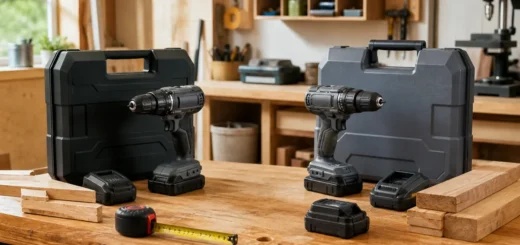
For regular home maintenance, a cordless drill-driver is usually the most useful place to invest. It drives screws, drills pilot holes, and handles routine assembly without the weight or cost of a larger hammer drill. A brushless motor can run cooler and use battery power efficiently, but it is not essential for occasional shelves or furniture. Look for a comfortable grip, a clutch with clear settings, and a two-speed gearbox. A clutch that slips reliably helps prevent stripped screw heads and damaged softwood.
Compare bare-tool prices with kit prices before choosing a battery platform. A bare tool is a bargain only if you already own compatible batteries and a charger. If you are starting fresh, a kit with two batteries can be more useful than a slightly cheaper single-battery package: one battery can charge while the other is in use. For frequent household jobs, a cordless drill-driver kit from a widely supported platform is a sensible first purchase.
Where a cheaper tool is often fine
Do not pay extra for jobsite-grade features you will not use. If you make a few cuts a year in shelving or trim, a corded circular saw can be a good value: it avoids battery costs and is ready whenever you plug it in. A basic model is adequate for straight cuts in common sheet goods, provided you use a sharp blade, support the work, and set the cutting depth just beyond the material. A low-cost saw is less appealing if you expect to cut dense lumber all day; heat, vibration, and poor adjustment mechanisms become more noticeable under sustained use.
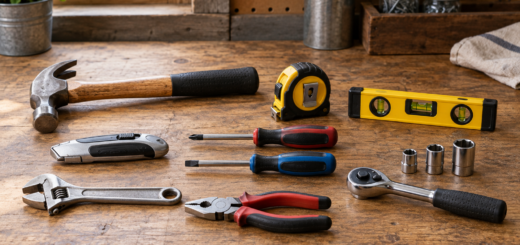
For hand tools, a mid-priced set of screwdrivers, pliers, and adjustable wrenches usually beats a large bargain kit filled with pieces you will never use. Cheap drivers can have soft tips that round over, then slip and damage fasteners. Buy fewer tools with comfortable handles and well-fitting tips. A compact home repair tool set is enough for furniture assembly and basic fixes; it is not a substitute for specialist tools when a fastener is seized or a job requires a precise torque.
Warranty pitfalls that affect real value
A warranty is least helpful when the claim process costs more effort than replacing the tool. Check whether the maker offers local service, mail-in repair, or replacement, and whether you pay shipping. Keep the tool’s model number and receipt together. If you buy from a marketplace seller, confirm that the item is new and eligible for the manufacturer’s warranty; unusually low prices can come with unclear seller support.
Also distinguish tool coverage from battery coverage. Batteries age through charging cycles and can lose capacity even without a defect. Leaving lithium-ion packs in a hot car, storing them fully depleted, or using a damaged pack can shorten their life and may complicate a warranty claim. For tools used weekly, batteries can become a larger long-term expense than the drill or saw itself.
When to buy and what to compare
Major holiday sales, spring home-improvement events, and end-of-season clearance can lower kit prices, but compare the actual contents. A bundle with an extra battery is useful only if it matches your platform; a bundle with several low-use tools can inflate the apparent discount. Check the price of the same kit at multiple retailers and compare it with the cost of buying the tool and batteries separately.
Before checkout, make a short list: expected jobs, compatible batteries you already own, warranty term for each included item, and return window. If the tool will see monthly use rather than daily use, a well-supported midrange model is generally a better value than the most expensive professional line. If it will be used weekly on demanding work, spend more on durability and service access—but do not treat a long warranty as evidence that a tool cannot fail.