6 Best Reciprocating Saw Blades for Metal (October 2026) Complete Guide
Key takeaways
- The best reciprocating saw blades for metal compared by TPI, length and bi-metal or carbide teeth, with a guide to matching blades to steel thickness.
What's inside
As an Amazon Associate I earn from qualifying purchases. This post may contain affiliate links at no extra cost to you.
The Diablo 9-inch bi-metal reciprocating blades in the 25-pack are the best all-around choice here for cutting metal. They combine a dual-tooth 14/18 TPI pattern, a coated body and a large quantity, so they suit pipe, conduit, angle iron and auto dismantling without running out mid-project. Choose the EZARC carbide blades instead if you cut cast iron or very thick steel. “Blades for metal” means saw blades with fine, hard teeth, usually bi-metal with a high-speed steel edge, that cut steel rather than wood.
Quick List
- TOLESA 9-Inch 14TPI 5-Pack – best for heavy-duty bi-metal with a cobalt edge in a small pack
- 25 Pack 9-Inch 14/18 TPI Dual-Tooth Set – best for stocking a shop with a large, mixed-pitch supply
- 6-Inch 18 TPI Bi-Metal 8-Pack – best for short, fine-tooth cuts in thinner metal
- Diablo 9-Inch Bi-Metal 25-Pack – best for general metal cutting and auto dismantling in bulk
- DEWALT 10-Piece Bi-Metal Combination Set (DW4898) – best for mixed jobs in a case with several lengths
- EZARC 6-Inch Carbide 8TPI 3-Pack – best for thick steel, cast iron and tough materials
Which One Is Right for You?
| If you… | Choose |
|---|---|
| cut cast iron, thick plate or hard fasteners and accept a higher cost per blade | EZARC 6-Inch Carbide 8TPI |
| need a sturdy general-purpose blade you can buy in bulk | Diablo 9-Inch Bi-Metal 25-Pack |
| do a few heavy-duty jobs a year and prefer a small pack of cobalt-edged blades | TOLESA 9-Inch 14TPI 5-Pack |
| want a variety of lengths and tooth counts stored in one case | DEWALT 10-Piece Combination Set |
| work on conduit, sheet and thin tubing in tight spaces | 6-Inch 18 TPI Bi-Metal 8-Pack |
| run a shop or crew and go through blades quickly | 25 Pack 9-Inch 14/18 TPI Dual-Tooth Set |
The first question is the thickness of what you cut. Thin and medium steel is a job for bi-metal, where fine teeth and a flexible body do the work. Thick, hard or abrasive material justifies the extra expense of carbide teeth. Length follows access: nine inches suits demolition and larger stock, and six inches suits tighter, shorter cuts.
All 6 Picks in Detail
1. TOLESA 9-Inch 14TPI 5-Pack – Best for Heavy-Duty Bi-Metal in a Small Pack
As an Amazon Associate we earn from qualifying purchases at no extra cost to you.
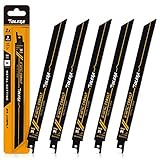
The TOLESA blades are positioned as heavy metal blades: nine inches long, 14 teeth per inch, bi-metal with an 8 percent cobalt edge and a 0.9 millimeter body. Eight percent cobalt is a standard high-end bi-metal grade, which holds its edge better at heat than basic high-speed steel. A five-pack is the right size for someone who cuts metal several times a year rather than daily.
- 9-inch length, 5 blades per pack
- 14 TPI set teeth, per the listing
- Bi-metal with an 8 percent cobalt edge, according to the listing
- 0.9 millimeter thickness as described in the listing
- Labeled for heavy metal cutting
- Shank type: confirm on listing
Pros:
- Cobalt edge is a step above basic bi-metal for tougher steel
- Small pack avoids stocking more than you need
Cons:
- Only five blades, so heavy users will run through them
- A single 14 TPI pitch may be coarse for very thin sheet
Against the Diablo pack, it trades quantity and mixed pitch for a stated cobalt content.
The cobalt edge is the point to notice here. Cobalt in the cutting edge helps the teeth keep their hardness at high temperature, which matters when cutting thicker steel where friction heats the blade. Even so, no bi-metal blade is meant for hardened steel, so do not use it on hardened bolts or case-hardened parts.
Set teeth are bent slightly left and right so the kerf is wider than the blade body. That prevents binding and clears chips, and it is the standard layout for metal-cutting reciprocating blades. At 14 TPI, a blade handles steel from about a quarter inch upward comfortably, and also works through pipe walls with a careful, steady feed.
2. 25 Pack 9-Inch 14/18 TPI Dual-Tooth Set – Best for Stocking a Shop

This is a bulk kit of nine-inch bi-metal blades with a 14/18 TPI dual-tooth design, marketed for metal cutting and auto dismantling. It targets the same job as the Diablo pack, but with an unbranded listing, so its value comes down to price per blade and consistent quality. The listing name does not state the cobalt content or the brand, so treat those as unknown.
- 9-inch length, 25 blades per pack
- 14/18 TPI combined pitch, per the listing
- Bi-metal construction, per the listing
- Dual tooth design
- Advertised for metal cutting and automobile dismantling
- Cobalt content, coating and shank type: confirm on listing
Pros:
- High count suits frequent use and shared job sites
- Mixed pitch gives flexibility across thicknesses
Cons:
- Brand and material grade are not stated, so quality is less predictable
- Not intended for hardened steel or cast iron
Because the listing leaves out the brand and material grade, a sensible approach is to buy the pack for rough, high-volume work where an occasional dull or broken blade does not matter. Use the 18 TPI side of the dual-tooth pattern on thin tubing and the 14 TPI side on thicker angle and plate. If the first few blades perform poorly, return the pack rather than pushing harder, since extra pressure only destroys blades faster.
It is the budget-minded alternative to the Diablo pack, so read the listing details before choosing it.
If you buy a large pack of blades, store them flat and dry in the original box or a case. Loose blades rattle in a bucket, chip their teeth against each other and rust quickly in damp garages. A light coating of oil on the blades keeps them in good shape for the next job.
3. 6-Inch 18 TPI Bi-Metal 8-Pack – Best for Short, Fine-Tooth Cuts

This eight-pack uses six-inch blades with 18 teeth per inch and HSS teeth bonded to a high-carbon steel body. The listing calls them “thick metal” blades, but an 18 TPI pitch is normally chosen for thinner stock such as conduit, tubing and sheet. Treat it as a fine-tooth blade for thin to medium metal rather than a thick-plate blade. The short length makes it manageable in tight cavities.
- 6-inch length, 8 blades per pack
- 18 TPI, a finer pitch suited to thinner metal
- HSS teeth bonded to a high-carbon steel body (bi-metal), per the listing
- Marketed for long-lasting metal cutting
- Brand and cobalt content: confirm on listing
- Shank type: confirm on listing
Pros:
- Fine teeth give smooth cuts in thin material
- Short blade is easier to control in small spaces
Cons:
- Shorter reach limits cuts through thick or wide material
- Fine pitch can clog and cut slowly in thick, soft metals
Between the two six-inch picks, this fine-tooth bi-metal set suits thinner work, while the EZARC carbide set is for the heavy side.
Because the listing’s wording and the tooth count point in different directions, check your own material before buying. If the metal you cut is a quarter inch or thicker, a coarser pitch such as 14 or 8 will work better and clear chips faster. If you mostly cut conduit, thin angle, sheet or exhaust tubing, this blade is a better match than the name suggests. A short blade also resists buckling, which helps with accuracy on small pieces.
The thin-metal rule is to keep several teeth engaged at all times. If a tooth catches and snaps, that is usually a sign of too coarse a blade for thin material. For tubing, rotate the work while cutting so teeth stay in contact with the wall rather than catching an edge.
4. Diablo 9-Inch Bi-Metal 25-Pack – Best for General Metal Cutting in Bulk

If you want one blade type to leave in the truck, this is the safest starting point. The listing describes nine-inch bi-metal blades with a 14/18 TPI dual-tooth design and a coating called Perma-Shield, pitched at auto dismantling and similar demolition. Twenty-five blades is a lot, and that is the point: demolition eats blades, and being able to swap freely keeps work moving.
- 9-inch length, 25 blades in the pack
- Bi-metal construction with a combined 14/18 TPI pattern, per the listing
- Dual tooth design to start cuts and handle varying thickness
- Perma-Shield coating, as named in the listing; confirm the manufacturer’s description of its benefits
- Marketed for auto dismantling and metal demolition
- Shank fit: confirm that it matches your saw’s blade clamp
Pros:
- Large quantity lowers the cost per blade and the worry about wearing one out
- Mixed TPI helps with materials of varying thickness
Cons:
- Bi-metal will not last long on hardened steel or cast iron
- Nine inches is long for tight cavities
Compared with the unbranded 25-pack above, this is the pick for those who prefer a recognized name and a described coating over a bare listing.
The dual-tooth idea is that the finer teeth begin the cut smoothly and the coarser teeth clear material once the blade is working. That makes it easier to start on round stock such as pipe, where a coarse blade can skip and chatter. Keep the saw’s shoe firmly on the work and start at a slower speed, then build up once the kerf is established.
As a rule, use the lowest cutting pressure that keeps the blade moving, and let the teeth do the work. Pressing harder generates heat in the teeth, which dulls them quickly. A few drops of cutting oil on thicker steel help, and clamping the work stops the blade from chattering and snapping.
5. DEWALT 10-Piece Bi-Metal Combination Set (DW4898) – Best for Mixed Jobs in a Case

This is a kit rather than a single-purpose pack. It includes ten bi-metal reciprocating blades in various sizes from six to nine inches, and the listing mentions a case and longer blade life. It is a good fit for a homeowner or a handyman who does a bit of everything: pruning a branch, cutting a pipe, trimming a nail-embedded board, trimming sheet metal.
- 10 blades in a case
- Bi-metal construction
- Various lengths from 6 inches to 9 inches, per the listing
- Combination of tooth counts for different materials; confirm the exact mix on the listing
- Model number DW4898
- Not a metal-only set, so check which blades are for metal
Pros:
- Includes several lengths and tooth counts in a protective case
- Well-known brand with easy replacement
Cons:
- Only part of the set is aimed at metal
- Fewer metal blades than a dedicated pack
This set is the most flexible but the least metal-focused, which is the main difference from the dedicated metal packs on this list.
The size range is the real value. A six-inch blade fits into a wall cavity or a small engine bay, while a nine-inch blade clears a thicker pipe or a deep timber. If you mainly want metal blades, check how many in the set are fine-tooth bi-metal for metal, and consider adding a dedicated metal pack. A case is also useful for keeping a couple of fresh blades protected on a service truck or in a toolbox.
The advantage of a case is that it keeps your blades organized by tooth count, so the right one is easy to find when the job changes. Pick the fine-tooth blades for metal, the coarse blades for wood and demolition, and keep the spent blades out of the case so you do not reach for a dull one by mistake.
6. EZARC 6-Inch Carbide 8TPI 3-Pack – Best for Thick Steel and Cast Iron
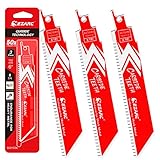
The EZARC blades use carbide teeth, a harder material than the high-speed steel in bi-metal blades. The listing is pitched at thick metal and says carbide lasts up to fifty times longer than bi-metal and can cut cast iron. That is a manufacturer claim and varies with use, but carbide is widely recognized as the better choice for abrasive, hard or heavy material. It is the one to pick for cast iron pipe, thick plate and hardened fasteners.
- 6-inch length, 3 blades per pack
- 8 TPI for thick material
- Carbide teeth, per the listing
- Manufacturer claim of much longer life than bi-metal
- Marketed for cast iron and thick metal
- Shank type: confirm on listing
Pros:
- Carbide teeth stay sharp in tough, abrasive materials
- Coarse pitch clears chips efficiently in thick stock
Cons:
- Carbide is more brittle and can chip if the work moves or vibrates
- Only three blades, and each is a higher-cost item
Choose it when the bi-metal packs struggle, not for light jobs where a cheaper blade does the work.
Because carbide is brittle, secure the work firmly and keep the saw shoe pressed against the surface so the blade does not bounce. Do not bend or pry with a carbide blade. Wear eye protection, since chips from a chipped tooth can fly.
Specs Compared
| Model | Length | TPI | Material | Pack size | Notable feature |
|---|---|---|---|---|---|
| TOLESA 14TPI | 9 in | 14 | Bi-metal, 8% cobalt edge | 5 | 0.9 mm body, set teeth |
| 25 Pack 14/18 TPI | 9 in | 14/18 | Bi-metal | 25 | Dual tooth; cobalt confirm on listing |
| 6-Inch 18 TPI Bi-Metal | 6 in | 18 | Bi-metal (HSS on HCS) | 8 | Fine tooth for thinner metal |
| Diablo Bi-Metal 25-Pack | 9 in | 14/18 | Bi-metal | 25 | Perma-Shield coating, dual tooth |
| DEWALT DW4898 Set | 6 to 9 in | Confirm on listing | Bi-metal | 10 | Storage case |
| EZARC Carbide 8TPI | 6 in | 8 | Carbide teeth | 3 | For cast iron and thick metal |
How We Chose These
This guide is built on desk research. We started with the six blade products supplied for this topic and read each listing for length, tooth count, material and pack size. We then compared those details against manufacturer technical guides on bi-metal and carbide blades and on tooth selection by material thickness. We considered how well each pack matches common metal jobs, from thin conduit to thick plate, and noted where a listing is unclear, such as an 18 TPI blade marketed for thick metal. Where the title omits a value, we say to confirm it on the product page. We do not make claims about cut life or speed that we have not verified.
What to Look For
Tooth count: the three-teeth rule
The most useful rule for metal is to keep at least three teeth in the material at all times. That means thin stock needs a fine pitch and thick stock needs a coarse one. Metal blades generally run from about 8 to 24 teeth per inch. Divide three by the thickness in inches to find the minimum TPI. A quarter-inch steel plate, for example, calls for at least 12 TPI, so a 14 TPI blade works. A thin-wall conduit with a wall of around one sixteenth of an inch needs around 24 TPI or higher. For thick plate of three-eighths of an inch, eight teeth per inch just meets the rule.
Bi-metal versus carbide
Bi-metal blades weld a strip of high-speed steel to a flexible spring-steel body, which gives hard cutting teeth and a body that tolerates bending. Many include around 8 percent cobalt for heat resistance. They are the default for mild steel, pipe, conduit and stainless of moderate thickness. Carbide-tipped blades use harder teeth that excel in cast iron, thick stainless and abrasive materials, but they are more brittle and cost more per blade. A common guideline is to consider carbide when you cut metal thicker than about one eighth of an inch regularly, or when bi-metal blades dull after only a few cuts.
Length and thickness
Choose a blade that extends at least an inch beyond the material and the shoe. Six-inch blades are best for tight spaces and small stock, and nine-inch blades handle larger pipes and demolition. Longer blades flex more, which can wander, and thicker blades resist bending. A body of about 0.9 millimeters, as on the TOLESA, is on the thicker side for a reciprocating blade.
Speed, stroke and blade life
Blade life depends as much on how you run the saw as on the blade you buy. Heat is the enemy. Running a saw flat out through thick steel overheats the teeth, which loses hardness and dulls them in a few cuts. Slow the speed for thick or tough metals and use a faster speed for thin sheet. Use the full stroke by moving the blade through the whole length of its travel rather than using a small section, so wear spreads along the teeth. If the saw has orbital action, switch it off for metal, because orbit is designed for wood and can chatter in steel. When a blade starts to smoke, slow down or stop, because a hot blade loses its edge permanently. Replace blades at the first sign of dullness, rather than pushing harder.
Shank, saw and technique
Most modern reciprocating saws accept a universal shank, but confirm that the blade shank matches your saw’s clamp. Use the saw’s lowest suitable speed for metal, because high speeds overheat the teeth. Clamp the work, keep the shoe against the surface, and apply light, steady pressure. A drop of cutting oil helps with thick steel. Wear safety glasses, gloves for handling sharp blades and hot chips, and hearing protection. Unplug the saw or remove the battery before changing a blade, and check behind a wall for wiring and pipes before cutting.
Questions
What TPI is best for cutting metal?
For most steel, between 14 and 18 TPI is a solid range. Use 18 to 24 TPI for thin sheet and conduit, and 8 to 14 TPI for thick plate and solid bar. Aim to keep at least three teeth in the cut at all times.
Are carbide reciprocating blades worth the extra cost?
For cast iron, thick stainless and hardened fasteners, often yes, because they last far longer than bi-metal. For occasional mild steel or sheet metal, bi-metal is cheaper and perfectly adequate.
Why do my metal-cutting blades keep breaking?
Common causes are loose work, too much pressure, bending the blade sideways, or a pitch that is too coarse for the thickness. Clamp the material, lower the feed pressure and use a finer blade for thin metal.
Can I use wood blades on metal?
No. Wood blades have coarse teeth made of softer steel, so they dull or strip teeth in metal. Use a metal-rated bi-metal or carbide blade with a fine pitch.
Do I need cutting oil with a reciprocating saw?
It is not required for thin material, but a few drops on thick steel reduce heat and extend blade life. Apply it sparingly and wipe up spills before you start cutting.
How long should the blade be?
Pick a blade that is long enough to pass fully through the work and extend at least an inch beyond it. Six inches fits small stock and tight spaces, while nine inches suits larger pipes and demolition.
Update History
- October 20, 2026 – Initial publication; product set drawn from current catalog listings.
- Check the product page for current specifications and availability before buying.
Sources
- Manufacturer technical guides and blog articles on bi-metal and carbide reciprocating saw blades, including material and tooth-selection guidance from EZARC and Spyder
- Retailer listing titles and specification fields for each blade pack
