6 Best Cordless Jigsaws for Curved Cuts (October 2026) Complete Guide
Our Top Picks
 BLACK+DECKER 20V MAX* POWERCONNECT Cordless Jig Saw11.38L x 3.81W x 10H inches4.7 poundsCheck on Amazon


What's inside
As an Amazon Associate I earn from qualifying purchases. This post may contain affiliate links at no extra cost to you.
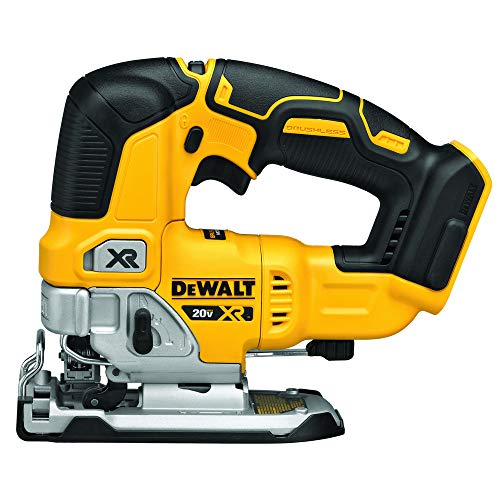
The DEWALT 20V MAX XR jig saw (DCS334B) is the best cordless jigsaw on this list for curved cuts. It pairs a brushless motor, a 3,200 strokes-per-minute top speed, a four-position orbital selector and a lever-style tool-free blade clamp, which together let one saw handle tight scrolls in thin plywood and long sweeping arcs in thicker stock. It suits remodelers, woodworkers and serious DIYers who already own 20V batteries. “Curved cuts” here means any cut that follows a radius rather than a straight line, so blade control and a clear view of the cutline matter more than raw power.
Quick List
- DEWALT DCS334B – best for all-around curved cuts in wood, plastic and thin metal
- BLACK+DECKER BDCJS20B – best for light, occasional scroll work around the house
- SEESII Jig Saw Kit (2 batteries) – best for a ready-to-run kit with spare power
- DEMIMA Jig Saw for DeWalt Batteries – best for people who already own DeWalt 20V packs
- Winmitool 5.5-Amp Corded Jig Saw – runner-up for shop-bound users; it is corded, not cordless
- SEESII Barrel Grip Jigsaw (4.0Ah) – best for close-in control and tight, detailed curves
Which One Is Right for You?
| If you… | Choose |
|---|---|
| want the most capable general-purpose cordless saw for scrolls and long arcs | DEWALT DCS334B |
| need a saw that sits in the garage and comes out a few times a year | BLACK+DECKER BDCJS20B |
| own no cordless batteries and want everything in one box | SEESII Jig Saw Kit (2 batteries) |
| already have DeWalt 20V batteries and want a lower-cost bare saw to use with them | DEMIMA Jig Saw for DeWalt Batteries |
| cut at a bench, never need to leave an outlet and want a plug-in alternative | Winmitool 5.5-Amp Corded Jig Saw |
| prefer to hold the saw like a handle close to the work and want a brushless motor with a larger battery | SEESII Barrel Grip Jigsaw (4.0Ah) |
Most buyers should start with the battery question. If you already own 20V tools, a bare saw saves money and keeps your charging routine simple. If you own nothing, a kit is cheaper than buying a saw, battery and charger separately. Curved-cut quality then comes down to blade choice and technique far more than to which saw you pick.
All 6 Picks in Detail
1. DEWALT DCS334B – Best for All-Around Curved Cuts
As an Amazon Associate we earn from qualifying purchases at no extra cost to you.

This is the saw to pick if you want one cordless jigsaw that does nearly everything well. The listing describes a 20V MAX XR model with a brushless motor, 3,200 blade speed, an LED light and a bare-tool configuration, so a compatible 20V MAX battery and charger are bought separately. It suits cabinet makers cutting sink openings, woodworkers shaping templates, and installers scribing around uneven walls.
- Brushless motor with variable speed up to 3,200 strokes per minute
- One-inch stroke length, per manufacturer and distributor specification pages
- Four-position orbital action for matching cut aggressiveness to the material
- Bevel shoe with detents at common angles and a stop at 45 degrees
- Lever-action tool-free clamp that accepts T-shank blades only
- LED work light and built-in dust blower to keep the line visible
Pros:
- Long stroke and brushless motor give strong, consistent cutting in thick stock
- Orbital selector can be turned off for clean curves and thin metal
Cons:
- Battery and charger are not included with the bare tool
- T-shank-only clamp rules out older U-shank blades you may have in a drawer
Think about the way the features combine on a curve. The brushless motor keeps speed steady when the blade loads up in a tight turn, the orbital selector lets you drop to the cleanest setting for the finishing pass, and the work light removes the shadow that the saw body casts across the line. A longer stroke also means each pass clears more dust from the kerf, which helps you see where you are going. Expect to budget for a 20V MAX battery if you do not own one, since the bare tool does not include it.
Compared with the BLACK+DECKER BDCJS20B, this saw has a longer stroke, a faster top speed and an orbital selector, so it handles thicker material with less effort and costs more because of it.
2. BLACK+DECKER BDCJS20B – Best for Light Occasional Scroll Work

The BDCJS20B is a simple, lightweight 20V MAX POWERCONNECT jigsaw sold as a tool-only unit. It fits the homeowner who needs to cut a curved shelf end, a plant-stand profile or a hole for a vent now and then. It does not try to compete with brushless professional saws, and that is fine for light work in softwood, thin plywood and plastic.
- 20V MAX POWERCONNECT platform; the tool-only version needs a separate battery and charger
- Brushed motor with a variable-speed trigger, topping out around 2,500 strokes per minute per manufacturer information
- Three-quarter-inch stroke length according to distributor specification pages
- Shoe bevels left and right up to 45 degrees
- Tool-free blade change that takes both U-shank and T-shank blades
- No orbital action listed, so it relies on blade choice for cut speed
Pros:
- Accepts both common blade shank types, which widens blade choice
- Light and easy to control for small curved cuts
Cons:
- Brushed motor and short stroke make thick hardwood slow work
- No orbital setting means less aggressive cutting for a given blade
The lack of an orbital setting is not a dealbreaker for curves, since orbit is something you usually turn down anyway. What you give up is speed in thick material. Pair it with a fine-tooth scroll blade for thin stock, keep the feed pressure light, and let the short stroke do small, controlled work. Because it shares a battery platform with other POWERCONNECT tools, it is easiest to justify if you already have those batteries on a shelf.
If you expect to cut thicker boards regularly, the DEWALT DCS334B is the saw to step up to, while this one is the sensible low-commitment choice.
3. SEESII Jig Saw Kit (2 Batteries) – Best for a Ready-to-Run Kit

This SEESII package arrives with two 2.0Ah batteries and a charger, so there is nothing else to buy before the first cut. It is aimed at DIYers who want to cut wood, PVC and thin metal without committing to a tool brand. Because the second battery means you can swap and keep working while one charges, it suits weekend projects where you cut for an hour or two at a time.
- Two 2.0Ah batteries and a charger included, per the listing title
- Bevel cuts of plus and minus 45 degrees
- Four orbital settings for wood, metal and PVC
- Variable speed control; confirm the exact top speed on the product page
- Motor type and nominal voltage: confirm on listing
- Intended for wood, metal and PVC cutting according to the listing
Pros:
- Complete kit with spare battery means no extra purchase to get started
- Orbital settings and bevel range cover most hobby cutting tasks
Cons:
- Batteries are not part of a larger tool platform you can reuse elsewhere
- Replacement batteries and parts depend on the brand continuing to stock them
A kit like this also makes sense as a gift or a first cordless tool, because there is no compatibility question to resolve. The trade-off is that the batteries are only useful with this saw, so if you later move to a larger tool collection you will end up with two systems. Read the listing for motor type, top speed and warranty terms, since the title does not state them, and plan on buying a few narrow scroll blades for curved work if the included blades are general purpose.
Next to the DEMIMA saw, this kit costs more up front but includes the power, while the DEMIMA only makes sense if you already own compatible DeWalt batteries.
4. DEMIMA Jig Saw for DeWalt Batteries – Best for Existing DeWalt 20V Owners

This is an independent-brand jigsaw designed to accept DeWalt 20V batteries. That makes it a way to add a jigsaw to an existing battery collection without paying for a premium bare tool. It is a reasonable choice for a homeowner with a DeWalt drill who needs an occasional curved-cut saw. Compatibility is the key point: confirm the battery fit and the warranty implications on the product page before relying on it.
- Designed for DeWalt batteries, according to the listing title; the battery is not clearly included, so confirm what ships
- Seven variable speed settings up to 3,200 per the listing
- Bevel cuts to 45 degrees
- Three orbital motions to adjust cut aggressiveness
- LED work light
- Supplied with jigsaw blades according to the listing
Pros:
- Uses batteries you may already own, avoiding another battery platform
- Orbital settings and LED light are features usually found on better saws
Cons:
- Not made by the battery brand, so fit and support are less certain
- Motor type and build details are not stated in the listing name
For occasional use, the appeal is obvious: you keep one battery family and add a saw. The caution is equally clear. A tool built by a different company to use another company’s batteries depends on the fit being right and the electronics behaving well, and any warranty claim becomes more complicated. Before you buy, check that your exact battery model is listed as compatible, and look at what the product page says about blades included, speed range and return policy.
Compared with the DEWALT DCS334B that uses the same batteries natively, this saw trades brand support and proven durability for a lower entry cost.
5. Winmitool 5.5-Amp Corded Jig Saw – Runner-Up for Corded Use
This product does not match the cordless topic because it plugs into a wall outlet. It is included here as a runner-up for readers who cut at a bench or in a garage with power nearby, and who care more about unlimited run time than portability. A 5.5-amp motor is typical for a mid-range corded jigsaw and is plenty for curved cuts in wood sheet goods.
- Corded operation with a 5.5-amp motor, per the listing
- Six speed settings for matching speed to material
- Four orbital settings
- Bevel cutting at plus and minus 45 degrees
- Designed for wood cutting according to the listing title
- No battery or charger needed
Pros:
- Constant power with no battery to charge or replace
- Full set of orbital and bevel controls at a plug-in level
Cons:
- The cord limits reach and can snag on curved cuts in large panels
- Not a cordless tool, so it does not fit the topic of this guide
Where this saw does earn its place is in a fixed workshop. Without a battery to think about, it is ready whenever you flip the switch, and the orbital and bevel controls let you handle the same curved layouts as a cordless model. Keep the cord behind you and clear of the blade, support large panels so the cord is not dragging across the cutline, and unplug the saw before changing blades. If portability matters, treat this as a comparison point rather than a pick.
If you truly need a cordless saw, skip this one and look at the SEESII kit as the closest ready-to-use alternative.
6. SEESII Barrel Grip Jigsaw (4.0Ah) – Best for Close-In Control

A barrel-grip jigsaw puts your hand around the body of the saw rather than on top of it, which lowers the center of gravity and lets you see the line closely. For curved cuts that matters, because steering the blade through a tight radius is easier when your wrist is near the work. This SEESII model comes with a 4.0Ah battery and a brushless motor according to the listing, making it the longest-running option in the group.
- Barrel-grip body for close control and a lower hand position
- 4.0Ah battery included, per the listing title
- Brushless motor, per the listing
- Variable speed, orbital settings and bevel range: confirm on listing
- Charger inclusion: confirm on listing
- Blade shank compatibility: confirm on listing
Pros:
- Barrel shape gives good feel for tight curves and flush work
- Larger battery supports longer cutting sessions per charge
Cons:
- Barrel grips take some adjustment if you are used to top-handle saws
- Less leverage for pushing through thick stock than a top-handle saw
Barrel-grip saws shine on flush trimming, small scrolls and cuts made while leaning over a work surface, because your forearm lines up with the blade. They are less comfortable when you need to lean your body weight into a thick board. The 4.0Ah battery should give a longer working window than the smaller packs in this group, though the actual run time depends on the material and speed you use. Check the listing for the charger, blade clamp type and warranty before committing.
It is the closest alternative to the DEWALT DCS334B for people who want brushless power, but the grip style is the real difference.
Specs Compared
| Model | Power source | Motor | Top speed | Orbital | Bevel | Battery included |
|---|---|---|---|---|---|---|
| DEWALT DCS334B | 20V MAX battery | Brushless | 3,200 strokes/min | 4 positions | Up to 45 degrees | No (bare tool) |
| BLACK+DECKER BDCJS20B | 20V MAX POWERCONNECT battery | Brushed | About 2,500 strokes/min | None listed | Up to 45 degrees | No (tool only) |
| SEESII Jig Saw Kit | Included 2.0Ah batteries | Confirm on listing | Confirm on listing | 4 settings | Plus/minus 45 degrees | Yes, two batteries and charger |
| DEMIMA Jig Saw | DeWalt-type 20V battery | Confirm on listing | Up to 3,200 per listing | 3 motions | Up to 45 degrees | Confirm on listing |
| Winmitool Corded | Corded, 5.5 amp | Confirm on listing | 6 speeds, top speed confirm on listing | 4 settings | Plus/minus 45 degrees | Not applicable |
| SEESII Barrel Grip | 4.0Ah battery | Brushless | Confirm on listing | Confirm on listing | Confirm on listing | Battery yes; charger confirm on listing |
How We Chose These
This guide is based on desk research rather than bench work. We began with the six products supplied for this topic and read each listing title, the manufacturer information that was available, and distributor specification pages for the two name-brand saws. We then compared the features that matter most for curved cuts: stroke length, speed range, orbital control, blade clamp style, bevel range, power source and what ships in the box. Where a listing did not state a value, we say so and ask you to confirm it on the product page. One item is corded and is labeled as a runner-up for that reason. We do not claim performance results we have not verified.
What to Look For
Blades matter more than the saw
For curved cuts, the blade does most of the steering. Narrow scroll blades turn tight radii but wander on thick stock, while wide blades track straight and resist twisting but need a gentler curve. As a rule of thumb, the blade width roughly limits how tight a radius you can follow: a thin scroll blade can handle curves of an inch or two in thin plywood, while a wide framing blade needs sweeping arcs. Choose tooth count by material. Coarser teeth around six to ten per inch cut wood quickly, and finer teeth at fourteen to twenty-four per inch suit thin metal and laminates with less tear-out. Check whether your saw takes T-shank blades, U-shank blades or both, because that sets your blade choices for years.
Orbital action, stroke length and speed
Orbital action pushes the blade forward on the upstroke so it cuts faster and clears chips, but it leaves a rougher edge. For curves, use little or no orbit in thin or finish-grade material, and a higher setting for rough cuts in thick boards. Stroke length is how far the blade travels up and down. A longer stroke, such as one inch, clears more sawdust per stroke and cuts thick stock faster, while a three-quarter-inch stroke is fine for light work. Top speed is quoted in strokes per minute, and a variable trigger or dial lets you slow down for metal and plastic, which melt or chatter at high speed.
Brushless motors and battery platforms
A brushless motor generally runs cooler, wastes less energy and lasts longer under load than a brushed motor, which is why it is the better choice if you cut often. Battery platform is just as important. If you already own 20V batteries, a bare tool of that brand avoids paying for another battery and charger. If you own none, a kit with two batteries is more practical. Be cautious with saws designed to use another brand’s batteries: confirm the fit, and understand that the battery maker’s warranty may not cover use in third-party tools.
Bevel, shoe and visibility
A bevel shoe tilts the blade so you can cut curved edges at an angle, useful for coping or scribing. Detents at common angles make setup quick. A flat, smooth shoe, or a snap-on cover, helps protect finished surfaces. An LED light and a dust blower matter more than they seem, because a curve is only as accurate as your view of the line.
A worked example
Say you need to cut a six-inch circle in three-quarter-inch plywood for a speaker mount. Mark the circle, clamp the board so the cut area overhangs the bench, and drill a half-inch starter hole just inside the line. Fit a narrow, fine-tooth scroll blade, set orbital to zero or one, and set the speed around the middle of the dial. Cut slowly, letting the blade follow the line without pushing sideways. If the blade binds, back out and make short relief cuts toward the line. Always remove the battery before changing blades, and wear eye and hearing protection.
Questions
Is a cordless jigsaw strong enough for curved cuts?
Yes, for most household and woodworking jobs. A cordless saw with a decent battery easily cuts curves in plywood, solid wood and plastic. It may run out of charge faster when cutting thick hardwood or metal, so carry a spare battery if you plan long sessions.
Should I turn orbital action on for curves?
Usually keep it low or off for curves. Orbital action speeds up straight rough cuts but pushes the blade into the side of a tight curve and leaves a ragged edge. Use higher settings only when speed matters more than finish.
What is the difference between T-shank and U-shank blades?
They are two different tang designs that fit different clamps. T-shank is the more common standard today, while U-shank is older. Check which your saw accepts, since some models take only one type.
Is a barrel-grip jigsaw better for curves?
It can be, because your hand sits closer to the cutline and the saw’s weight is lower. Many users find that gives finer control on detailed work. A top-handle saw usually gives more downward force for thick material.
Can I use a battery from another brand in a jigsaw?
Only if the saw is built for that battery. Some third-party tools are designed to accept popular battery packs, but fit, performance and warranty coverage vary. Read the listing carefully and confirm compatibility with your battery model.
How do I stop splintering on the underside of the cut?
Use a fine-tooth blade, reduce or turn off orbital action, and keep the shoe flat against the panel. Cutting with the good face down on a standard blade also helps, since jigsaw teeth cut on the upstroke and splinter the top face.
Update History
- October 20, 2026 – Initial publication; product set drawn from current catalog listings.
- Check the product page for current specifications and availability before buying.
Sources
- Manufacturer and distributor specification pages for DEWALT and BLACK+DECKER jigsaws
- Retailer listing titles and specification fields for the SEESII, DEMIMA and Winmitool products
