
What's inside
- Contents
- How tile nippers work
- Types of tile nippers
- Features that matter on a listing
- Comparison table of nipper styles
- Technique for clean curves and notches
- When another tool is the better choice
- Care and maintenance
- Buyer checklist
- Mistakes to avoid
- Safety when nipping tile
- Frequently asked questions
- Bottom line
As an Amazon Associate I earn from qualifying purchases. This post may contain affiliate links at no extra cost to you.
The short answer: the best tile nippers are the ones whose jaws suit the material you are cutting, whose handles give you leverage without cramping your hand, and whose cutting edges stay aligned under pressure. For ceramic wall tile and small curved cuts, a pair of carbide-wheeled nippers is the usual choice. For harder or denser tile, or for lots of repeated nibbling, a compound-action pair gives more bite for less hand effort. Nippers are for shaping and trimming, not for long straight cuts, so pair them with a scoring cutter or a saw for the big work.
This guide does not rank products or name models. It explains how nippers work, what the details on a listing mean, how to use them without wrecking the tile, and where they fit alongside other cutting tools. Check the current specifications and instructions on any tool you consider, and test on a spare tile before committing to your good ones.
Contents
- How tile nippers work
- Types of tile nippers
- Features that matter on a listing
- Comparison table of nipper styles
- Technique for clean curves and notches
- When another tool is the better choice
- Care and maintenance
- Buyer checklist
- Mistakes to avoid
- Safety when nipping tile
- Frequently asked questions
- Bottom line
How tile nippers work
Tile nippers look a little like pliers, but they do not slice cleanly through a tile the way a pair of scissors cuts paper. Instead, the hardened jaws concentrate force on a very small bite along the edge of the tile, causing a tiny fragment to crack away. You then take another bite, and another, gradually nibbling a curve or notch. Because every bite is small, the technique gives you control over irregular shapes that a straight cutter or a saw cannot easily follow.
That nibbling action is also why technique matters so much. Take too big a bite and the crack can run past your line and ruin the tile. Take small, deliberate bites and the result is a rough but accurate edge that you can then refine with a file or abrasive stone. Thinking of nippers as a shaping tool rather than a cutting tool makes it easier to choose the right pair and to use it well.
What they are good at
Nippers shine in tight, awkward spots: around pipes, drains and outlet boxes, along curved walls, and where a tile needs a notch to wrap around a corner. They are also the tool of choice for trimming small slivers off an edge when a tile is only a hair too large.
What they are not good at
Long straight cuts, thick stone, and very dense tile are better handled by other tools. Nippers can struggle with tough, glassy surfaces, and they may chip the glaze if the tile is brittle. A straight run through a thick floor tile with nippers is slow, tiring and unpredictable.
Types of tile nippers
Wheeled nippers
These have two small cutting wheels, one on each jaw, usually made of a hard material such as carbide. The wheels roll slightly as they bite, which reduces friction and helps the jaws grip the tile edge. Many tilers like them for ceramic wall tile and for fine, controlled curves. The wheels are often replaceable, and some are designed to be rotated to a fresh edge when one section wears.
Compound-action nippers
A compound design uses a double pivot so the force applied at the handles is multiplied at the jaws. They take more effort to close fully but demand less squeezing from your hand, which matters on a long cutting session. Compound nippers are popular for denser tile and for people with weaker grip strength.
Mosaic and small-format nippers
Mosaic nippers have narrow, precise jaws made for small tiles, glass tesserae and tight cuts. If you are working with small mosaic pieces, a smaller pair gives you much better visibility and control. They are not intended for larger or thicker tiles.
Glass and stained-glass nippers
Some sellers list nippers for glass tile separately. These are tuned for brittle, glassy materials that tend to shatter rather than chip. If your project uses glass tile, look for a pair that explicitly mentions it, and check the listing before using standard nippers on glass.
Features that matter on a listing
Jaw material and hardness
The jaws take the abuse, so the material matters. Tungsten carbide edges or wheels are known for staying sharp over time. Steel jaws with a hardened tip are common on budget pairs and wear more quickly on dense tile. Look for a description of the cutting surface rather than a generic phrase such as hardened steel.
Wheel size and replaceability
Larger wheels spread wear over more material and roll more smoothly, while smaller wheels fit into tighter curves. If the wheels are replaceable, check whether spares are sold separately, because a tool that cannot be refreshed becomes disposable once the edge dulls.
Spring and return action
A built-in spring that opens the jaws after each bite saves effort. A weak spring forces you to pull the handles apart by hand, and a spring that is too stiff tires your fingers. Most people prefer a firm but gentle return.
Handle length and grip
Longer handles provide more leverage, and padded or dipped grips reduce hand fatigue. Check whether the handle shape suits your hand size. If you have smaller hands, a long-reach handle may feel awkward, so look for a design that lets you open the jaws without stretching.
Jaw opening and alignment
When the jaws close, the cutting surfaces should meet cleanly with no gap or side wobble. Misaligned jaws chew the tile edge instead of nibbling it. A slightly loose pivot is a common complaint in cheaper tools, and customer comments are a useful clue.
Comparison table of nipper styles
This table describes the general behavior of each style. It does not describe any particular product, so confirm details on the actual listing.
| Style | Best for | Effort | Advantages | Trade-offs |
|---|---|---|---|---|
| Wheeled | Ceramic wall tile, fine curves | Moderate | Smooth bite, often replaceable wheels | Can struggle on very dense tile |
| Compound-action | Denser tile, long sessions | Lower hand effort | More leverage, less fatigue | Slower closing, often heavier |
| Mosaic | Small tiles, tesserae | Low | Precise, good visibility | Not for thicker tile |
| Glass-specific | Glass tile | Low to moderate | Designed for brittle material | Narrow use |
| Combination pliers | Light, occasional jobs | Moderate | One tool, several functions | Jack of all trades |
If you are comparing a few pairs, start by browsing carbide tile nippers and read how each listing describes its jaws, spring and handle.
Technique for clean curves and notches
The best tool in the world will not rescue careless technique. These steps cover the usual approach.
- Mark your line. Use a pencil or a fine marker on the glaze so you can see where you are heading. Mark the waste side clearly.
- Score where you can. A scoring wheel or a straight cutter can remove the bulk of the waste if part of the cut is straight, leaving only the curve for the nippers.
- Support the tile. Hold it firmly over a flat surface with the waste edge overhanging. A tile that flexes is more likely to crack.
- Take small bites. Start with the jaws only slightly over the edge and squeeze gently.
- Work back towards your line. Approach the line gradually. Do not try to make the final shape in one go.
- Move around inside curves. For a tight inside curve, make a series of relief bites that run toward the center and then nibble away the ridges between them.
- Refine the edge. Use a file, a rubbing stone or an abrasive block to smooth the rough edge and to take off any sharp burr.
- Dry-fit. Offer the tile up to the space before adding mortar, and trim a little more if needed.
Cuts for pipes and outlets
A common trick is to cut the tile in two, nibble a half-circle from each piece, and then rejoin them around the pipe. This reduces the risk of cracking the whole tile and makes small adjustments easier. Measure twice, mark clearly, and leave a small gap, because a trim ring or escutcheon will often cover the edge.
Glazed versus unglazed edges
Glaze tends to chip as you nibble, and the chipping can run along the surface. Many tilers nibble from the back side towards the face or support the glaze with painter’s tape to limit flaking. Try both on a spare piece to see what works for your tile.
When another tool is the better choice
Nippers are one tool in a set. Knowing when to put them down saves tile and patience.
Wet saw
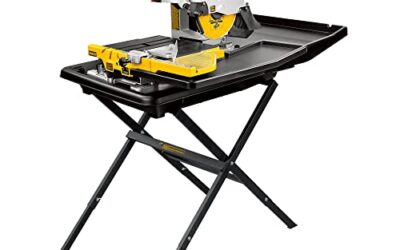
For long straight cuts, miters and dense porcelain, a wet saw is the standard answer. It cuts cleanly and keeps dust down. Many people rent one for a single project rather than buying.
Manual scoring cutter
A manual tile cutter with a scoring wheel is quick and quiet for straight cuts on suitable tile. It pairs well with nippers: score and snap the straight section, then shape the curve with the nippers.
Angle grinder with a diamond blade
For L-shaped cuts, notches and curves in dense tile, some people use a grinder with a diamond blade. It is fast but throws a lot of dust and demands good protective gear and steady hands. It is not a beginner’s first choice for a visible cut.
Rod saw and tile files
A rod saw is a gritty wire in a handle that can cut gentle curves slowly. A coarse file or tile rubbing stone helps smooth cut edges after nipping. Neither is fast, but both are cheap.
Care and maintenance
Nippers work harder when they are looked after. Brush off dust and slurry after each session, and wipe the jaws with a dry cloth. A drop of light oil on the pivot keeps the action smooth, but avoid getting oil on the cutting wheels, because it can make the jaws slip on the tile. If your pair has replaceable wheels, check them for flat spots or chips and swap or rotate them following the maker’s instructions.
Store the tool dry, with the jaws slightly open if the spring design allows it, so the spring is not constantly loaded. Keep it away from a wet bucket, since rust on the pivot or on steel jaws leads to stiff action and rough cuts. Avoid using nippers as pliers or pry bars, because the jaws are hard but can chip when twisted.
Buyer checklist
- Does the listing say what the jaws or wheels are made of?
- Is the tool designed for your tile type: ceramic, porcelain, glass or mosaic?
- Are replacement wheels or spare parts available?
- Does the handle suit your hand size, and does it have a comfortable grip?
- Does the spring open the jaws without a fight?
- Do customer comments mention jaw misalignment, loose pivots or chipped wheels?
- Do you need a single pair or a small and a large pair for different tasks?
- Do you already have a straight cutter or a saw for the long cuts?
- Do you have eye protection, gloves and a file or stone to finish edges?
- Is a return option available if the tool is misaligned on arrival?
Mistakes to avoid
Taking big bites
Large bites are the main cause of cracked tiles. Small bites keep the break contained and give you finer control.
Cutting without support
Holding a tile in mid-air makes it flex. Rest it on a firm surface and keep your grip close to the cut.
Expecting a smooth edge straight from the tool
Nippers leave a ragged edge. Plan to file or stone it, or to hide it under a trim, a fixture, or the grout line.
Using the wrong tool for dense tile
If you are battling the tool and the tile keeps splintering, stop. A saw or grinder may be the better answer, and forcing nippers can damage both the tile and the jaws.
Cutting the final shape on a good tile first
Practice on spare tile or an offcut, especially if you have never nipped before. A scrap piece teaches you more than any guide.
Letting the tool rust or clog
Tile slurry dries into a hard film. Wipe the tool clean and dry before storing it.
Safety when nipping tile
Breaking tile creates sharp fragments that can fly. Treat even a small cut with care.
- Wear safety glasses. Chips can fly toward your face with real force. Close-fitting eye protection is cheap and effective.
- Wear gloves. Cut edges are razor-sharp. Cut-resistant work gloves reduce the risk, while still giving enough dexterity for the job.
- Control dust. Grinding or filing edges creates fine mineral dust. Use a suitable mask or respirator, ventilate the area, and consider damp methods.
- Keep fingers clear. Never place your fingers between the jaws and the tile, and keep them out of the line of the closing handles.
- Collect the offcuts. Sweep small shards promptly with a brush and pan, then dispose of them in a sturdy container so no one is cut when emptying a bin.
- Mind your hands. Repetitive squeezing can tire the hand. Rest often, and switch to a compound-action tool or another method if your hands ache.
- Protect floors and surfaces. A scrap board or a rubber mat under the tile keeps chips from scratching a finished surface.
Frequently asked questions
1. Can tile nippers cut porcelain?
They can nibble some porcelain, but dense, hard porcelain is more demanding and may require a stronger compound-action pair or a different tool. Check the maker’s guidance for the tile you own.
2. How big a bite should I take?
Keep every bite small, and smaller still on brittle or glazed pieces. Test on a spare tile to find what your material tolerates.
3. Do I need wheeled or plain jaws?
Wheeled jaws roll as they bite and are a favorite for ceramic. Plain jaws can work, but they usually wear faster. Read the description of the cutting surface before buying.
4. Can I cut a perfect circle with nippers?
You can get close with patience, but expect a rough edge that needs filing. For perfect circles, a hole saw designed for tile may be a better option.
5. Why does my tile keep cracking past the line?
Usually the bite is too big, the tile is unsupported, or the tile is under tension from the cut. Support it, shrink your bites, and approach the line gradually.
6. Should I nip from the front or the back?
It varies by tile. Many people start from the back to limit glaze chipping, then finish from the front. Test on scrap pieces first.
7. How do I sharpen tile nippers?
Many pairs are not meant to be sharpened by hand. Replace worn wheels if the design allows, or replace the tool. Check the maker’s instructions before attempting any resharpening.
8. Is a wet saw better than nippers?
For straight cuts and dense tile, usually yes. Nippers are better for small curves and quick trims where a saw cannot reach. Many projects use both.
Bottom line
Choose nippers by the tile you are cutting and the hours you will spend using them. Wheeled pairs suit most ceramic jobs, compound-action pairs ease the effort on tougher tile, and mosaic pairs handle tiny pieces. Take small bites, support the tile, refine the edge and wear eye and hand protection. Product details change, so check current specifications and instructions before buying or using any tool. When you are ready to compare, you can browse compound tile nippers and check each listing against the points above.
Disclosure: As an Amazon Associate, we earn from qualifying purchases. Links marked as sponsored may earn us a commission at no extra cost to you.
Related guides
More from Amazon
Programs that pair well with the guide above. Offers and eligibility are set by Amazon and may change.
A free business account with business pricing and bulk-buying tools for work, shop or home office.
Create a business accountFree shipping on eligible items, Prime Video and more. Eligible new members can start with a free trial.
Start a Prime free trialAudiobooks and podcasts to listen to on the go. Eligible new members can start with a free trial.
Try Audible freeAd-free music streaming. Eligible new subscribers can start with a free trial.
Try Music Unlimited freeAs an Amazon Associate we earn from qualifying purchases.
Write Your Review
No reviews yet. Be the first to share your experience!