
What's inside
- Top Picks at a Glance
- Comparison Table
- 1. DEWALT DWA171424: Best Overall for General Wood Cutting
- 2. Revvstark 3-Pack: Best Value for Mixed Projects
- 3. FOXBC 60-Tooth Fine Finish: Best Budget Pick for Plywood and Trim
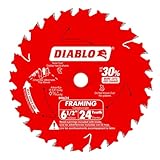
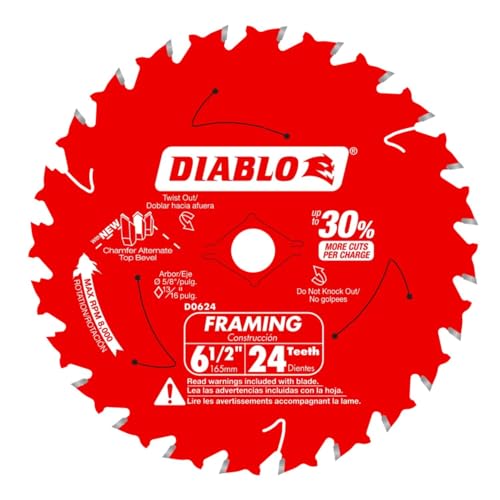
- 4. Diablo Framing 24-Tooth (2-Pack): Best Premium Framing Blade
- 5. Diablo Steel Demon Cermet II: Best for Cutting Metal
- 6. DEWALT 8-1/4 in. 24T: Best for Larger Saws
- 7. CRALY 6-1/2 in. 60-Tooth Thin Kerf: Best for Compact Cordless Saws
- Also Consider
- How We Chose
- Buying Guide: How to Choose Circular Saw Blades
- Common Mistakes to Avoid
- Frequently Asked Questions
- Which One Should You Buy?
- Sources
As an Amazon Associate I earn from qualifying purchases. This post may contain affiliate links at no extra cost to you.
The best circular saw blades are the ones matched to the job and the saw: a 24-tooth framing blade such as the DEWALT DWA171424 for fast rough cuts, a 60-tooth thin kerf finish blade such as the FOXBC 60T for plywood and trim, and a cermet-tipped blade such as the Diablo Steel Demon when the material is steel. This guide is for anyone searching for the best circular saw blades, the best saw blade for circular saws or a blade to swap onto an older saw, and it sorts seven real blades by what they actually cut. If you only want one blade to start with, the DEWALT 24T is the safe general-purpose pick, and a Revvstark three-pack covers the most ground for the least outlay.
A blade swap is the cheapest upgrade you can make to any saw. A dull 18-tooth blade that shipped with a budget saw makes a good motor feel weak, burns the cut and tears plywood faces. The right blade changes that in a few minutes. The catch is that blade choice is not a single ranking. Tooth count, tooth shape, kerf and diameter all pull in different directions, so the sections below explain the trade-offs in plain terms before the picks.
As an Amazon Associate we earn from qualifying purchases at no extra cost to you.



Our Top Picks

Top Picks at a Glance
- Best Overall: DEWALT 7-1/4 in. 24T (DWA171424) for framing and general wood work
- Best Value: Revvstark 3-pack 24T/40T/60T combo for mixed projects
- Best Budget Finish Cuts: FOXBC 7-1/4 in. 60-tooth fine finish blade
- Best Premium Framing: Diablo 7-1/4 in. 24-tooth framing blade
- Best for Metal: Diablo Steel Demon 7-1/4 in. 48-tooth cermet blade
- Best for 8-1/4 in. Saws: DEWALT 8-1/4 in. 24T framing and ripping blade
- Best for 6-1/2 in. Cordless Saws: CRALY 6-1/2 in. 60-tooth thin kerf blade
Comparison Table
| Product | Best for | Key specs | Watch for | Price tier |
|---|---|---|---|---|
| DEWALT DWA171424 | Framing, rough ripping | 7-1/4 in., 24 teeth, wood cutting | Kerf not listed; rough finish on veneer | Budget |
| Revvstark 3-pack | Mixed jobs on one saw | 7-1/4 in., 24T + 40T + 60T, 5/8 in. arbor | Brand has less track record than the big names | Budget |
| FOXBC 60T | Plywood, trim, finish cuts | 7-1/4 in., 60 teeth, sold as a replacement for Freud and DEWALT 60T blades | Kerf not listed; slower in thick lumber | Budget |
| Diablo framing 24T (2-pack) | Daily framing and decking | 7-1/4 in., 24 teeth, 8,000 max RPM, TiCo+ carbide | Overkill for occasional use | Mid-range |
| Diablo Steel Demon | Mild steel, studs, angle iron | 7-1/4 in., 48 TCG teeth, cermet, Perma-Shield coating | Not for wood; needs a saw rated for metal cutting | Mid-range |
| DEWALT 8-1/4 in. 24T | Larger worm-drive and big sidewinder saws | 8-1/4 in., 24 teeth, framing and ripping | Only fits saws that accept this diameter | Budget |
| CRALY 6-1/2 in. 60T | Compact cordless saws, clean plywood | 6-1/2 in., 60 teeth, 5/8 in. arbor, thin kerf, carbide tipped | Smaller depth of cut on the saw | Budget |
1. DEWALT DWA171424: Best Overall for General Wood Cutting
- Diameter: 7-1/4 in.
- Teeth: 24, intended for wood cutting
- Maker model number: DWA171424
- Kerf and arbor: not listed in the retailer title; check the blade label before you buy
- Sold singly, with a three-pack version also listed
Best for: homeowners with a standard 7-1/4 in. corded or cordless saw who cut dimensional lumber, fence boards and deck framing. Skip if: your main material is veneered plywood or melamine, where a 24-tooth blade will chip the surface.
A 24-tooth blade has big gullets between teeth. That is the point: the gullet carries sawdust out of the cut so the blade can feed quickly through a 2×4 without bogging. The trade-off is rougher cut edges, which does not matter when the lumber will be covered by siding, sheathing or a deck board. The DEWALT is the blade most people picture when they say general-purpose circular saw blade, and it has the practical advantage of being easy to find in local stores when a blade gets pinched and ruined.
In practice, expect this blade to rip along the grain quickly and to cross-cut pine and fir with some splintering on the exit side. If you cut with the good face down on a circular saw, the splinters land on the back. Keep a second, finer blade nearby for visible cuts and use this one for everything structural.
Pros: widely available; fast in framing lumber; easy to replace; fits the most common saw size. Cons: rough finish; kerf is not listed, so thin-kerf-dependent cordless saws should check the label; not for plywood faces.
2. Revvstark 3-Pack: Best Value for Mixed Projects
- Diameter: 7-1/4 in.
- Pack: three blades at 24T, 40T and 60T
- Arbor: 5/8 in.
- Listing positions the 24T for framing and the 40T for ripping and cross-cutting
- Carbide-tipped; kerf not listed
Best for: weekend DIYers who want one blade for rough lumber, one for general work and one for finish cuts without buying three separate brands. Skip if: you want a name brand with proven long-term sharpening and warranty support.
The appeal of a combo pack is that it forces the right behaviour. Most home users leave one blade on the saw for years and blame the saw when cuts burn. With three blades at different tooth counts you can pick by task: 24T for studs and decking, 40T when you are cutting a lot of mixed boards and want a middle ground, and 60T for plywood and trim. The 40-tooth blade is the sleeper in the pack, because it is the one that most closely matches the combination blades pros reach for when they do not want to swap constantly.
The unknown is how long the carbide stays sharp. Third-party packs vary, and we have no independent long-term data to share. Treat the pack as a way to learn what tooth count you actually like, then spend more on a premium blade in that count once you know.
Pros: three tooth counts for little outlay; covers framing, general and finish cuts; standard 5/8 in. arbor. Cons: brand less established; kerf not listed; blade life unknown.
3. FOXBC 60-Tooth Fine Finish: Best Budget Pick for Plywood and Trim
- Diameter: 7-1/4 in.
- Teeth: 60, ultra fine finish
- Marketed as a replacement for the Freud Diablo D0760A/D0760X and DEWALT DWA171460 sizes
- Kerf: not listed for this blade
Best for: cutting cabinet-grade plywood, shelving boards, laminate edges and trim stock. Skip if: you are cutting thick pressure-treated lumber in bulk; a 60-tooth blade clogs and heats up.
Sixty teeth means each tooth takes a tiny bite, so the cut edge comes out smooth and the top veneer on plywood tears far less. The price is feed speed. You have to push gently and let the blade do the work, and in wet or resinous lumber the gullets can fill and the blade can burn the cut line. Use a straightedge guide or clamp a board as a fence; a fine blade rewards a straight, controlled push.
Because the listing says it is a replacement for two well-known 60-tooth blades, it is useful to know what those references are. The Freud Diablo D0760X, per retailer spec sheets, is a thin-kerf 60 ATB blade with a 0.059 in. kerf and a 5/8 in. arbor. That is a reference point only: the FOXBC kerf is not listed, so do not assume it matches. If your saw is a cordless model with limited power, the thin-kerf claim matters, so check the blade packaging.
Pros: clean cuts in plywood and trim; low cost for a 60-tooth blade; fits standard saws. Cons: slower cutting; kerf not listed; wears faster if forced.
4. Diablo Framing 24-Tooth (2-Pack): Best Premium Framing Blade
- Diameter: 7-1/4 in.
- Teeth: 24
- Maximum RPM: 8,000
- Carbide: TiCo+ Hi-Density, with Perma-Shield coating mentioned in the listing
- Pack: two blades; a ten-pack is also listed
Best for: builders, deck installers and renovators who cut framing lumber all day. Skip if: you cut a few boards a year; a cheaper blade will last just as long in your hands.
This is the blade that earns its keep through longevity and consistency rather than raw speed. The coated body helps resist pitch buildup, the tooth geometry is designed to track straight, and a two-pack means you always have a fresh blade ready when the first one is dull. Per the manufacturer, Diablo framing blades are built around this style of tooth, and the 8,000 RPM maximum is simply the safety ceiling you must keep your saw under. Check your saw runs below that figure; most corded saws do.
The value argument is straightforward. If the cheap blade dulls and you push harder to compensate, you get burn marks, kickback risk and a tired motor. A sharper premium blade lets the saw work within its limits. For people building a deck or a shed, one pack is plenty.
Pros: long-lasting carbide; tracks straight; pitch-resistant coating; two-pack convenience. Cons: costs more than store-brand blades; unnecessary for occasional use.
5. Diablo Steel Demon Cermet II: Best for Cutting Metal
- Diameter: 7-1/4 in.
- Teeth: 48, triple chip grind (TCG)
- Tip material: cermet
- Coating: Perma-Shield, per the listing
- Intended for ferrous metal such as mild steel; check your saw and the blade label for RPM limits
Best for: cutting steel studs, angle iron, conduit and sheet-metal-based work with a saw that is designed to take a metal blade. Skip if: you only cut wood. Never use a wood saw with a metal blade unless the saw maker allows it.
Cermet is a ceramic-metal composite that tolerates the heat of cutting steel better than ordinary tungsten carbide. The triple chip grind alternates a chamfered tooth with a flat raker tooth, which breaks the chip and lets the blade cut steel with less binding. Cutting metal throws hot chips and sparks, which is why PPE and clearing flammable material from the area matter. Clamp the work, wear eye and hearing protection and do not use your wood-cutting saw guard setup as a substitute for safe practice.
Check the saw maker’s manual first. Some corded saws spin faster than metal-rated blades are designed for, and the blade packaging carries the maximum RPM. This is why many metal-cutting circular saws run slower than wood saws.
Pros: purpose-built for steel; cermet tips; low-binding tooth pattern. Cons: wrong for wood; requires correct saw speed and PPE; not a general-purpose blade.
6. DEWALT 8-1/4 in. 24T: Best for Larger Saws
- Diameter: 8-1/4 in.
- Teeth: 24, framing and ripping
- Maker model number: DWA181424
Best for: owners of 8-1/4 in. circular saws, including some worm-drive models, who want a fast ripping and framing blade. Skip if: your saw is 7-1/4 in.; the blade will not fit.
The larger diameter gives a deeper cut in a single pass. That matters for cutting a 4×4 post from one side or notching large timbers. It also means the blade has more mass, which helps it hold a steady line in thick stock. Always match diameter to the saw’s rated size. A blade that is too large will hit the guard, and one that is too small reduces cut depth and can leave the guard in the wrong position.
The arbor size on the listing is not stated here, so verify that the blade’s bore matches the saw’s arbor (many saws use a 5/8 in. arbor with a diamond knockout, but some use others).
Pros: deeper cuts; fast rip speed; maker-supported size. Cons: limited to saws that accept 8-1/4 in.; rough finish.
7. CRALY 6-1/2 in. 60-Tooth Thin Kerf: Best for Compact Cordless Saws
- Diameter: 6-1/2 in.
- Teeth: 60, ultra fine finish
- Arbor: 5/8 in.
- Carbide tipped, thin kerf, per the listing
Best for: compact 6-1/2 in. cordless saws used for plywood, shelving and trim. Skip if: you need to rip thick hardwood.
Thin kerf blades remove less material, so each cut needs less power. That is why they are popular on battery saws: you get more cuts per charge and less strain on the motor. The trade-off is that a thin plate can flex if you force a turn or twist in the cut, so keep the saw flat on the work and avoid cutting curves.
A 60-tooth blade on a small saw is a good pairing for furniture builds, bookshelves and closet organisers where edge quality counts more than speed.
Pros: low power draw; smooth cuts; good battery economy. Cons: thin plate can flex; slow in thick lumber; fits only 6-1/2 in. saws.
Also Consider
- Makita D-45989-10 (10-pack, 24T): a 7-1/4 in. carbide-tipped framing blade sold in bulk. Good for crews or anyone who goes through blades quickly.
- WORKPRO 7-1/4 in. 60T: a thin-kerf fine-finish alternative if you want a second 60-tooth option at a modest cost.
- CRAFTSMAN 7-1/4 in. 24T framing/ripping (CMAS272524): a basic store-brand framing blade for light use.
- DEWALT 5-1/2 in. 30T metal cutting (DWA7770): for small saws that cut metal; check that your saw accepts a 5-1/2 in. blade and a metal-rated RPM.
How We Chose
This guide is research-based. We did not personally use these products. We started from real, currently listed blades in the store catalogue, then narrowed to seven by diameter, tooth count and intended material. We cross-checked tooth counts, diameters and arbor details against the listing titles and maker model numbers, and we used retailer spec pages for reference figures such as the 0.059 in. kerf quoted for the Diablo D0760X. Where a spec was not stated on the listing, such as the kerf of the DEWALT and FOXBC blades, we wrote “not listed” rather than guess.
We limited each brand to two picks and covered the main saw diameters: 6-1/2, 7-1/4 and 8-1/4 in. We also made sure each wood use (framing, general, finish) and metal cutting were represented. Price is described as budget, mid-range or premium because retail prices move constantly. We did not use star scores or review counts to rank products.
Buying Guide: How to Choose Circular Saw Blades
Match the diameter first
The diameter printed on your saw’s plate or manual is the only size to buy. Common sizes are 6-1/2 in. for compact cordless, 7-1/4 in. for the standard sidewinder, and 8-1/4 in. for some worm-drive and heavy-duty saws. Using a smaller blade reduces cut depth, and a larger one will not fit under the guard. Also check the arbor (centre hole). Many saws use 5/8 in. with a diamond knockout that fits round or diamond-shaped arbors, but not all do.
Pick tooth count by the job
A simple rule of thumb: 24 teeth for ripping and framing, 40 teeth for general mixed use, 60 teeth or more for plywood, laminate and trim. Fewer teeth cut faster but leave a rougher edge. More teeth cut slower but cleaner. If you only own one blade, 40 teeth is the compromise, though a three-pack gives you all three.
Ripping versus crosscut versus plywood
Ripping runs with the grain, so large gullets and a flat-top or aggressive tooth help clear waste quickly. Crosscutting runs across the grain, so a sharper alternating top bevel (ATB) tooth severs fibres cleanly. Plywood has thin cross-laid veneers, so a high tooth count and ATB geometry reduce tear-out. A 60-tooth ATB blade is a typical plywood choice, and cutting with the good face down on a circular saw keeps the exit tear on the back.
Thin kerf or full kerf
Kerf is the width of the slot the blade cuts. Thin kerf blades, such as the 0.059 in. figure quoted for the Diablo D0760X, remove less wood and need less power, which helps battery saws and saves lumber. Full kerf blades are stiffer and track straighter in demanding cuts. Corded saws with 13 to 15 amps handle either. Battery saws generally benefit from thin kerf. If the listing does not state kerf, look at the blade label or the maker’s spec sheet.
Check RPM and material
Every blade has a maximum RPM stamped on it. The Diablo framing blade lists 8,000 RPM, and a saw running above the blade’s rating is a hazard. Metal-cutting blades are designed for specific speeds and materials, so match them to a saw designed for that use.
Common Mistakes to Avoid
- Leaving one 18-tooth blade on the saw for every task. Swapping is quick and the cut quality improves.
- Forcing a dull blade. Burn marks on the wood are a sign it is time to replace or sharpen it.
- Putting a wood blade on a metal job, or vice versa.
- Ignoring blade direction. The arrow on the blade must match the saw’s rotation, and the printed side should face outward on most sidewinders.
- Skipping the unplug or battery removal step before changing a blade.
- Cutting without eye and hearing protection, or without clamping the work.
Frequently Asked Questions
What is the best saw blade for circular saws if I only buy one?
A 40-tooth combination blade is the most flexible single choice, but if you mostly frame or build decks, the 24-tooth DEWALT DWA171424 is the practical pick. A three-pack such as the Revvstark set avoids the compromise entirely.
How many teeth should a circular saw blade have for plywood?
Sixty teeth is a common choice for plywood because the smaller bite reduces splintering. Cut with the good face down on a circular saw and use a clamped straightedge for a clean line.
Can I use a thin kerf blade on any circular saw?
Most saws accept thin kerf blades, and battery saws often prefer them. Check that the arbor size and maximum RPM suit your saw, and note that the thin plate can flex if you twist the saw mid-cut.
Are the best saw blades for circular saws and for arm saws the same?
Not always. Searches for saw blades for arm saws usually mean a radial arm saw or a miter saw, which take different diameters, commonly 10 in. or 12 in., and often a negative hook angle. Check the diameter and hook recommendations in your saw’s manual before buying a blade written for a hand-held circular saw.
How do I know when a circular saw blade is dull?
Burning on the cut edge, the saw needing more push, louder cutting and a rougher finish are the usual signs. Blades with visibly chipped or missing teeth should be replaced immediately.
Can I cut metal with my regular circular saw?
Only if the saw maker permits it. Metal-cutting blades such as the Diablo Steel Demon are designed for specific RPM ranges, and sparks and hot chips create fire and eye hazards. Use a saw designed for metal cutting where possible, and wear proper PPE.
Which blades fit a 7-1/4 inch circular saw?
Any 7-1/4 in. blade with the correct arbor and a maximum RPM above your saw’s speed. The DEWALT 24T, Diablo framing blade, FOXBC 60T and Diablo Steel Demon in this guide are all 7-1/4 in. sizes, though only some are meant for wood.
Which One Should You Buy?
If you cut mostly framing lumber, buy the DEWALT DWA171424 or step up to the Diablo two-pack. If you do a mix of rough and finish work and want to learn what you like, the Revvstark three-pack is the efficient route. For plywood shelving and trim, the FOXBC 60T (or the CRALY 60T for a 6-1/2 in. saw) gives a clean edge at a modest cost. For steel, only buy a metal-rated blade like the Diablo Steel Demon if your saw is designed for it. And for an 8-1/4 in. saw, the DEWALT 24T is the obvious match. Confirm diameter and arbor before ordering, and replace the blade as soon as cuts start burning.
Sources
- DEWALT product and accessory specification pages
- Diablo (Freud) blade specification sheets, including D0760X retailer spec listings
- Makita accessory catalogue
- Retailer listing details for FOXBC, Revvstark, CRALY, WORKPRO and CRAFTSMAN blades
- Circular saw operator manuals from major manufacturers (blade diameter, arbor and RPM guidance)
Last updated: October 2026
Related guides
More from Amazon
Programs that pair well with the guide above. Offers and eligibility are set by Amazon and may change.
A free business account with business pricing and bulk-buying tools for work, shop or home office.
Create a business accountFree shipping on eligible items, Prime Video and more. Eligible new members can start with a free trial.
Start a Prime free trialAudiobooks and podcasts to listen to on the go. Eligible new members can start with a free trial.
Try Audible freeAd-free music streaming. Eligible new subscribers can start with a free trial.
Try Music Unlimited freeAs an Amazon Associate we earn from qualifying purchases.
Write Your Review
No reviews yet. Be the first to share your experience!