
What's inside
- Top Picks at a Glance
- Quick Comparison Table
- 1. Milwaukee M18 FUEL Sawzall: Best Overall Cordless
- 2. DEWALT 20V MAX Compact (DCS387B): Best Value Cordless
- 3. RYOBI ONE+ 18V (PCL515B): Best Budget Cordless
- 4. Makita XRJ07ZB 18V LXT Sub-Compact: Best Compact
- 5. DEWALT DWE305: Best Corded Overall
- 6. SKIL SPT44A-00: Best for Reducing Vibration
- 7. WEN 3630: Best Budget Corded
- Also Consider
- Plaster, Lath and Metal: Which Blade Answers the Question
- A Practical Order of Work for Plaster and Lath Walls
- How We Chose
- Buying Guide
- Common Mistakes
- Frequently Asked Questions
- Which One Should You Buy?
- Sources
As an Amazon Associate I earn from qualifying purchases. This post may contain affiliate links at no extra cost to you.
The best reciprocating saw for most homeowners is the Milwaukee M18 FUEL Sawzall if you already own M18 batteries, with the DEWALT 20V MAX compact (DCS387B) as the runner-up for anyone on the yellow platform who wants a lighter tool for pruning and light demolition. If you would rather plug in and never think about batteries, the DEWALT DWE305 is the straightforward corded pick. A “saber saw” is, in everyday shop talk, the same kind of tool as a reciprocating saw: a long-bodied saw that pushes and pulls a straight blade with a 1/2-inch universal shank. This guide covers both names, both power types and, because that is where most people get stuck, the blades that decide whether a plaster-and-lath wall takes ten minutes or an hour.
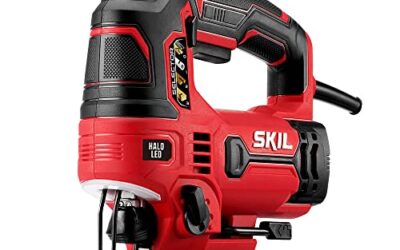
One note on terms before we start. Some older catalogs and a few people still use “saber saw” to mean a jigsaw. Here we use it the way most search results do, as another name for the reciprocating saw. If you are after a jigsaw for curves in plywood, that is a different tool with a different guide. We also did not personally use the products below; this guide is research-based, built from manufacturer listings, spec sheets and independent reviews.
As an Amazon Associate we earn from qualifying purchases at no extra cost to you.


Our Top Picks


Top Picks at a Glance
- Best Overall (cordless): Milwaukee M18 FUEL Sawzall, a brushless full-size cordless saw sold as a bare tool.
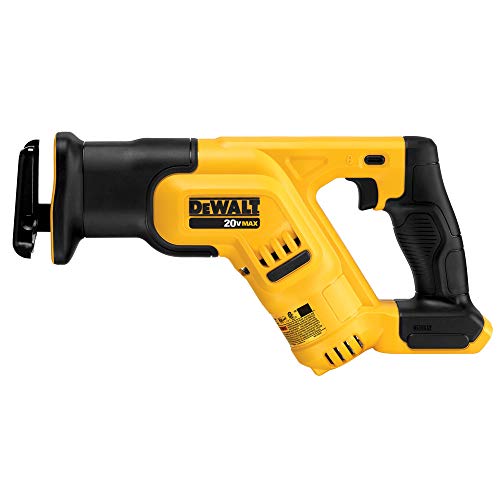
- Best Value (cordless): DEWALT 20V MAX Compact Reciprocating Saw (DCS387B), a lighter saw for overhead and one-hand-assist work.
- Best Budget (cordless): RYOBI ONE+ 18V Reciprocating Saw (PCL515B), listed at 3,400 strokes per minute with a 1-inch stroke.
- Best Compact: Makita XRJ07ZB 18V LXT sub-compact brushless, for tight spaces between studs and under sinks.
- Best Corded Overall: DEWALT DWE305 12-amp, with a 4-position blade clamp.
- Best Corded for Vibration Control: SKIL SPT44A-00 13-amp with Buzzkill technology.
- Best Budget Corded: WEN 3630 10-amp with 8 blade positions.
Quick Comparison Table
| Product | Best for | Key specs (as listed) | Watch for | Price tier |
|---|---|---|---|---|
| Milwaukee M18 FUEL Sawzall | Frequent cordless demolition | Brushless, M18 platform, bare tool | Battery and charger sold separately | Premium |
| DEWALT DCS387B | Compact general use | 20V MAX, variable speed trigger, LED light, bare tool | Battery and charger sold separately | Mid-range |
| RYOBI PCL515B | Occasional homeowner jobs | 18V ONE+, 3,400 SPM, 1 in. stroke, tool only | Brushed motor not stated in the listing; battery not included | Budget |
| Makita XRJ07ZB | Tight spaces, plumbing, one-handed work | 18V LXT, sub-compact, brushless, tool only | Smaller body suits lighter cuts | Mid-range |
| DEWALT DWE305 | Steady all-day corded cutting | 12 amp, 2,900 RPM, 4-position clamp, variable speed trigger | Cord limits reach | Mid-range |
| SKIL SPT44A-00 | Reducing hand fatigue | 13 amp, Buzzkill technology | Stroke length not listed here | Mid-range |
| WEN 3630 | Garage and yard cleanup | 10 amp, 8-position, variable speed | Tool-free blade change not confirmed in the listing | Budget |
1. Milwaukee M18 FUEL Sawzall: Best Overall Cordless
- Brushless cordless reciprocating saw on Milwaukee’s M18 platform.
- Sold as a bare tool: no battery, no charger in the box.
- Sawzall is Milwaukee’s long-running name for its reciprocating saw line.
- Stroke length and strokes per minute: check Milwaukee’s spec sheet for your exact version (not listed in the retail title).
Best for: anyone already invested in M18 batteries who cuts studs, nail-embedded lumber, pipe or branches several times a month. Skip if: you need a single saw for one weekend project and have no M18 batteries; the battery and charger will cost more than the saw feels worth.
A bare-tool listing matters more than it looks. The saw body is one purchase; the batteries are the real long-term cost, which is why platform choice beats any single spec. If your drill, impact driver and blower already run on M18 packs, this saw is the easiest decision in the guide. Brushless motors generally run cooler and make better use of the battery than brushed motors, which is the main reason demolition crews favor them, but run time depends on the battery you pair it with, and we are not quoting figures we could not source.
In practice a full-size cordless saw is heavier than the compact class, and that weight is useful when you are pushing through a doubled-up stud or cast iron pipe, because the mass keeps the blade from chattering. It is a poor choice for working overhead for long stretches.
Pros: brushless design; large battery ecosystem; full-size body steadies heavy cuts; the same platform covers many other tools. Cons: premium price tier; bare tool needs batteries; heavier than compact saws.
2. DEWALT 20V MAX Compact (DCS387B): Best Value Cordless
- 20V MAX platform, compact body.
- Variable speed trigger and LED light.
- Bare tool only; battery and charger sold separately.
- Strokes per minute and stroke length: check DEWALT’s manual for your version (not stated in the listing).
Best for: homeowners on the DEWALT 20V MAX platform who prune branches, cut PVC and trim pallet wood. Skip if: you cut a lot of thick steel or demolition framing, where a full-size saw does the work faster.
The compact format is the selling point. A shorter body fits between joists, behind a vanity or inside a wall cavity where a long-nosed saw cannot swing. The LED light helps when you cut inside a dark cavity, and a variable speed trigger lets you start a cut gently on a slick pipe so the blade does not skip. If you need only light-to-medium duty, this is the saw that covers it without the cost and bulk of a flagship model.
Pros: compact and easier to control; LED light; variable speed trigger; works with a big family of 20V MAX batteries. Cons: bare tool; not the pick for heavy-duty demolition; specs beyond the basics are not in the listing.
3. RYOBI ONE+ 18V (PCL515B): Best Budget Cordless
- 18V ONE+ battery platform, tool only.
- 3,400 strokes per minute, variable speed.
- 1-inch stroke length.
- Battery and charger not included.
Best for: occasional cutting around a house and yard, especially if you already own ONE+ batteries. Skip if: you plan a full-house gut, where a heavier-duty saw will save time.
A 1-inch stroke is the usual full-size figure and it helps the blade clear sawdust and chew faster through wood. Pair it with a coarse wood blade for branches and a metal blade for pipe and you cover most household jobs. The listing says nothing about a brushless motor, so treat it as a straightforward homeowner saw, not a daily pro tool. For the price tier it is the sensible way to add a recip saw to an existing ONE+ kit.
Pros: low entry cost; stroke and speed numbers are clear; huge ONE+ tool range. Cons: bare tool; probably not the long-run pick for heavy daily use; motor type not listed.
4. Makita XRJ07ZB 18V LXT Sub-Compact: Best Compact
- 18V LXT, sub-compact brushless design.
- Tool only; battery and charger sold separately.
- Aimed at one-handed and tight-space cutting.
Best for: plumbers, electricians and remodelers cutting in cramped spaces, and anyone who wants a lighter tool for overhead work. Skip if: you want maximum cutting speed on thick material.
Sub-compact saws trade a little stroke and mass for access. Cutting a drain line under a sink or a nail in a stud bay is where this size shines. The 18V LXT line is broad, so owners of other Makita tools have a ready battery supply. For plaster and lath demolition, a small saw works fine on the lath and plaster face but you will go through more battery on long thick cuts.
Pros: small and light; brushless; easy overhead use; large LXT battery family. Cons: less raw cutting power than full-size models; bare tool.
5. DEWALT DWE305: Best Corded Overall
- 12 amp motor, 2,900 RPM as listed.
- 4-position blade clamp to rotate the blade for flush cuts.
- Variable speed trigger.
Best for: shop and garage use, long demolition sessions where batteries would run out, and anyone who wants steady power. Skip if: you cut far from an outlet or hate cords.
A corded saw never fades. In a plaster-and-lath job, where you may cut continuously for an hour, that matters. The four blade positions let you flip the blade so the teeth face up, which helps with cuts against a floor or a wall. Always use a cord rated for the tool’s amperage, and keep the cord behind you and clear of the blade.
Pros: consistent power; no battery cost; flexible blade orientation; variable speed trigger. Cons: cord limits reach; heavier than compact cordless saws.
6. SKIL SPT44A-00: Best for Reducing Vibration
- 13 amp corded motor.
- Buzzkill technology, SKIL’s name for its vibration-damping design.
Best for: long cutting sessions where hand and forearm fatigue is the problem. Skip if: you want a cordless saw.
Vibration is what ends a day of demolition, not the motor. SKIL’s Buzzkill is marketed as a way to reduce it. We cannot quote how much, because we could not find independent measurements, so read it as a feature worth weighing rather than a promise. The 13-amp rating is at the higher end of the corded range, giving headroom for thicker cuts.
Pros: strong motor rating; vibration-damping feature; corded consistency. Cons: exact stroke length not listed here; cord required.
7. WEN 3630: Best Budget Corded
- 10 amp motor, variable speed.
- 8-position blade orientation.
Best for: garage cleanup, tree limbs, and occasional demolition on a tight budget. Skip if: you rely on a saw daily.
Eight blade positions give more options than the DEWALT’s four, which helps when you need to cut flush to an awkward surface. A 10-amp motor is plenty for cutting branches, plastic pipe and light framing. It is the saw to buy when the job is a one-off and you would rather spend on good blades than on a premium body, which is the smartest budget advice in this whole guide.
Pros: low entry cost; many blade positions; variable speed. Cons: lower power than 12-13 amp saws; build quality is aimed at lighter use.
Also Consider
- Milwaukee 2719-20 M18 FUEL Hackzall: a one-handed M18 recip saw for plumbing and pruning. Bare tool.
- Makita JR3070CT AVT 15 amp: a heavy corded saw with anti-vibration technology for pros who cut all day.
- RYOBI ONE+ HP PSBRS01B one-handed: a compact brushless saw for ONE+ owners who want a small tool.
- Blades worth stocking: IVY Classic 28318 (6 in., 6 TPI, plaster), DEWALT DW4851 (6 in., 6 TPI, plaster) and the Milwaukee The Ax 9-inch 5 TPI for thick wood demolition.
Plaster, Lath and Metal: Which Blade Answers the Question
For plaster and wood lath, use a 6-TPI bi-metal blade, 6 inches or longer. Several blade guides agree that 6 to 8 teeth per inch is the demolition sweet spot, because the gullets are large enough to clear plaster dust and the blade survives the occasional nail. The IVY Classic 28318 and DEWALT DW4851 are both listed as 6-inch, 6 TPI blades sold for plaster cutting, which is the right starting point. Plaster dust is abrasive and will dull a fine-tooth blade quickly.
For metal lath, the thin expanded-metal mesh behind some older plaster, switch to a finer blade. A common metalworking guide is the three-tooth rule: keep at least three teeth in contact with the material at all times. Metal lath is very thin, so a 14 to 24 TPI bi-metal blade is the logical choice. This is our inference from the three-tooth rule, since the blade guides we read do not mention metal lath by name. If your wall mixes plaster, wood lath and nails, a 6 to 8 TPI demolition blade at least 0.050 inch thick is the compromise most guides recommend, and a carbide-tipped version lasts longest.
Safety matters in older houses. Plaster and old paint in houses built before the late 1970s may contain lead, and some old plaster or insulation can contain asbestos. Before you cut, check with your local health department or a certified inspector about testing, wear a fitted respirator rated for the hazard, seal the room, and follow local rules for disposal. This is general guidance, not a substitute for a professional assessment.
A Practical Order of Work for Plaster and Lath Walls
Start by turning off power to the room at the breaker and checking the wall for wiring and pipes with a stud finder or by opening a small inspection hole with a hand tool. Mark the cut line with a pencil. Set the saw to a low speed for the first pass so the blade does not skip on the hard plaster face, then raise the speed once the blade is seated in the kerf. Keep the saw’s shoe pressed firmly against the wall; a loose shoe is the most common cause of jumping and torn plaster.
Cut shallow first. Plaster over wood lath is usually about three-quarters of an inch to an inch thick in total, so a 6-inch blade is enough for the wall surface and a 9-inch blade is only needed if you are cutting through the studs behind it as well. Work in sections of a few feet rather than long continuous cuts, because plaster dust packs the blade gullets and heats the blade. Pause to let the blade cool and clear the dust with a brush.
When you reach metal lath, change the blade rather than pushing on. A coarse demolition blade snags thin expanded metal and can kick back. A finer bi-metal blade with at least three teeth in contact keeps the cut smooth. Wear cut-resistant gloves, because lath edges are sharp, and use a shop vacuum with a fine filter to keep dust under control. Dispose of the debris according to your local rules.
Battery sizing for cordless saws
Cordless run time depends mostly on the battery, not the saw body. As a rule of thumb, a larger amp-hour pack runs longer between charges and sustains power better under load, but it is also heavier. For plaster demolition, two packs let you cut with one while the other charges. For pruning and plumbing cuts, one mid-size pack is usually enough. We are deliberately not quoting minutes of run time, because those depend on the blade, the material and the battery age, and they are not sourced figures.
Reading blade packaging
Blade packaging usually states length, TPI, material (bi-metal, carbide or high-carbon steel) and the intended material. Bi-metal blades combine a flexible spine with harder teeth and are the all-round choice. High-carbon steel blades are cheaper but bend and dull faster in nails. Carbide-tipped blades cost the most and last longest in abrasive materials like plaster, cement board and masonry. Match the blade length to the cut: the blade should extend at least an inch beyond the thickness of the material at the full stroke, but a longer blade flexes more and wanders.
How We Chose
This guide is research-based. We did not personally use these products. We compared manufacturer listings and spec sheets, read independent saw and blade guides, and chose products that cover the main jobs: cordless full-size, cordless compact, corded and budget. Every product named was found currently sold through the site’s product store. We used only specs stated in the listings and marked everything else as not listed, and we do not quote prices; we use tier words (Budget, Mid-range, Premium) instead. Maximum two picks per brand, and we leaned on platform fit because battery compatibility changes the true cost of a cordless saw.
Buying Guide
Corded or cordless?
Choose corded for jobs where you cut continuously, such as gutting a room, and for lower overall cost. Choose cordless for yard work, remodeling in rooms without power, and anywhere a cord is a trip hazard. A cordless saw is only as good as its battery, so budget for at least one 4.0Ah-class pack or larger; a 2.0Ah pack will drain on thick cuts.
Stroke length and speed
Stroke length is how far the blade travels each pass. A 1-inch stroke is typical for full-size saws; sub-compact saws often have shorter strokes. Longer strokes cut faster in wood. Strokes per minute (SPM) in the 2,800 to 3,500 range is common. Variable speed lets you start slowly on metal and speed up on wood.
Size and weight
A compact saw is easier overhead and in tight spaces but cuts slower on thick stock. A full-size saw cuts faster and stays steadier. If you will hold the saw above your shoulders often, pick compact. If you mostly cut at waist height, pick full-size.
Blade clamp and orientation
Tool-free blade change saves time and a lost wrench. Multi-position clamps (4 on the DEWALT, 8 on the WEN) let you flip the blade for flush cuts. Check that the saw uses the standard 1/2-inch universal shank so the blades described above fit.
Vibration and anti-vibration features
Vibration causes fatigue and sloppy cuts. Features like SKIL’s Buzzkill and Makita’s AVT are designed to reduce it. If you cut for hours, they may help; if you cut a few branches each year, they are not worth paying for.
Common Mistakes
- Buying the saw and ignoring the blade: a great saw with a dull general-purpose blade cuts plaster poorly.
- Using a fine-tooth metal blade in plaster, which clogs and overheats.
- Skipping eye, ear and dust protection, especially in old walls.
- Buying a cordless bare tool without checking for a battery and charger you already own.
- Leaning the saw shoe away from the work, which causes jumping; keep the shoe firmly against the surface.
Frequently Asked Questions
Is a saber saw the same as a reciprocating saw?
In most modern usage, yes. Both names describe the saw that moves a straight blade back and forth with a 1/2-inch universal shank; brand names like Sawzall are used the same way. A few people use “saber saw” for a jigsaw, so check the picture before buying.
What blade cuts plaster and metal lath?
A 6-TPI bi-metal blade of 6 inches or longer cuts plaster and wood lath. For metal lath alone, use a 14 to 24 TPI bi-metal blade. For mixed walls with nails, use a 6 to 8 TPI demolition blade at least 0.050 inch thick.
What are the best rechargeable reciprocating saws?
Match the platform to the batteries you own. Milwaukee M18, DEWALT 20V MAX, Makita 18V LXT and RYOBI ONE+ each have saws in this guide. Ask how often you cut: occasional users do well with the RYOBI, heavier users with the Milwaukee.
Can I get a good reciprocating saw for around 100 dollars?
Usually, with the right framing. A corded WEN or SKIL saw, or a budget cordless tool-only model such as the RYOBI, often sits in that range, but prices change and batteries are extra for cordless. Check current listings rather than relying on a number here.
Are there reciprocating saws for ripping lumber?
A rip cut runs along the grain. A reciprocating saw can do rough rip cuts in a pinch with a coarse wood blade, but a circular saw or table saw gives a straighter, cleaner result. Use the recip saw for demolition and rough work.
Do I need a saw guide oil for gang saws?
No. That is sawmill equipment and unrelated to hand-held reciprocating saws. For a recip saw, a few drops of cutting oil on metal cuts is sufficient, and the manual will state any lubrication needed.
Are there video guides to choosing a recip saw?
Many manufacturers and trade channels publish video walkthroughs. Watch for how the presenter handles blade choice, not just the saw, because the blade drives results. Always cross-check specs against the manufacturer’s page.
Which One Should You Buy?
Pick by your battery platform first. If you already own Milwaukee M18, buy the M18 FUEL Sawzall. If you own DEWALT 20V MAX, buy the DCS387B. Pick the RYOBI if you own ONE+ batteries and cut only now and then. Choose the Makita XRJ07ZB for tight spaces. If you prefer corded, the DEWALT DWE305 is the balanced choice, the SKIL SPT44A-00 is for vibration-sensitive hands, and the WEN 3630 is the money-saver. Whatever you choose, buy a plaster blade and a metal blade at the same time.
Sources
- Milwaukee Tool product pages (M18 FUEL Sawzall, Hackzall)
- DEWALT product pages (DCS387B, DWE305, DW4851 blades)
- RYOBI product pages (PCL515B, PSBRS01B)
- Makita product pages (XRJ07ZB, JR3070CT)
- Reciprocating saw blade guides from Benchmark Abrasives and Ezarc
- SKIL and WEN product pages
Last updated: October 2026
Related guides
More from Amazon
Programs that pair well with the guide above. Offers and eligibility are set by Amazon and may change.
A free business account with business pricing and bulk-buying tools for work, shop or home office.
Create a business accountFree shipping on eligible items, Prime Video and more. Eligible new members can start with a free trial.
Start a Prime free trialAudiobooks and podcasts to listen to on the go. Eligible new members can start with a free trial.
Try Audible freeAd-free music streaming. Eligible new subscribers can start with a free trial.
Try Music Unlimited freeAs an Amazon Associate we earn from qualifying purchases.
Write Your Review
No reviews yet. Be the first to share your experience!