
What's inside
- Top Picks at a Glance
- Table Saws Under 1000 Compared
- 1. SKIL TS6307-00: Best Overall for Beginners
- 2. DEWALT DWE7485: Best Compact and Lightweight
- 3. Evolution R10TS: Best Multi-Material
- 4. WEN TT0811: Best Budget Benchtop
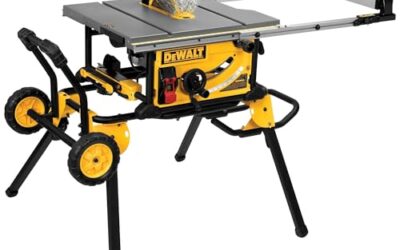
- 5. DEWALT DWE7491RS: Best Wide Rip Upgrade
- 6. Bosch GTS15-10: Best Mobility
- 7. Delta 36-6023: Best Entry Full-Size Fence
- Also Consider
- How We Chose
- Buying Guide
- Setting Up a Budget Table Saw Safely
- Common Mistakes to Avoid
- Frequently Asked Questions
- Which One Should You Buy?
- Sources
As an Amazon Associate I earn from qualifying purchases. This post may contain affiliate links at no extra cost to you.
The best table saw under 1000 dollars for most beginners is the SKIL TS6307-00 10-inch jobsite saw, with the DEWALT DWE7485 8-1/4-inch compact saw as the runner-up for people who need something lighter to carry and store. The SKIL gives a full 10-inch blade, a rack-and-pinion fence and about 25.5 inches of rip capacity to the right of the blade, which is enough to cut a 4×8 sheet of plywood in half. The DEWALT trades blade size for portability and a very fast 5800 rpm motor.
This guide is for people shopping the budget end of the table saw market: hobbyists, first-time workshop builders, and homeowners who want a saw for shelving, cabinet parts and deck or fence projects. It covers three practical categories that fit the budget: compact benchtop saws, 10-inch jobsite saws, and the cheapest full-size saws with a larger rip capacity. It also explains why “sliding table saws” and true cabinet saws are a different class and why even a generous budget does not always buy them. This is a research-based guide. We did not personally use these products and rely on manufacturer specs, retailer spec sheets and published reviews, flagging anything we could not confirm as “not listed”.
A table saw is among the tools most associated with serious workshop injuries. Use a blade guard, riving knife and push sticks, stand to the side of the blade line, never cut freehand, and never reach over a spinning blade. Eye and hearing protection are mandatory. If you are new, take time with the manual, and consider asking an experienced woodworker to walk you through your first cuts.
As an Amazon Associate we earn from qualifying purchases at no extra cost to you.


Our Top Picks


Top Picks at a Glance
- Best Overall for Beginners: SKIL TS6307-00 10-inch jobsite saw with folding stand
- Best Compact and Lightweight: DEWALT DWE7485 8-1/4-inch compact jobsite saw
- Best Multi-Material: Evolution R10TS 10-inch jobsite saw
- Best Budget Benchtop: WEN TT0811 8.25-inch benchtop saw
- Best Wide Rip Upgrade: DEWALT DWE7491RS with rolling stand
- Best Mobility: Bosch GTS15-10 with Rise wheeled stand
- Best Entry Full-Size Fence: Delta 36-6023 10-inch table saw
Table Saws Under 1000 Compared
| Product | Best for | Key specs (as listed) | Watch for | Price tier |
|---|---|---|---|---|
| SKIL TS6307-00 | First 10-inch saw | 10 in blade, 15 amp, 4600 rpm, 25.5 in rip right and 14 in left, folding stand | Reviewers differ on exact left rip number; stand is basic | Mid-range |
| DEWALT DWE7485 | Small shops, car-trunk transport | 8-1/4 in blade, 15 amp, 5800 rpm, 24.5 in rip right and 12 in left, 2-9/16 in depth at 90 degrees | Weight figures vary 46 to 53 lb; stand sold separately in base kit | Mid-range |
| Evolution R10TS | Cutting wood, aluminium and mild steel | 10 in blade, 15 amp, 3300 rpm, 3-3/8 in depth, 26 in rip, 50.8 lb | Lower rpm than wood-only saws; multi-material blade is a specific type | Mid-range |
| WEN TT0811 | Light projects on a workbench | 8.25 in blade, 11 amp, benchtop | Smaller capacity; fence and miter details not listed in the title | Budget |
| DEWALT DWE7491RS | Wide rip cuts on a rolling stand | 10 in blade, 15 amp, 4800 rpm, 32-1/2 in rip, rolling stand | Heavier and bulkier; upper end of this budget | Premium |
| Bosch GTS15-10 | Moving the saw often | 10 in blade, 15 amp, 32-1/8 in rip, Rise wheeled stand | Stand adds footprint; check dado ability on the maker page | Premium |
| Delta 36-6023 | Home shop with a larger table | 10 in blade, 32.5 in rip capacity | Motor and weight not listed in the title | Mid-range |
1. SKIL TS6307-00: Best Overall for Beginners
- Blade: 10 inch, 5/8 inch arbor
- Motor: 15 amp, 4600 rpm no load
- Rip capacity: 25.5 inches right of the blade, about 14 inches left per the maker page
- Fence: rack-and-pinion rails
- Stand: integrated folding legs
- Bevel: 0 to 45 degrees with a quick-release lever
Best for: hobbyists and new homeowners who want a real 10-inch blade without paying for a larger shop saw. Skip if: you regularly rip anything wider than half a sheet of plywood and want a bigger table.
The combination of a 10-inch blade and a rack-and-pinion fence is the main reason this saw works for beginners. A rack-and-pinion fence moves in small, parallel steps, so you can set a width and expect the fence to stay parallel to the blade. Cheap saws with a loose fence are the biggest source of frustration and poor cuts for beginners, and fence quality is worth more than motor numbers at this budget level.
The 25.5 inch right-side rip is the number that matters for plywood. Four feet of sheet is 48 inches; cutting down the middle needs 24 inches, so this saw can split a sheet with room to spare. The built-in folding stand makes setup quick and storage easier than assembling a separate stand. A folding stand is never as rigid as a heavy cabinet, so clamp or weigh down the base if you notice movement on long boards.
Pros: true 10-inch capacity, rack-and-pinion fence, folding stand, good value for the class. Cons: not a cabinet-grade saw, stand is only as steady as a folding design can be, spec differences between sources on the left-side capacity.
2. DEWALT DWE7485: Best Compact and Lightweight
- Blade: 8-1/4 inch, 5/8 inch arbor
- Motor: 15 amp, 5800 rpm
- Rip capacity: 24.5 inches to the right, 12 inches to the left
- Depth of cut: 2-9/16 inches at 90 degrees, 1-3/4 inches at 45 degrees
- Fence: rack-and-pinion
- Weight: sources list roughly 46 to 53 lb
Best for: small garages, trim carpenters and DIYers who carry the saw to different rooms. Skip if: you need to cut through 3-inch stock in a single pass, because 2-9/16 inches is the ceiling.
The 8-1/4 inch blade limits cut depth. A standard 2×4 is 1-1/2 inches thick, so it is no problem, but a doubled-up 4×4 post (3-1/2 inches) is not possible in a single pass at 90 degrees. For furniture, shelves, trim and sheet goods, the depth is more than enough. The 5800 rpm speed gives smooth cuts with a good blade, although small blades also lose some tip speed efficiency compared with 10-inch ones at similar rpm, so keep a sharp, fine-tooth blade on it for plywood.
It is also available packaged with a stand. If you buy the saw alone, think about where it will sit. Put it on a stable bench at the right height with clamps, or buy a dedicated stand, because working at a wobbly kitchen table is dangerous.
Pros: compact, strong motor, accurate rack-and-pinion fence, trusted brand and parts. Cons: smaller cut depth, shorter left-side capacity, stand and weight details vary by package.
3. Evolution R10TS: Best Multi-Material
- Blade: 10 inch multi-material blade
- Motor: 15 amp, 3300 rpm no load
- Rip capacity: about 26 inches right, roughly 14.5 inches left
- Maximum cut depth: 3-3/8 inches
- Extras: integrated cross-cut sled, accepts an 8-inch dado stack according to a review site
- Weight: about 50.8 lb
Best for: hobbyists who cut wood and also work with aluminium, plastics or thin mild steel. Skip if: you only cut wood and want a standard wood-cutting blade with a higher rotation speed.
The multi-material approach is the main selling point. The R10TS uses a specific blade that is designed for cutting wood, wood with embedded nails, non-ferrous metals and mild steel, at the cost of a slower blade speed. That makes it appealing for workshop projects where the line between woodworking and fabrication blurs. For pure furniture-grade cuts, however, a high-tooth-count wood blade will leave a smoother edge. The cross-cut sled included on this saw is a genuinely useful addition because crosscutting small pieces with a miter gauge alone can be awkward.
Pros: deepest cut in this group, wide rip, versatile material range, includes sled. Cons: blade type is specialised, lower no-load speed, finish on pure wood cuts depends on the blade you choose.
4. WEN TT0811: Best Budget Benchtop
- Blade: 8.25 inch
- Motor: 11 amp
- Format: compact benchtop jobsite saw
- Rip capacity, fence type, weight: not listed in the title we confirmed
Best for: small projects, craft and model work, and people who want to learn on a low-cost saw before investing. Skip if: you plan to build furniture or cut full plywood sheets.
An 11-amp 8.25 inch benchtop saw is a starter tool. It can handle dimensional lumber and thinner sheet goods, but with less capacity and a less precise fence than the SKIL or DEWALT. Many beginners buy a saw like this and end up upgrading, so the question to ask is whether the cost of learning on a low-cost saw is worth it to you. If you need a saw for a project or two, a budget benchtop saw can be a sensible way to start. If you want to build a long-term shop, putting the same funds toward a better fence and a stronger motor is usually wiser.
Pros: low cost, small footprint, simple to store. Cons: smaller capacity, several specs not listed, likely to be outgrown.
5. DEWALT DWE7491RS: Best Wide Rip Upgrade
- Blade: 10 inch
- Motor: 15 amp, 4800 rpm
- Rip capacity: 32-1/2 inches
- Stand: foldable rolling stand
Best for: woodworkers who regularly rip wide panels, cabinet doors or shelving stock and want a rolling stand. Skip if: you have a tiny space or a tight budget; this model sits at the top of the range for the under-1000 class.
A 32-1/2 inch rip capacity matters because it lets you cut sheets down to cabinet widths without a track saw. Combined with a 15 amp motor and 4800 rpm, this is a serious upgrade over the compact saws above. The rolling stand collapses and wheels, which is the key feature for anyone who needs to store the saw in a garage corner. The trade-off is weight and bulk, so expect to need a flat floor and some storage space.
Pros: wide rip, strong motor, rolling stand, well-known brand. Cons: expensive within this class, heavy, more than a casual user needs.
6. Bosch GTS15-10: Best Mobility
- Blade: 10 inch
- Motor: 15 amp
- Rip capacity: 32-1/8 inches
- Stand: Rise wheeled stand
Best for: carpenters and DIYers who move the saw between a van, garage and work area. Skip if: you prefer a fixed, heavy saw that never moves.
The wheeled stand is the standout trait. A saw that is easy to roll and set up is a saw you will use more often. The listing confirms the rip capacity and motor size, but check the maker page for details such as dado capacity, blade guard design and fence style, because they affect safety and flexibility. Bosch has a good reputation among jobsite saw users, but the only way to know whether this suits you is to compare the stand, fence and guard against your needs.
Pros: wide rip capacity, wheeled stand, widely supported brand. Cons: large footprint, upper end of the range, details need checking.
7. Delta 36-6023: Best Entry Full-Size Fence
- Blade: 10 inch
- Rip capacity: 32.5 inches
- Motor, weight and stand: not listed in the title we confirmed
Best for: a home shop owner who wants a larger table and a long rip fence on a bench or a base. Skip if: you need a saw that folds and rolls; this is more of a stationary entry saw.
Delta has a long history in woodworking, and the 36-6023 is aimed at home workshop owners who want a longer fence and a larger table than a compact jobsite saw. The listing information is limited, so verify the motor type and the included features on the maker page before purchasing. As with any table saw, install the riving knife and guard, and check that the fence locks parallel to the blade.
Pros: 32.5 inch rip capacity, familiar brand, larger table footprint. Cons: limited confirmed specs, stationary, stand details unclear.
Also Consider
- Delta 36-6030 Cruzer: an induction-motor crossover saw that is quieter and tends to cost more. It sits at the top of the under-1000 range and points toward cabinet-style performance.
- Evolution R8MTS: an 8-1/4 inch convertible miter and table saw that suits small shops with limited space.
- MarvTool 10-Inch Compact: a low-cost 10-inch saw listed at 15 amp and 4600 rpm. Check build quality and fence details closely.
- VEVOR 25-Inch Jobsite: a portable saw listed at 4500 rpm and 15 amp for budget buyers who accept limited support.
How We Chose
We started with the search terms behind this topic: table saws under 1000, tables saws under 200 dollars, sliding table saws and general “best table saw” queries. We then looked at the current product store to see which models are actually sold and kept only those whose titles state blade size and power. We checked the stated specs against manufacturer pages, retailer spec tables and independent reviewers such as Pro Tool Reviews.
We did not personally use these saws. Where sources disagree, we gave a range or marked the item as not listed. We do not quote prices because they change often; instead we use price tiers (Budget, Mid-range, Premium). We kept to two products per brand and left out products with no stated blade size or motor.
On the “under 200 dollars” and “sliding table” variants: the budget end of this guide does not include a verified saw we can recommend at that level beyond very small benchtop models, and sliding table saws generally sit in a different price class, so we cover the concept in the buying guide rather than naming a product.
Buying Guide
Benchtop, jobsite or full-size?
Benchtop saws, like the WEN, are the lightest and cheapest, with blades around 8 to 8-1/4 inches and rip capacities near or below 24 inches. Jobsite saws, such as the SKIL, DEWALT and Bosch, offer 10-inch blades, rolling or folding stands and rip capacities of 25 to 32 inches, and they remain portable. Entry full-size saws, such as the Delta 36-6023, have bigger tables and longer fences, but do not fold up. Pick based on where the saw will live and how often you move it.
Rip capacity and the fence
Rip capacity tells you the widest board or panel the saw can cut along its length. Aim for at least 24 inches to split a plywood sheet, and 30 inches or more if you build cabinets. But fence quality matters as much as capacity: a rack-and-pinion fence that stays parallel is better than a longer fence that wobbles. Check that the fence locks in place without shifting.
Motor, rpm and blade choice
Fifteen amps is the practical ceiling of a standard household circuit, and most jobsite saws use it. Rpm is less important than blade quality. A 24-tooth rip blade cuts quickly along the grain; a 40 to 60 tooth blade gives cleaner crosscuts and plywood edges. Many saws ship with a general-purpose blade, so a better blade is the most effective first upgrade.
Safety features you should demand
Look for a riving knife that rises and falls with the blade, a clear blade guard, anti-kickback pawls, and a miter gauge that slides smoothly. Some higher-priced saws add flesh-detection technology; these typically cost more than most of the saws here, so consider whether the added protection is worth stretching your budget. Whatever saw you pick, use push sticks and keep your hands clear of the blade path.
Stands, space and dust
A jobsite saw is only as steady as its stand. Folding stands are convenient but lighter; rolling stands are heavier but easier to move. Check that the dust port fits your shop vacuum hose, because table saw dust is fine and easily inhaled. A dust mask or respirator is a smart addition.
Setting Up a Budget Table Saw Safely
Whichever model you choose, spend the first hour on setup rather than cutting. Place the saw on a flat, stable surface and make sure the stand legs are fully locked. Check that the blade is square to the table at 90 degrees using a reliable square, then confirm the bevel stop at 45 degrees. Align the rip fence so it is parallel to the miter slot; many beginners skip this step, and a fence that toes in toward the back of the blade pinches the board and invites kickback.
Next, install the riving knife and blade guard supplied with the saw and check that the knife sits close behind the blade without touching it. Keep a set of push sticks within reach, and mark the danger zone on the table with tape if it helps you remember to keep your hands outside it. Clear the floor around the saw of offcuts and cords, and arrange outfeed support for long boards, since a board that tips off the back of the table can bind on the blade. Finally, run the saw for a few seconds with no workpiece, listen for unusual noise or vibration, and stop if anything seems off. A small amount of care at setup is what turns an inexpensive saw into a dependable one.
Common Mistakes to Avoid
- Removing the blade guard or riving knife because it “gets in the way”. Fix the setup instead.
- Buying on motor numbers alone and ignoring fence quality.
- Using a dull or wrong-type blade, which burns wood and increases kickback risk.
- Standing directly behind the blade or reaching over it.
- Skipping a stable stand or setting the saw on an uneven surface.
Frequently Asked Questions
What is the best table saw under 1000 dollars?
For most buyers, the SKIL TS6307-00 is the best all-around choice, because it offers a 10-inch blade, a rack-and-pinion fence and a folding stand. If you need to rip wider panels, the DEWALT DWE7491RS or Bosch GTS15-10 are stronger options in the same range.
Is there a good table saw under 200 dollars?
Very low-cost benchtop saws exist, such as 8-inch compact models, but they tend to have smaller capacity and less precise fences. They can work for craft projects and light carpentry; they are less suited for furniture or sheet goods.
Are table saws under 1000 dollars good enough for woodworking?
Yes, a quality jobsite saw can handle most hobby and home projects. Cabinet saws and hybrid saws offer more mass, quieter induction motors and better dust collection, but that extra performance usually costs more.
Can I get a sliding table saw in this price range?
True sliding table saws, with a precision carriage for crosscutting large panels, are generally in a higher price class. Some budget saws offer a sliding miter gauge or a crosscut sled, which provide some of the same functions. We did not find a verified sliding table saw to recommend within this budget.
Is an 8-1/4 inch table saw enough?
For furniture, trim and sheet goods, yes. The 2-9/16 inch depth at 90 degrees handles common lumber but not thick posts in a single pass. If you cut 4x4s or thicker stock, choose a 10-inch saw.
Do I need a dado blade?
Not at first. A dado stack is used for cutting grooves and joinery. Check the saw’s arbor length and manual before buying one, because not every jobsite saw supports a dado stack.
Is a multi-material saw like the Evolution R10TS good for beginners?
It can be, especially if you also work with aluminium or plastics. For pure wood projects, a standard wood blade on a saw like the SKIL may give cleaner results.
Which One Should You Buy?
Pick the SKIL TS6307-00 if you want a dependable first 10-inch saw. Choose the DEWALT DWE7485 if portability and storage matter more than blade size. Go for the Evolution R10TS if you cut metals and plastics as well as wood. Choose the WEN TT0811 only if your projects are small and you want to spend as little as possible. Step up to the DEWALT DWE7491RS or Bosch GTS15-10 if you rip wide panels and want a rolling stand, and look at the Delta 36-6023 if you prefer a larger fixed table.
If you are torn, answer two questions: how wide are the boards you cut, and how often will you move the saw? Wide boards and frequent moves point to the wheeled 10-inch jobsite saws. Narrow boards and rare moves point to the compact saws. The rest is blade quality and technique.
Sources
- SKIL TS6307-00 product page and owner manual
- DEWALT DWE7485 and DWE7491RS product specifications
- Evolution Power Tools R10TS product page
- Bosch GTS15-10 and Delta table saw maker pages
- Pro Tool Reviews and Pro Table Saw Reviews
Last updated: October 2026
Related guides
More from Amazon
Programs that pair well with the guide above. Offers and eligibility are set by Amazon and may change.
A free business account with business pricing and bulk-buying tools for work, shop or home office.
Create a business accountFree shipping on eligible items, Prime Video and more. Eligible new members can start with a free trial.
Start a Prime free trialAudiobooks and podcasts to listen to on the go. Eligible new members can start with a free trial.
Try Audible freeAd-free music streaming. Eligible new subscribers can start with a free trial.
Try Music Unlimited freeAs an Amazon Associate we earn from qualifying purchases.

Write Your Review
No reviews yet. Be the first to share your experience!