
What's inside
- Top Picks at a Glance
- Battery Chainsaws Compared
- 1. EGO Power+ CS1611: Best Overall
- 2. RYOBI RY40550: Best Value Platform
- 3. Greenworks 48V 16-Inch: Best Budget Full-Size
- 4. SKIL PWR CORE 40 14-Inch: Best Compact Pick
- 5. DEWALT 20V MAX 12-Inch: Best for 20V Tool Owners
- 6. Makita XGT 18-Inch 40V Kit: Best Large Bar
- 7. Husqvarna Power Axe 350i: Best Premium Pro-Style
- Also Consider
- How We Chose
- Buying Guide
- Battery Chainsaw Mistakes to Avoid
- Which Battery Chainsaw Fits Which Job
- Frequently Asked Questions
- Which One Should You Buy?
- Sources
As an Amazon Associate I earn from qualifying purchases. This post may contain affiliate links at no extra cost to you.
For most homeowners, the EGO Power+ CS1611 16-inch 56V chainsaw is the best battery chainsaw to start with: it pairs a brushless motor that the maker positions against a 40cc gas saw with a chain speed of up to 20 m/s and a well-supported battery platform. If you already own 40V RYOBI batteries, the RYOBI RY40550 16-inch brushless kit is the runner-up because it lets you reuse packs you have. This guide is about choosing a battery chainsaw the way professionals recommend it: pick the battery platform first, then the bar length, then the extras. It also covers best battery powered chainsaws for light storm cleanup, plus sub-200 options if you are shopping to a limit, and what to look for if you want an arborist-style compact saw.
This guide is research-based. We did not personally use these chainsaws; specs come from manufacturer pages and the product store listings, and where a number is not stated in a source we mark it “not listed”. Runtime figures are deliberately left out unless a source states them, since cutting time per charge depends on wood species, chain sharpness and battery size.
As an Amazon Associate we earn from qualifying purchases at no extra cost to you.


Our Top Picks
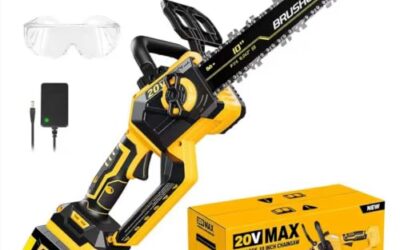
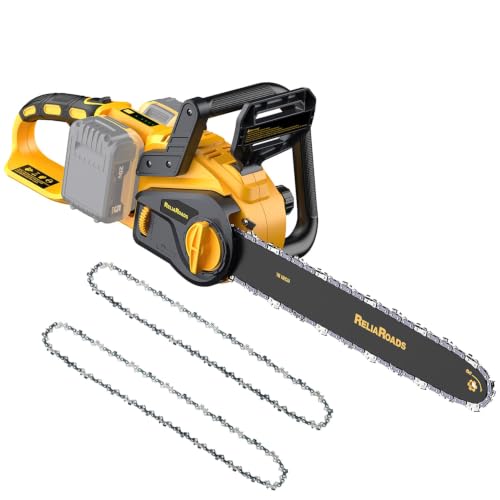 ReliaRoads 16-Inch 40V Brushless Cordless Chainsaw for DeWalt16 x 9 x 7 inches10.5 PoundsCheck on Amazon

Top Picks at a Glance
- Best Overall: EGO Power+ CS1611, 16-inch, 56V brushless.
- Best Value Platform: RYOBI RY40550, 16-inch, 40V brushless with a 4Ah battery.
- Best Budget Full-Size: Greenworks 48V 16-inch with two 4.0Ah batteries.
- Best Compact: SKIL PWR CORE 40 brushless 14-inch kit.
- Best for 20V Tool Owners: DEWALT 20V MAX 12-inch chainsaw, tool only.
- Best Large Bar: Makita XGT 18-inch 40V brushless kit.
- Best Premium Pro-Style: Husqvarna Power Axe 350i, 18-inch.
Battery Chainsaws Compared
| Product | Best for | Key specs | Watch for | Price tier |
|---|---|---|---|---|
| EGO CS1611 | Yard and firewood work | 16 in bar; 56V; brushless; up to 20 m/s chain speed | Battery sold in kit; bare tool is a separate model | Premium |
| RYOBI RY40550 | Existing 40V owners | 16 in bar; 40V; brushless; 4Ah battery and charger | Chain speed not listed | Mid-range |
| Greenworks 48V 16 in | Budget-conscious full-size use | 16 in; 48V; brushless; two 4.0Ah batteries; tool-free tensioning | Chain speed not listed for this kit | Mid-range |
| SKIL PWR CORE 40 14 in | Lighter handling | 14 in; 40V; brushless; tool-free tension; auto lubrication; 2.5Ah class battery | Shorter bar limits log diameter | Budget to mid-range |
| DEWALT 20V MAX 12 in | Light pruning on 20V platform | 12 in; 20V MAX; tool only | Battery and charger not included | Mid-range |
| Makita XGT 18 in | Larger limbs and logs | 18 in; 40V max; brushless; 5.0Ah kit | Heavier handling; not listed in source | Premium |
| Husqvarna Power Axe 350i | Frequent heavy use | 18 in; battery and charger included | Highest cost in this guide | Premium |
1. EGO Power+ CS1611: Best Overall
- Bar length: 16 inches.
- Voltage: 56V battery platform.
- Motor: brushless, presented by the maker as equivalent to a 40cc gas engine.
- Chain speed: up to 20 m/s (about 65.6 feet per second) per the maker.
- Chain: 3/8-inch pitch, .043-inch gauge, 56 drive links, per published specifications.
- Weight: sources differ; one professional review lists about 9 pounds bare and roughly 13.7 pounds with a 4.0Ah battery, while another consumer review lists about 11.55 pounds.
Best for: people who want a battery saw that behaves like a mid-size gas saw for pruning, limbing and cutting firewood. Skip if: you only trim small branches a few times a year, where a smaller and cheaper saw fits the job.
The reason the CS1611 leads is the combination of chain speed and platform. Chain speed is the figure that most affects how aggressively a saw bites into wood, and 20 m/s is comfortably in the range of a capable homeowner saw. A 16-inch bar can cut logs up to roughly 14 inches in diameter in a single pass when you use the bar fully, though most people use it for limbs and rounds well under that size. EGO also builds a large family of 56V outdoor tools, so batteries bought now can feed a mower, trimmer and blower later.
Ownership reality: a brushless motor means no carbon brushes to replace, so the wear items are the chain, the bar and the oil. Keep the oil reservoir filled before every session and check that the chain is dripping oil onto the bar; running a dry chain is the fastest way to ruin a bar. Sharpen the chain before it starts producing sawdust instead of chips.
Weight is the figure to watch. Because the numbers vary by source and by battery size, assume that a saw with a full-size battery on it will feel heavy by the end of a long session, particularly when you cut overhead. Cut at waist height wherever possible.
Pros:
- Strong chain speed for a battery model.
- Brushless motor and a deep tool platform.
- Appropriate for limbing, storm cleanup and firewood.
- Specs published by the maker.
Cons:
- Premium cost, especially with the battery included.
- Platform lock-in if you do not already own EGO tools.
2. RYOBI RY40550: Best Value Platform
- Bar length: 16 inches.
- Voltage: 40V.
- Motor: brushless, per the product name.
- Kit: 4Ah battery and charger included.
- Chain speed: not listed in the source we used.
Best for: homeowners who already own 40V RYOBI mowers, trimmers or blowers and want a capable saw that uses the same batteries. Skip if: you are starting from zero and want the highest-performance platform, since this is a mainstream homeowner saw rather than a pro one.
The value of this model is mostly about batteries. A saw is only as useful as the battery that powers it, and large packs are the most expensive part of any cordless kit. If you already have one or two 40V packs, buying the bare tool can be much cheaper than starting over, and the 4Ah pack in this kit is a sensible size for yard tasks. The 16-inch bar is the right length for the vast majority of residential limbs and small trees.
Unlike some budget brands, RYOBI offers broad retail availability, which makes finding replacement chains and bars easy. When you buy a chain, match the pitch, gauge and drive-link count to the bar, since a wrong chain either will not fit or will run loose. The numbers are stamped on the bar or printed in the manual.
Pros:
- Works with a large existing 40V RYOBI battery ecosystem.
- Kit comes with battery and charger.
- Widely available parts.
Cons:
- Chain speed and weight not listed in the source we used.
- Not intended for daily professional work.
3. Greenworks 48V 16-Inch: Best Budget Full-Size
- Bar length: 16 inches.
- Voltage: 48V.
- Motor: brushless.
- Kit: two 4.0Ah batteries and a charger.
- Feature: tool-free chain tensioning.
Best for: a first battery chainsaw where having a second battery matters more than headline power. Skip if: you want published chain-speed and weight figures; the kit listing does not state them, and the maker’s other 16-inch 40V models show different chain speeds.
The standout feature is the two-battery kit. Cutting through a pile of storm-felled branches tends to drain a single pack faster than expected, and having a spare changes what a saw is like to own: you swap packs while one charges instead of waiting. Tool-free tensioning is also worth having, because a chain stretches in its first few cuts and needs adjusting, which is easier without a wrench.
Greenworks sells many chainsaw versions at different voltages, and the specifications differ between them. Because search results show conflicting chain speeds across the maker’s 16-inch listings, check the exact model number and match it to the spec sheet before you buy, rather than assuming a number from another version.
Pros:
- Two batteries in the box.
- Brushless motor and tool-free tensioning.
- Full-size 16-inch bar at a competitive tier.
Cons:
- Chain speed and weight not listed for this specific kit.
- Less pro-oriented than the premium picks.
4. SKIL PWR CORE 40 14-Inch: Best Compact Pick
- Bar length: 14 inches.
- Voltage: 40V.
- Motor: brushless.
- Features: tool-free chain tension and automatic lubrication, per the listing.
- Battery: a 2.5Ah class pack is included in the kit.
Best for: pruning, trimming and cutting small logs for a fire pit, where a lighter saw is easier to control. Skip if: you cut logs above about 12 inches in diameter on a regular basis.
A 14-inch bar is not a compromise for most yard work, because you rarely cut at full bar length anyway. It is lighter at the nose, and that makes it easier to hold steady when cutting overhead. If you worry about kickback and fatigue, a shorter bar is a sensible way to reduce both, since there is less saw sticking out in front of you.
The automatic lubrication listed here is the kind of feature that prevents the most common beginner mistake: forgetting the bar oil. You still need to keep the reservoir filled, but the system delivers oil as you cut. Check the manual for the recommended oil, and do not substitute motor oil or cooking oil.
Pros:
- Shorter bar for lighter handling.
- Auto lubrication and tool-free tension.
- Brushless 40V platform with a growing tool range.
Cons:
- Limited log diameter.
- Smaller 2.5Ah-class battery in the kit for heavy sessions.
5. DEWALT 20V MAX 12-Inch: Best for 20V Tool Owners
- Bar length: 12 inches.
- Voltage: 20V MAX.
- Package: tool only, no battery or charger.
- Weight and chain speed: not listed in the source we used.
Best for: anyone who already owns DEWALT 20V MAX batteries and wants a compact pruning saw to go with a drill and impact driver. Skip if: you want a saw you can fell trees with; a 12-inch bar and a 20V platform are better matched to branches and small limbs.
This saw is about convenience. If you already carry 20V MAX packs in your truck or garage, a bare-tool saw can be a convenient addition for pruning, clearing brush or cutting up storm debris. A 12-inch bar is quick to move around, and you can use a larger battery pack for longer sessions. The caution is the platform: 20V tools run at lower voltage than the 40V and 56V platforms, so expect more modest power for the money.
Because this is a tool-only package, check that you already own compatible batteries and a charger before you decide. If you do not, the total cost can approach that of a complete kit from another brand, which changes the value equation.
Pros:
- Uses the widely owned 20V MAX battery family.
- Compact, manoeuvrable bar length.
- Strong brand support and accessories.
Cons:
- Battery and charger not included.
- Lower voltage platform than the main picks.
6. Makita XGT 18-Inch 40V Kit: Best Large Bar
- Bar length: 18 inches.
- Voltage: 40V max XGT platform.
- Motor: brushless.
- Kit: 5.0Ah battery included.
- Weight: not listed in the source we used.
Best for: property owners with larger trees and logs who prefer the Makita XGT tool ecosystem. Skip if: you want a light saw for occasional trimming; an 18-inch saw is bigger than you need.
An 18-inch bar gives you room for thicker logs and more comfortable felling cuts on small trees, though felling any tree carries real risk and is best left to trained people when the tree is near buildings or power lines. Makita’s XGT line is aimed at heavier users, so the platform also covers many other jobs, from demolition to outdoor tools.
The trade-off is mass. A longer bar and a bigger battery add weight at the end of your arms, and overhead cutting with a long bar is tiring. If you are mainly limbing, prefer a shorter bar. If you are bucking firewood, the extra length speeds up thicker cuts.
Pros:
- Large 18-inch bar for bigger logs.
- Brushless motor and a 5.0Ah battery in the kit.
- Part of a heavy-duty tool platform.
Cons:
- Premium cost.
- Bigger and heavier to handle.
7. Husqvarna Power Axe 350i: Best Premium Pro-Style
- Bar length: 18 inches.
- Kit: battery and charger included.
- Positioning: outdoor cordless chainsaw from a company known for professional saws.
- Chain speed and weight: not listed in the source we used.
Best for: users who want a pro-brand battery saw and are prepared to pay for it. Skip if: you cut a few branches a year, or you want the best performance per dollar.
Husqvarna built its reputation on professional gas saws, and its battery range borrows that design culture, including attention to chain brakes, balance and service support. For someone who uses a saw for several hours a month, that can matter more than a headline spec. A dealer network also means you can get chains, bars and repairs locally, which is a real ownership advantage over mail-order brands.
Because specifications are not stated in the source we used, check the maker’s page for chain speed, weight and battery compatibility before you buy, and compare them with the EGO and Makita options above.
Pros:
- Pro-brand build and dealer support.
- 18-inch bar with battery and charger included.
- Suited to regular heavy use.
Cons:
- Highest cost in this guide.
- Specifications not stated in the listing.
Also Consider
EGO Power+ CS1815 18-Inch
The larger EGO model for people who like the 56V platform but want an 18-inch bar. The maker presents it as faster and more powerful than the CS1611. Check the exact kit contents before buying.
Greenworks 80V 18-Inch
A higher-voltage Greenworks saw with a 4.0Ah battery and charger. Choose it only if you plan to buy into the 80V line.
SEESII 12-Inch Brushless Cordless Chainsaw
A budget 12-inch brushless saw with two 4.0Ah batteries and auto oiling in the listing. Reasonable for light pruning, but check the return terms because the brand has limited independent coverage.
SEESII 6-Inch Mini Chainsaw
A one-hand pruning saw rather than a full chainsaw. It suits small branches only and should not replace a full-size saw for firewood.
How We Chose
This guide is research-based. We did not personally use these saws. We built the shortlist from the product store, then checked each model against manufacturer specification pages and independent publications such as professional tool reviewers and consumer product guides. Where sources disagree, particularly on weight, we say so. Where we could not find a figure, we write “not listed” instead of guessing.
We included at least one saw on each major platform (EGO 56V, 40V from RYOBI, Makita and SKIL, Greenworks 48V, and DEWALT 20V MAX) because the battery you already own is the biggest factor in total cost. We kept to a maximum of two products per brand across the guide and left out unverified runtime claims.
Buying Guide
Start With the Battery Platform
The chainsaw is the cheap part of a battery system; the batteries and chargers are the expensive part. If you already own mowers, trimmers or drills on a platform, check whether that maker sells a chainsaw first. A bare-tool saw on a platform you own can cost far less than a complete kit elsewhere. If you own nothing, choose the platform with the broadest range of outdoor tools, since you will be buying more of them.
Choose the Bar Length by the Wood You Cut
As a rule, choose a bar about two inches longer than the thickest log you plan to cut. A 12-inch bar suits pruning branches up to about 8 inches. A 14 to 16-inch bar covers limbing, storm cleanup and most firewood rounds. An 18-inch bar is for larger logs and heavy use, at the cost of weight. Longer bars also raise the kickback risk if you use the tip.
Voltage and Chain Speed
Higher voltage generally means more power, but voltage numbers are not directly comparable across brands because some are nominal and some are maximum. Chain speed, measured in metres per second or feet per second, is a more useful comparison when a maker publishes it. Brushless motors are more efficient and need less maintenance than brushed ones, so they are worth prioritising.
Battery Capacity and Runtime
Amp-hours indicate capacity: a 4.0Ah pack holds roughly twice the energy of a 2.0Ah pack of the same voltage. We avoid quoting runtimes because they vary with wood, chain condition and technique. As a planning rule, buy at least two batteries if you will cut more than a few logs in a session, or buy a saw that includes two.
Safety Features and Oiling
Look for a chain brake, a low-kickback chain, a trigger lockout and a hand guard. Automatic oiling and tool-free tensioning are helpful, but you still need to check oil level and chain tension before every use. Wear eye protection, hearing protection, gloves and cut-resistant legwear, and follow the manufacturer’s manual. Do not cut above shoulder height, and never cut near power lines.
Battery Chainsaw Mistakes to Avoid
- Skipping bar oil, or using the wrong oil, which ruins bars and chains.
- Letting the chain go dull and forcing it through the wood, which wears the motor and battery.
- Buying a tool-only saw without checking that you own compatible batteries and a charger.
- Choosing the longest bar available when a shorter one would be safer and lighter.
- Cutting with the nose of the bar, which can cause kickback.
- Storing batteries fully discharged or in extreme heat or cold; follow the maker’s storage guidance.
Which Battery Chainsaw Fits Which Job
| Job | Recommended bar | Example pick |
|---|---|---|
| Pruning branches up to 6 inches | 10 to 12 in | DEWALT 20V MAX 12 in |
| Storm cleanup, limbing | 14 to 16 in | SKIL 14 in or RYOBI RY40550 |
| Firewood from small logs | 16 in | EGO CS1611 or Greenworks 48V |
| Thicker logs, regular use | 18 in | Makita XGT 18 in or Husqvarna 350i |
Frequently Asked Questions
What is the best battery chainsaw for home use?
The EGO Power+ CS1611 is our top pick for most homeowners because of its listed chain speed and its broad platform. If you already own a different battery system, a saw on that platform may be the better value.
How big a bar do I need on a battery chainsaw?
Choose a bar about two inches longer than the thickest wood you plan to cut. Most households do well with a 14 to 16-inch bar. A 12-inch bar suits pruning and an 18-inch bar suits bigger logs.
Are battery chainsaws as powerful as gas chainsaws?
Some battery models are positioned by their makers as equivalent to a 40cc gas saw, but power depends on the model. Gas still suits long days of heavy cutting, while battery saws are quieter, start instantly and need less maintenance.
Do battery chainsaws need oil?
Yes. The chain and bar still need bar oil. Some models oil automatically, but you must keep the reservoir filled and check that oil reaches the chain before each use.
Are there good battery chainsaws under 200?
Entry-level kits, including some Greenworks, SKIL and lesser-known brands, are often found in the lower price tiers, but prices change often, so check the current listing. Budget saws tend to give up battery capacity or brand support, so compare chain speed and warranty where published.
Can I use a battery chainsaw for arborist work?
Professional arborists use dedicated top-handle saws built for climbing, and those are specialised tools. A homeowner battery saw is not a substitute for climbing equipment or training. For work in trees or near power lines, hire a qualified arborist.
How do I choose between 40V, 56V and 20V?
Choose the platform you already own, or the one with the tools you want next. Within a platform, check chain speed and battery size. Voltage alone is not a reliable way to compare brands.
Which One Should You Buy?
Buy the EGO Power+ CS1611 if you want the strongest all-round battery chainsaw for a typical yard and are happy to commit to the 56V platform. Buy the RYOBI RY40550 if you already use 40V RYOBI batteries. Choose the Greenworks 48V if you want two batteries in the box, the SKIL 14-inch if you prefer a lighter saw, and the DEWALT 12-inch if your batteries are already 20V MAX. Step up to the Makita XGT or Husqvarna 350i only if you cut large wood regularly and want a pro-style tool. Whichever you pick, read the owner’s manual, wear protective gear, and keep your cuts away from power lines.
Sources
- EGO Power+ product specification pages for the 16-inch CS1611
- Greenworks product pages for 40V and 48V chainsaws
- Pro Tool Reviews battery chainsaw coverage
- Consumer Reports chainsaw overview
- RYOBI, SKIL, DEWALT, Makita and Husqvarna product pages
Last updated: October 2026
Related guides
More from Amazon
Programs that pair well with the guide above. Offers and eligibility are set by Amazon and may change.
A free business account with business pricing and bulk-buying tools for work, shop or home office.
Create a business accountFree shipping on eligible items, Prime Video and more. Eligible new members can start with a free trial.
Start a Prime free trialAudiobooks and podcasts to listen to on the go. Eligible new members can start with a free trial.
Try Audible freeAd-free music streaming. Eligible new subscribers can start with a free trial.
Try Music Unlimited freeAs an Amazon Associate we earn from qualifying purchases.
Write Your Review
No reviews yet. Be the first to share your experience!