Pneumatic vs Cordless Nail Gun
Our Top Picks


What's inside
As an Amazon Associate I earn from qualifying purchases. This post may contain affiliate links at no extra cost to you.
The pneumatic vs cordless nail gun question is almost never about which tool drives a nail better. Both drive nails fine. The decision is about money: a pneumatic framing or finish nailer plus a compressor plus a hose typically lands in a similar total spend to a single bare-tool cordless nailer once you already own batteries, and lands well above it if you don’t. Retailers know this, which is why nailer listings are some of the most aggressively repackaged tool listings on Amazon and at the big boxes.
So the honest answer depends on two numbers you already have: how many batteries you own in a given platform, and how many nails per year you actually shoot. Everything else in the marketing copy is noise. Below is the cost structure, the traps in seasonal nailer discounts, and where the discount bands need to be before you should move.
As an Amazon Associate we earn from qualifying purchases at no extra cost to you.



| Factor | Pneumatic | Cordless |
|---|
| Factor | Pneumatic | Cordless | |||
|---|---|---|---|---|---|
| Entry cost for the gun alone | Lowest of any nailer category | Roughly two to three times a comparable pneumatic | Depends on bare vs kit | ||
| Required extras | Compressor, hose, fittings, oil | Battery and charger only if you’ | re new to the platform | None if you’ | re already invested |
| Weight at the tool | Light, most of the mass sits on the floor | Heavier, motor and battery ride in your hand | Noticeable overhead | ||
| Setup time per session | Several minutes to drag out and pressurize | Seconds | Cordless wins outright | ||
| Cost per nail over years | Effectively pennies, very long service life | Same nails, but battery replacement adds cost | Pneumatic wins | ||
| Best discount season | Spring and fall combo events | Holiday and Prime-style events, bare tools any time | Different calendars |
Pneumatic vs Cordless Nail Gun: The Total Cost Math
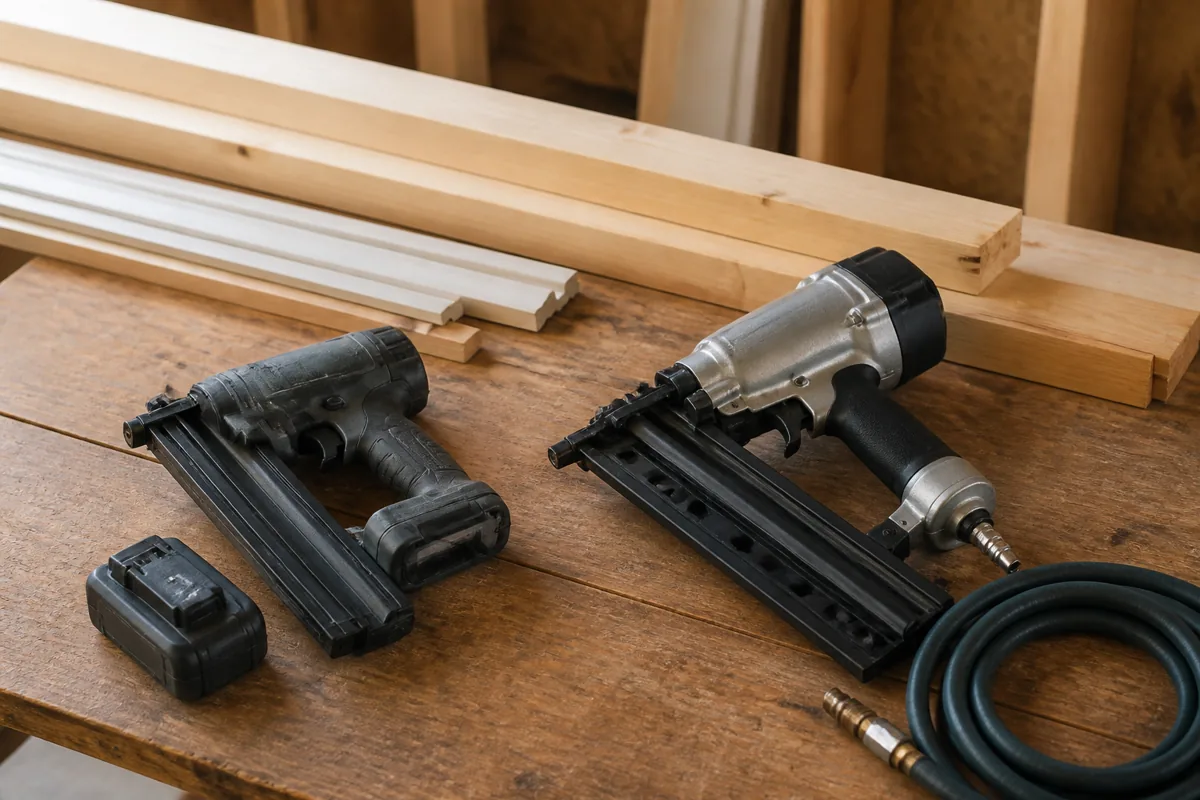
Price the system, not the tool. A pneumatic finish nailer is the cheapest way to drive a nail, but only if you already have a compressor. Add a pancake compressor and a hose and you’re usually in the same price band as a mid-tier cordless nailer. That is the entire trick behind compressor-plus-nailer combo kits: the bundle looks generous because you are comparing it against a cordless kit, but the compressor in the bundle is usually the smallest oil-free unit the brand sells, and it’s the part you’ll want to replace first.
Cordless flips the math. A bare-tool cordless nailer in an ecosystem you already own is frequently the single cheapest path to a working nailer, because you’re buying only the motor and the driver. If you have three or four DeWalt XR, Milwaukee FUEL, or Makita LXT batteries in a bucket already, a bare tool is the value play by a wide margin, and it’s the one that gets discounted quietly rather than during headline events.
The long tail matters too. Pneumatics have almost nothing to fail: a piston, a driver blade, some O-rings, and a rebuild kit that costs a fraction of the tool. Cordless nailers add a flywheel or gas-spring mechanism and a battery pack that degrades. Over a long enough horizon the pneumatic is cheaper to keep alive, which is why production trim shops still run hoses. If you’re shooting a few hundred nails a year on home projects, that durability advantage never gets a chance to pay you back.
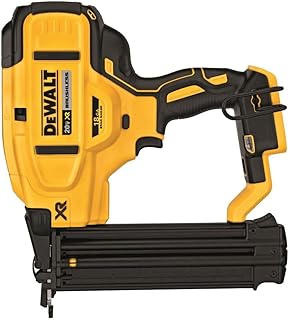
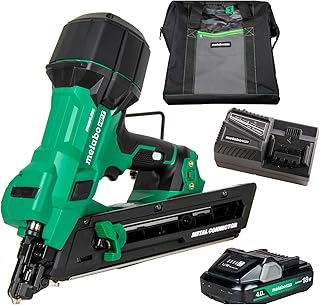
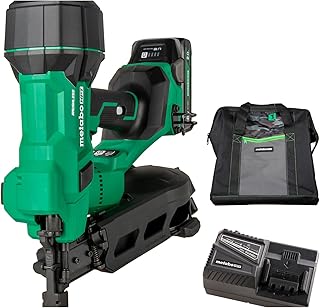
Cordless Brad Nailer, 18 Gauge
If you already have two or more batteries in a major platform, buy the bare tool and skip the kit. Kits bundle a low-amp-hour pack you probably don’t need, and the bundle premium rarely reflects what that pack is worth on its own. Filter for bare tool listings first, then compare against the kit price minus the battery’s standalone value.
The Battery Downgrade Trick to Watch For
This is the most common way a cordless nailer deal gets hollowed out. The tool stays the same, the model number looks familiar, but the included pack drops a tier. A kit that historically shipped with a mid-capacity pack quietly becomes a kit with the smallest compact pack in the lineup, and the listing price only comes down slightly. On paper it’s a discount. In practice you paid nearly full price and received less.
Nailers are especially sensitive to this because driving nails is a high-current job. Compact packs can run a nailer, but they sag under load, cycle slower on dense material, and reach thermal cutoff sooner on a long run of trim. The tool gets blamed for the pack’s limits.
Three checks before you commit. First, read the amp-hour rating in the bullet list, not the hero image, since brands reuse product photography across kit variants. Second, compare the kit price against the bare tool plus the standalone pack; if the kit isn’t clearly cheaper, the battery is filler. Third, be suspicious when a nailer kit price drops during a big sale event but the amp-hour rating isn’t stated anywhere in the listing text.
- ✔ Pneumatic: lowest entry price for the gun, near-endless service life, cheap rebuild parts, lighter in hand all day
- ✔ Pneumatic: no battery to degrade, no thermal cutoff, consistent drive power on the thousandth nail
- ✔ Cordless: no compressor, no hose, no cord routing, ready in seconds for a five-nail job
- ✔ Cordless: bare tools are the best-value entry point if you already own packs
- ✘ Pneumatic: compressor plus hose can double or triple your real spend, plus noise and storage space
- ✘ Pneumatic: dragging a hose around finished work is how trim gets scuffed
- ✘ Cordless: heavier at the tip, which shows up on ceilings and overhead nailing
- ✘ Cordless: battery replacement is a recurring cost, and kits are where the downgrade tricks live
Reading Nailer Discounts Without Getting Played
Inflated reference prices are endemic in this category. A nailer with a list price nobody has paid in years gets shown with a large crossed-out number, and the “discount” percentage is calculated against that fiction. The fix is simple: ignore the crossed-out price entirely and judge the current number against the tool’s own street price history. Any price tracker will show you the real floor. If the current price is only a hair under the trailing average, it’s not a deal no matter how big the percentage badge is.
Useful bands, based on how nailers typically move rather than any specific model. Around ten percent off street is routine and not worth rearranging your project schedule for. Fifteen to twenty-five percent off street is the normal good-deal zone during major sale events, and that’s where most buyers should pull the trigger. Thirty percent or more off a genuine street average usually means one of three things: a platform refresh is coming, the retailer is clearing shelf stock, or the kit configuration got downgraded. The first two are great for you. The third is not.
Timing also splits by tool type. Pneumatic combo kits and compressors surge into spring and fall promotional windows because they’re framed as project tools. Cordless nailers cluster around the big fourth-quarter events and the midsummer retail sale. Bare tools are the exception and often get their lowest prices in unglamorous off-season weeks, when there’s no headline event to protect margins.
Pneumatic Nailer and Compressor Combo Kit
The honest use case for a combo kit is a first-time buyer with no batteries and a real project queue: a deck, a room of trim, a shed. You get a nailer plus a compressor for less than most cordless kits. Accept that the compressor is entry-level, check the tank size and recovery rate rather than the peak PSI number, and expect to upgrade the compressor before you ever wear out the gun.
Which One Should You Actually Buy
Own two or more batteries in a major platform and mostly do punch-list work, trim touch-ups, and small jobs? Buy the bare cordless tool. It’s the cheapest real option available to you and the convenience is not a marketing invention. Waiting for a headline sale on a bare tool is usually wasted patience.
No batteries at all, and a multi-weekend project ahead? The pneumatic combo is the lower total spend, and the compressor keeps earning its keep for blowing out sawdust, seating brads, and inflating things. Buy it during a spring or fall promotional window.
Framing, sheathing, or fencing at volume? Pneumatic, with no real debate. High nail counts are where the hose stops being an annoyance and starts being the reason the job finishes today.
Working alone, indoors, on finished surfaces, and time matters more than the last twenty dollars? Cordless, even at a mild premium. Compare the bare tool price plus a standalone mid-capacity pack against the kit before you decide which listing to click.
Pneumatic vs Cordless Nail Gun FAQ
Is a cordless nailer powerful enough for framing? Modern cordless framing nailers sink nails into dimensional lumber without complaint. The limitation is sustained rate and cost, not power. On a long production run a pneumatic keeps pace better and costs less per nail driven.
Do I need a big compressor for a finish or brad nailer? No. Small brad and finish nailers use very little air, and a compact pancake unit handles them easily. Watch tank size and recovery rate rather than the advertised peak PSI, since peak numbers say nothing about whether the compressor can keep up with continuous use.
Should I wait for a sale or buy now? Wait if what you’re looking at is a kit priced within roughly ten percent of its trailing average, since the good-deal zone for nailers sits closer to fifteen to twenty-five percent off real street price. Buy now if it’s a bare tool in a platform you already own, because those rarely get dramatic event pricing and the savings from waiting are usually smaller than the delay costs you.
Price the whole system, verify the amp-hour rating in the listing text, and check the current price against the tool’s own history rather than a crossed-out list price. Do those three things and either choice ends up a good buy.
Check prices on Amazon →