Must Have Tools For New Homeowners
Our Top Picks
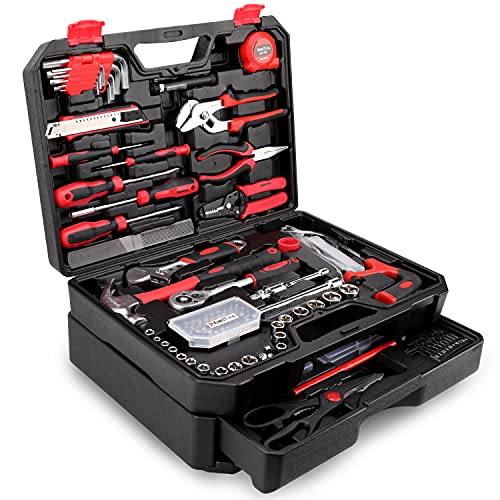 KingTool 325 Piece Home Repair Tool Kit16.1 x 12.2 x 6.2 inches16.1 x 12.2 x 6.2 inchesCheck on Amazon
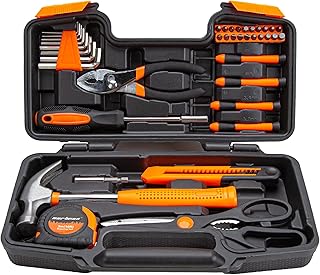
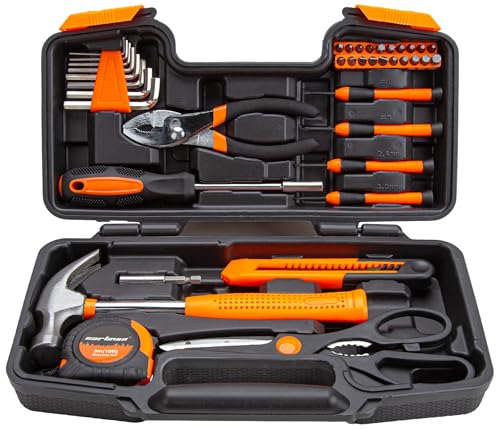 CARTMAN 39-Piece Household Tool Set39 Count(Pack of 1)12.4 x 7.4 x 3 inches3.3 poundsCheck on Amazon
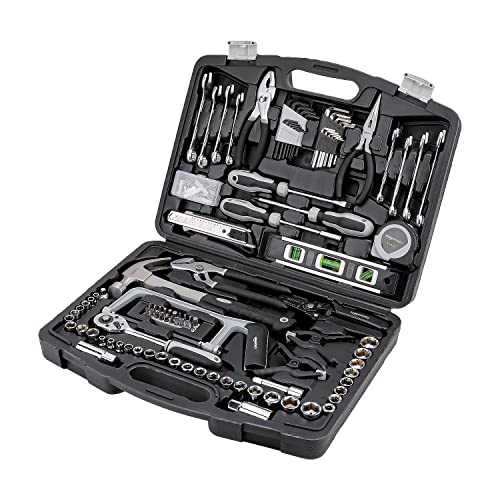 Amazon Basics 173-Piece General Household Hand Tool Set173-Piece16.89 x 12.68 x 3.35 inches11.18 PoundsCheck on Amazon
 KingTool 276-Piece Tool Set Kit with 12V Cordless276 Count (Pack of 1)16.4 x 13.1 x 6.57 Inches1.76 PoundsCheck on Amazon
 DEWALT 20V MAX Cordless Drill and Impact DriverOne Size15.06 x 6.4 x 9.88 inches3.6 PoundsCheck on Amazon

What's inside
As an Amazon Associate I earn from qualifying purchases. This post may contain affiliate links at no extra cost to you.
The first year in a house is when you overspend. Something breaks, you drive to the store angry, and you pay full retail for a tool you will use twice. That is how people end up with a garage full of orphan batteries and a drawer of dull screwdrivers. The must have tools for new homeowners list below is built in buying order, not alphabetical order, so you can spread the spend across a few months and let the discount cycles come to you instead of chasing them.
Two rules before anything else. First, pick one battery platform and stay in it, because the batteries and charger are the real cost of cordless ownership, not the bare tool. Second, ignore the crossed-out “was” price on any listing and judge the deal against what that item has actually sold for over the last few months. Tool pricing swings hard around Father’s Day, July holiday weekends, October, and Black Friday through mid-December. Outside those windows, most “sales” are noise.
As an Amazon Associate we earn from qualifying purchases at no extra cost to you.




The core kit at a glance
Here is what a functional first-year homeowner kit looks like, in the order I would buy it, with realistic price bands rather than made-up numbers.
| Tool | Typical price band | Buy it when | Why it earns its spot |
|---|---|---|---|
| Cordless drill/driver kit | Entry to mid two figures for brushed, low-to-mid three figures for brushed | Holiday promo with free extra battery | Hangs everything, assembles everything |
| Impact driver (or 2-tool combo) | Combo often costs barely more than the drill alone | Combo kit season, Oct-Dec | Deck screws, lags, long fasteners without wrist pain |
| 25 ft tape, 16 oz hammer, utility knife | Low two figures each | Anytime, no reason to wait | Used weekly, cheap to replace |
| Screwdriver and hex key set | Low to mid two figures | Bundled with anything | Fixes 60 percent of household annoyances |
| Adjustable wrench and pliers set | Low two figures per piece | Anytime | Shutoff valves, hose bibs, toilet supply lines |
| Stud finder and voltage tester | Low two figures each | Before your first wall project | Prevents the expensive mistakes |
| 6 ft step ladder | Mid two figures for fiberglass | Spring clearance | Filters, smoke alarms, gutters, paint |
| Wet/dry vacuum | Mid two figures, 4-6 gallon | Late fall promos | Water events, drywall dust, car interiors |
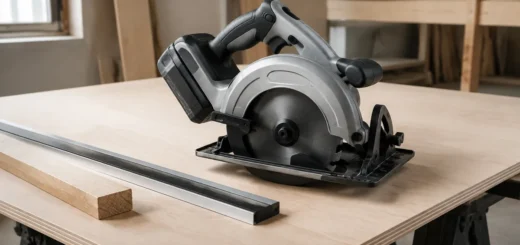
| Circular saw or reciprocating saw | Low three figures bare, less on the platform you own | After the drill kit, not before | Demo, plywood, storm cleanup |
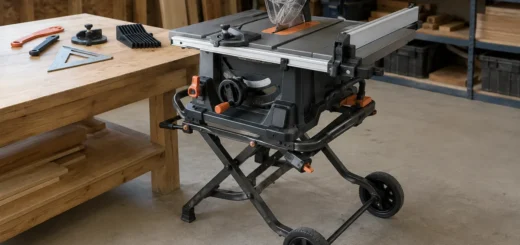
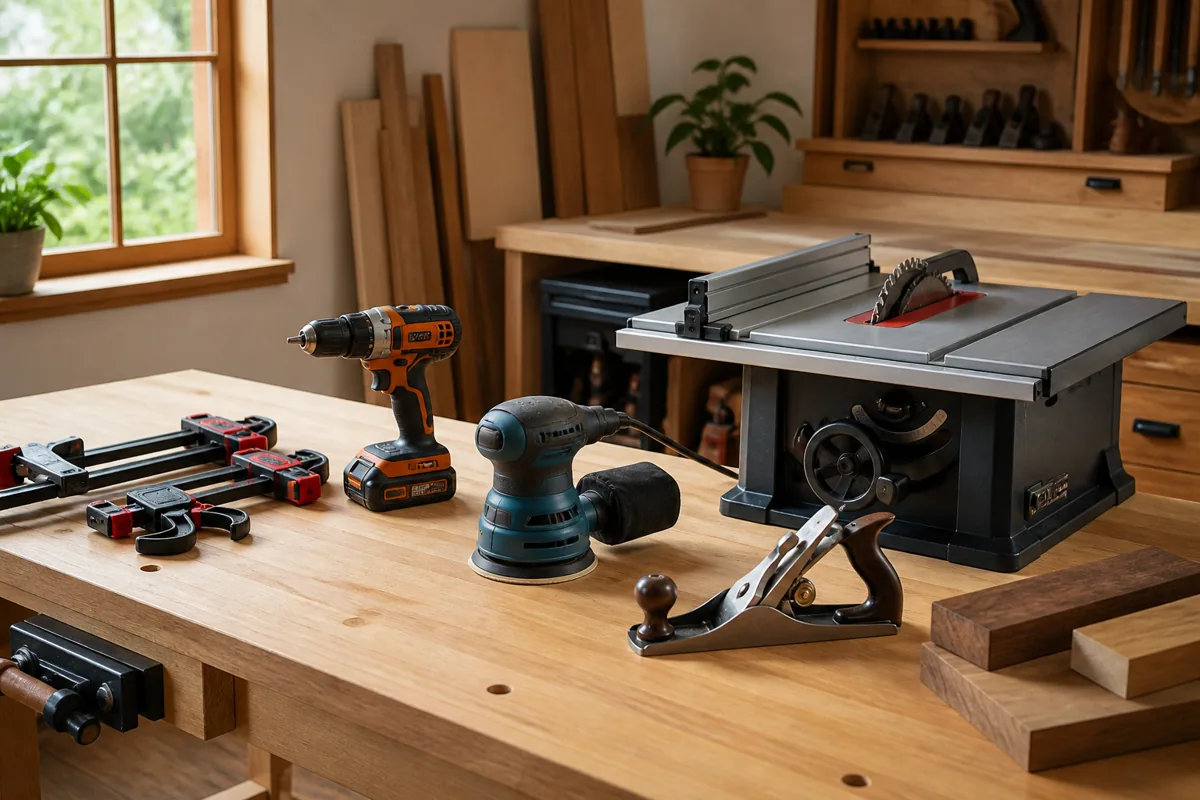
Notice what is not on that list: an oscillating multi-tool, a table saw, a router, a pressure washer. Those are project tools. Buy them when a specific project justifies the price, and you will pay less because you will have time to wait for a real discount.
Start with the drill kit, and read the battery fine print
The cordless drill is the one purchase where the deal-hunting actually matters, because the pricing tricks are concentrated here. The most common one is the battery downgrade. A kit that looks aggressively cheap during a promo often ships with the smallest compact battery in the lineup, or with two of them instead of a compact plus a higher-capacity pack. The tool is identical; the runtime is not. Compare the amp-hour rating on the included packs before you compare price, and treat a kit with one compact battery as roughly the same value as a bare tool.
The second trick is the retired-SKU discount. Brands quietly refresh models, and the outgoing version gets marked down hard. That is often a genuinely good buy, but only if the battery mount is unchanged. Within the big platforms, DeWalt’s 20V MAX and XR line, Milwaukee’s M18 and FUEL, Makita’s LXT, Ryobi ONE+, and the Craftsman V20 range, older bare tools generally keep working with current packs, which is exactly why platform lock-in is worth respecting.
Brushless versus brushed is a real difference, not marketing. Brushless motors run cooler, stretch runtime, and hold torque better under load. Whether you need it depends on use. For hanging blinds, assembling furniture, and occasional shelves, a brushed drill is fine and the savings are substantial. If you expect deck work, framing, or repeated large-diameter holes, pay for brushless.
Cordless Drill and Impact Driver Combo Kit
The two-tool combo is where the math works in your favor. Retailers price combos aggressively during holiday promos, and the impact driver often adds less to the total than buying it separately later. Filter for kits that include two batteries plus a charger and a case, then check the amp-hour rating on both packs. If a kit shows a suspiciously deep discount, it is usually because one battery got swapped for a compact.
Must have tools for new homeowners that are not power tools
Most homeowner emergencies are solved with hand tools. The water heater does not need a drill; it needs a channel-lock plier and a flashlight. Build out the boring half of the kit first, because it is cheap, it never goes obsolete, and it is what you will actually reach for at 10 p.m.
A 25 foot tape measure with a stiff blade, a 16 ounce claw hammer, a retractable utility knife with spare blades, a 4 foot level, and a combination square cover measuring and mounting. For fasteners, get a screwdriver set with real Phillips and square-drive tips plus a full metric and SAE hex key set, which handles nearly all flat-pack furniture and appliance panels. For plumbing, an adjustable wrench, a pair of tongue-and-groove pliers, and a toilet auger will get you through the first few incidents without a service call.
Add a headlamp rather than a handheld flashlight. Every plumbing and electrical job under a sink or in a crawlspace needs both hands. Add a non-contact voltage tester before you touch a single switch plate, and a stud finder before you hang anything heavy. Those two together cost less than a single drywall repair.
- ✔ Hand tools have no battery to obsolete and hold resale value
- ✔ Bundled sets are consistently cheaper per piece than buying individually
- ✔ Skipping specialty tools until a project demands them cuts first-year spend sharply
- ✔ Sticking to one battery platform means later bare-tool deals are actually usable
- ✘ Giant 200-piece “homeowner” sets pad the count with sockets and bits you will never use
- ✘ Cheapest-tier tape measures and utility knives fail early and cost more over time
- ✘ Off-brand cordless platforms look like a bargain until you need a replacement battery
- ✘ Buying a saw before you own a drill is the most common first-year mistake
How to read a tool deal without getting played
Treat every listed discount percentage as a claim, not a fact. The reference price it is measured against is often a list price nobody has paid in years. Three checks handle most of it.
Check the price history, not the badge. Use a price-tracking browser extension or simply watch a saved list for two or three weeks before you buy anything over about a hundred dollars. Seasonal patterns are strong and repeatable: cordless combo kits bottom out between late November and mid-December, outdoor tools and ladders clear out in late summer and early fall, and hand-tool sets get bundled heavily around Father’s Day.
Check what is in the box. Kit contents change silently between promos. Count batteries, note their capacity, and confirm the charger is included and is not the slow trickle unit. A kit missing a real charger is not a kit.
Check the seller and the warranty path. On marketplaces, third-party sellers of major-brand power tools are worth scrutiny, because warranty service usually requires an authorized retailer. Saving eight percent on a drill and losing the three-year warranty is a bad trade. Reconditioned and factory-blemished tools from an official outlet are a different story and often the best value in the entire category, though they typically carry a shorter warranty term.
Wet/Dry Shop Vacuum, 4 to 6 Gallon
The tool nobody puts on their list and everybody ends up needing, usually because of a supply line or a clogged gutter. A 4 to 6 gallon unit fits in a closet and handles water pickup, drywall dust, and car interiors. Buy on horsepower claims at your peril; look instead at whether it comes with a proper wet filter, a decent hose diameter, and onboard accessory storage. These discount reliably in late fall.
A twelve month spending plan
Spreading the purchases is the single biggest lever on total cost. In the first month, buy the hand tools and the safety basics: tape, hammer, knife, screwdrivers, hex keys, pliers, adjustable wrench, voltage tester, safety glasses, work gloves, headlamp. None of it needs a sale.
In the first quarter, add the ladder and the stud finder, ideally on a spring or late-summer clearance. Mid-year, watch for the drill and impact combo, and pull the trigger only when the included batteries make sense. In the fourth quarter, when discounts are deepest, add the wet/dry vac and your first saw, plus a spare high-capacity battery, which is usually cheapest as part of a promo bundle rather than as a standalone pack.
By month twelve you own a complete, coherent kit on one battery platform, you paid promo pricing on the expensive pieces, and you never bought a tool in a panic. That is the whole strategy.
FAQ
Which battery platform should a new homeowner pick? Pick based on what is stocked near you and what you can buy batteries for locally. Ryobi ONE+ is the value pick for light homeowner use with the broadest cheap-tool selection. DeWalt 20V MAX and Milwaukee M18 cost more per tool but hold up under heavy use and have strong resale. Makita LXT is excellent if you find good local pricing. The wrong answer is owning two platforms.
Are the big all-in-one homeowner tool sets a good deal? Sometimes, but check the piece count against the piece list. Sets that advertise 150 to 300 pieces usually inflate the count with drill bits and screwdriver inserts. A 60 to 100 piece set with a real tape measure, a full-size hammer, and proper pliers beats a 250 piece set of thin stamped tools at the same price.
Should I buy corded or cordless for a first saw? Corded circular saws and reciprocating saws cost noticeably less for the same cutting power and never need a battery, which makes them a sensible pick if your projects happen near an outlet. Go cordless only if you already own the platform and expect to work in the yard, on a roof, or during a power outage.
Buy the hand tools now, wait for a real promo on the combo kit, and check what is actually in the box before you check the discount badge.
Check prices on Amazon →