How to Decide if a Tool’s Higher Voltage Justifies Its Price
What's inside
As an Amazon Associate I earn from qualifying purchases. This post may contain affiliate links at no extra cost to you.
“Higher voltage” sounds like a straightforward upgrade, but voltage alone does not tell you how much work a tool can do. A more expensive 20V drill is not automatically stronger than an 18V one, and a 40V mower is not necessarily twice as capable as a 20V model. Before paying extra, look at the job, the tool’s design, battery cost and how often you’ll use its added capacity.
What voltage tells you—and what it doesn’t
Voltage is part of a battery system’s electrical specification. In general, higher-voltage platforms can deliver the power needed for demanding jobs without drawing as much current as a lower-voltage system. But real-world performance also depends on the motor, electronics, battery capacity, cooling and tool design. A poorly designed high-voltage tool can lose to a well-designed lower-voltage one.
Battery labels can add confusion. Some brands advertise a battery’s maximum voltage, while others use its nominal voltage. For example, a battery marketed as 20V Max may have a nominal voltage of 18V. Those labels don’t necessarily indicate a meaningful difference in working performance.
Also separate voltage from amp-hours (Ah). Amp-hours describe battery capacity, not voltage; a 5Ah pack generally stores more energy than a 2Ah pack in the same system. More capacity can mean longer runtime, but also more weight and cost. For sustained work, a larger battery may matter more than choosing a tool with a higher voltage label.
Match the platform to the job
For occasional household repairs—hanging shelves, assembling furniture or drilling small holes—a compact 12V drill or driver is often enough. It is lighter and can be easier to control in tight spaces. A 12V tool may struggle with repeated large holes, long structural screws or thick hardwood, but those aren’t typical weekend tasks for many buyers.
An 18V/20V-class system is a versatile middle ground. It covers most homeowner and general remodeling work, including drilling into wood, driving screws and using common cordless saws. If you’ll use several cordless tools, this platform is often the practical place to invest: one battery family can power a drill, impact driver, circular saw and other tools.
Higher-voltage platforms make more sense when the tool faces sustained heavy loads: cutting thick material repeatedly, running a large mower through dense grass or operating a high-demand outdoor tool. Even then, compare the complete tool rather than buying by voltage. Blade size, chain speed, cutting depth and thermal protection may tell you more about capability.
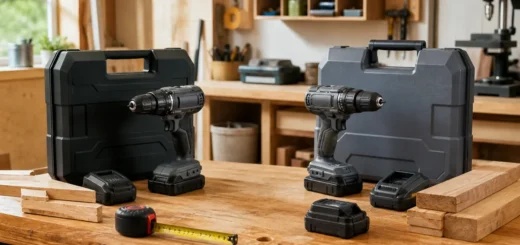
For a first set of cordless tools, a 18V/20V drill-driver kit is a sensible starting point for many home users. If your work is mostly light assembly and small repairs, compare it with a 12V drill-driver kit before paying for capacity you may rarely use.
Compare the full cost, not the bare tool
A higher-voltage tool can have a low advertised price and still be an expensive choice if its batteries and charger cost more. Check whether the price includes a battery, how many amp-hours it has and whether the charger is included. Then consider what else you might buy in that system. A discounted bare tool is a poor bargain if you still need to purchase a battery and charger.
| Typical use | Likely fit | When paying more can make sense | When it probably won’t |
|---|---|---|---|
| Light repairs and assembly | 12V tool | You also need a tougher tool in the same system | The tool is used a few times a year |
| General drilling, driving and cutting | 18V/20V-class platform | You use tools often or work with demanding materials | The higher tier adds weight without a needed feature |
| Repeated heavy cutting or outdoor work | Higher-voltage or higher-capacity system | Lower-voltage tools bog down, overheat or need frequent battery swaps | The job is small, occasional or easy to do with a corded tool |
Look for performance gains you can verify
Ask what specifically improves at the higher price. Useful evidence includes more cutting capacity, faster work under load, longer runtime with a similarly sized battery, better cooling, a more durable gearcase or a feature that matters to you. For drills, compare torque figures cautiously: manufacturers may report different test conditions, and a headline number does not guarantee smoother control or faster drilling.
If possible, compare the same task rather than product labels. For a saw, check how quickly it cuts the material and whether it slows or shuts down during repeated cuts. For a mower, consider lawn size, grass thickness and whether the battery lasts through the whole yard. A higher-voltage tool that avoids an extra battery swap may be worth it if that saves time every week.
Also account for weight. A larger battery can make an overhead drill tiring or a handheld saw less manageable. The extra power is not a benefit if it makes the tool harder to control for the work you actually do. For occasional use, a corded tool may deliver steady power for less than a high-voltage cordless setup, provided an outlet and extension cord are practical.
Watch for the common failure modes
A tool that is undersized for the job may bog down, overheat, trigger a battery cutoff or take so long to finish that you force it and wear out bits or blades. Repeated stalls are a sign to change technique, use a sharper accessory or move to a more capable tool—not simply to buy the largest voltage available.
The opposite mistake is buying excess capacity that sits unused. Higher-voltage kits can cost more, weigh more and lock you into pricier batteries. Battery families are usually not interchangeable across voltage platforms, even within one brand. Check compatibility before assuming a battery from your existing tools will fit.
Time the purchase around the kit
Seasonal promotions often make a higher-tier tool worthwhile by bundling an extra battery, charger or second tool. Compare the kit price with the cost of its parts, and check that the included battery is useful—not a small pack that runs out quickly on a demanding tool. If your current system already handles the work, wait for a bundle rather than upgrading just because a higher-voltage model is on sale.
Pay the premium when the added capacity solves a repeated problem: slow work, frequent stalls, overheating or batteries that cannot finish the job. If you rarely encounter those limits, a lower-voltage tool with a good battery, the right accessory and a solid warranty is often the better value.