Kobalt vs Ryobi: Which Budget Tool System Costs Less to Build Over Time?
What's inside
As an Amazon Associate I earn from qualifying purchases. This post may contain affiliate links at no extra cost to you.
The cheaper starter kit is not always the cheaper tool system. Batteries, bare tools, and the jobs you actually do can shift the total over several years. Kobalt and Ryobi both sell cordless tools aimed at homeowners, but they make different trade-offs: Kobalt often offers more performance per tool, while Ryobi’s larger selection and frequent promotions can make it easier to build a broad lineup on a budget.
The costs that add up
Compare a system by the cost of the tools you expect to use, not by the price of one drill kit. A typical small setup might include a drill, impact driver, circular saw, work light, two batteries, and a charger. If you later add a trimmer or blower, outdoor batteries can change the calculation quickly.
Prices vary by retailer, bundle, and season, so there is no permanent winner on shelf price. Kits can be a good deal when you need most of what is included; they are poor value if an extra tool sits unused. Before buying, price the bare tool, the battery-and-charger kit, and the next tool you expect to add. Also check whether a promotion requires buying items together.
Two systems, different strengths
Kobalt’s mainstream cordless platform is 24V; Ryobi’s long-running homeowner platform is 18V ONE+. Voltage alone does not tell you which tool is better. Battery design, motor, gearing, and tool type matter more. For routine drilling, driving, light cutting, and yard work, both systems can be entirely adequate.
Ryobi’s practical advantage is breadth. Its 18V lineup covers many homeowner and specialty tasks, so a battery purchase can support a wide range of later additions. Kobalt has a capable range too, but availability and selection can vary more by retailer and region. That matters if you want an unusual tool or need a replacement in a hurry.
For heavier or repeated work, compare the particular tool rather than assuming either brand wins across the board. A circular saw that cuts slowly or a blower that drains a small battery quickly can cost you time and may push you toward a larger battery. Higher-capacity batteries improve runtime but add weight and expense; they are not automatically the right choice for a drill or light.
A realistic five-year cost check
Use a simple estimate before committing. Suppose you buy a drill-and-driver kit, add a saw and a yard tool, and keep the system for five years. Record current local prices for each item, then add batteries only if the included ones will not cover the work. For comparison, use the same battery capacity and similar tool capability in both columns.
| Cost factor | Kobalt | Ryobi |
|---|---|---|
| Starter kit | Compare current kit price and included battery sizes | Compare current kit price and included battery sizes |
| Next bare tools | Check the exact tools you need and local availability | Check the exact tools you need and local availability |
| Extra batteries | Price matching capacity; count only batteries you need | Price matching capacity; count only batteries you need |
| Promotions | Check bundles and seasonal markdowns | Check bundles, free-tool offers, and seasonal markdowns |
| Replacement risk | Confirm batteries and tools are easy to find locally | Broad lineup can make later additions easier to source |
Fill this with today’s prices rather than relying on a brand-wide claim. A $30 difference in a kit can disappear if the losing system has a sale on the next tool you need. Likewise, a bundled battery is not a saving if you already own enough batteries or it is too small for the job.
Battery costs and common failure points
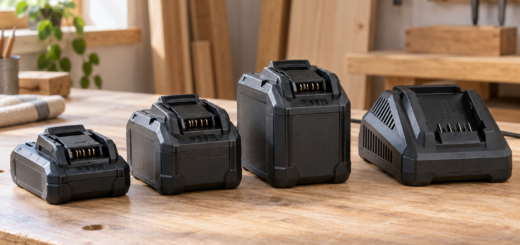
Battery care affects the long-term bill. Leaving packs in a hot shed or using a small battery for demanding work can shorten useful life. A saw, blower, or trimmer may run noticeably longer on a higher-capacity pack, but that pack costs more and makes a handheld tool heavier. For occasional homeowner use, one or two batteries may be enough. For a full day of yard work, plan for a charged spare and realistic breaks.
Do not buy batteries just to match a claimed runtime figure. Runtime depends on material, load, temperature, and tool condition. If a tool stalls, overheats, or repeatedly drains a pack, the cause may be a dull blade, clogged intake, or an undersized battery—not a reason to replace the whole system. Check the manual and use the battery capacity recommended for the task.
Which system fits your buying pattern?
Ryobi is a sensible starting point if you want to add many kinds of homeowner tools over time, especially when its kits or bundles are on sale. Its breadth can reduce the chance that you will need a second battery platform for a one-off task. Look at a Ryobi 18V drill-and-driver kit if you are building a basic set, but compare the included battery capacity and current local price before buying.
Kobalt may be the better value when its specific tools are discounted and you care more about the performance of a compact, focused set than having the widest possible catalog. It can be a good choice for a homeowner who needs a drill, driver, saw, and a few yard tools. Check Kobalt 24V drill-and-driver kits against Ryobi kits with similar batteries; a larger included pack can make an apparently higher-priced kit worthwhile.
If you already own batteries, staying on that platform usually saves more than switching for a small tool-price difference. Do not count an old battery as useful just because it still charges: if it loses power quickly under load, budget for replacement. For a one-time job, borrowing or renting a specialty tool may beat buying another charger and battery system.
When to buy, and what to check
Major sales around holidays and seasonal yard-care periods can bring down kit prices, but promotions change and are not guaranteed to beat ordinary discounts. Make a short list of the tools you will use in the next year, then watch prices for a few weeks if the purchase is not urgent. Compare the complete bundle, not just the headline price.
Before checkout, confirm the battery platform, included pack sizes, charger, warranty terms, and whether the tool is bare. If you expect to use a saw or outdoor tool often, favor a kit with a suitable battery over the lowest sticker price. If your work is occasional and light, buy the cheaper system that has the tools you need locally. The best long-term value is the one you can expand without paying for batteries, chargers, or specialty tools that will spend most of their life unused.