Best Bushcraft Backpacks for Trail-Ready Carry
What's inside
As an Amazon Associate I earn from qualifying purchases. This post may contain affiliate links at no extra cost to you.
The best bushcraft backpack for most users is a 35-45L pack with 500D+ Cordura or heavy canvas, a simple internal frame or frame sheet, and extensive external lashing points, because it covers day trips and single overnights without forcing you to carry empty volume or sacrifice durability when strapping axes, saws, and shelter to the outside.
As an Amazon Associate we earn from qualifying purchases at no extra cost to you.
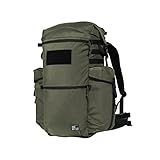


How to Match Capacity, Fabric, and Frame to Your Trip
Bushcraft packs are not hiking packs. You carry sharper, bulkier, and often dirtier gear on the outside, you access tools frequently without unpacking, and you need fabrics that resist abrasion from wood, sparks, and ground contact. Use these four criteria to narrow your choice before looking at specific models.
1. Capacity by Trip Type
- Day trips (20-30L): Enough for water, food, first aid, fire kit, rain shell, and a small axe or saw strapped outside. You want a compact body that stays stable when half-empty.
- Overnights (35-50L):
2. Fabric and Durability
- 500D-1000D Cordura / Nylon 6,6: Best abrasion and tear resistance for bushcraft. Heavier but shrugs off bark, rocks, and ember holes better than lightweight hiking fabrics.
- Waxed canvas (18oz+): Very quiet, highly abrasion-resistant, and naturally water-resistant after waxing. Heavier when wet and requires periodic re-waxing. Brands like Fjallraven (G-1000) and Duluth Pack use this class.
- 500D Cordura + canvas hybrids: A common compromise – Cordura body with canvas reinforcements on bottom and lashing zones.
- Avoid ultralight 70D-210D ripstop: Excellent for thru-hiking, poor for carrying axes, saws, and wood close to the fabric. It will puncture and melt from sparks faster.
3. Frame Support
- Frameless / foam sheet only: Works to 25L and under 20 lbs. Flexible and quiet in brush, but sags with heavy tools or water.
- Internal frame sheet with aluminum stay(s): The sweet spot for bushcraft. Transfers weight to hips at 25-40 lbs while keeping a slim profile for moving through woodland. Most 35-55L bushcraft packs use this.
- Full internal frame with hip belt: Needed for 55L+ and loads over 40 lbs where you carry winter gear, large amounts of water, or game. Look for a padded, load-bearing hip belt, not just a webbing strap.
4. External Attachment Points
This is what separates a bushcraft pack from a standard backpacking pack. Check for:
- Daisy chains or MOLLE/PALS webbing on the front and sides for horizontal and vertical lashing
- Side compression straps that can secure an axe, saw, or fishing rod, not just compress the bag
- A dedicated axe/hatchet sleeve or lower retention loop and upper tie-off
- Beavertail or front shingle pocket that can sandwich a tarp, bedroll, or wet layers on the outside
- Lash tabs on the bottom for a sleeping pad or blanket roll without blocking the main zipper
Spec Comparison: Trail-Ready Bushcraft Packs for 2026
The packs below represent the most common capacity classes and build styles. Weights and dimensions are manufacturer specs for size M/L where applicable.
| Pack Model | Capacity | Weight | Main Fabric | Frame Type | External Carry Highlights |
|---|---|---|---|---|---|
| Fjallraven Singi 48 | 48L | 2.9 kg / 6.4 lbs | G-1000 HeavyDuty Eco (65% polyester, 35% cotton) + 500D Cordura base | Fixed wooden frame + aluminum stay, padded hip belt | Front shingle, side pockets, axe attachment, multiple lashing points, rain cover included |
| Savotta Jaakari M (30L) | 30L (expands to 35L) | 1.6 kg / 3.5 lbs | 1000D Cordura | Removed / flat internal aluminum frame optional | MOLLE throughout, side compression, bottom lashes, roll-top + front zip access |
| Mystery Ranch 2-Day Assault (27L) | 27L | 1.7 kg / 3.7 lbs | 500D Cordura | Futura frame sheet + stay, moderate hip belt | MOLLE/PALS front and sides, triple-zip front access, bolt-thru compression straps |
| Helikon-Tex Bushcraft Satchel + EDC Pack (25L) | 25L | 1.1 kg / 2.4 lbs | 500D Cordura | Padded back with foam sheet, no stay | Front beavertail straps, side MOLLE, bottom bedroll straps, quick-draw side pockets |
| Tasmanian Tiger Pathfinder MKII (80L) | 80L (80+20L snow collar) | 3.1 kg / 6.8 lbs | 700D Cordura | Internal X-frame with aluminum stays, padded hip belt | Heavy side compression, MOLLE, extendable snow collar, detachable side pouches |
| Osprey Rook 65 | 65L (58L + 7L extension) | 1.68 kg / 3.7 lbs | 600D polyester main, 450D polyester base | LightWire peripheral frame + HDPE sheet, integrated hip belt | Side compression straps, sleeping pad straps, removable top lid, front shove-it pocket |
Best Picks by Situation
Best for Day Trips and Skill Practice: Helikon-Tex Bushcraft Line or Mystery Ranch 2-Day Assault
For carving, fire practice, and short trail loops, a 25-30L pack keeps weight close to your back and tools within reach. The Helikon-Tex EDC/Bushcraft series and Mystery Ranch 2-Day Assault are built from 500D Cordura, so they tolerate an axe head or folding saw rubbing on the side all day. Both rely on MOLLE and compression straps rather than a heavy frame, which keeps them agile in dense brush. Expect general market ranges in the lower to mid-tier for this class, with premium Cordura MOLLE packs costing more than simple canvas daypacks.
Best for Overnights: Savotta Jaakari M and Fjallraven Singi 48
This is the core bushcraft category. The Savotta Jaakari M at 30L is deceptively large because it carries tall items externally very well; its 1000D Cordura and simple frame handle an axe, saw, tarp, and cooking pot outside without sagging. The Fjallraven Singi 48 adds a wood-framed suspension and G-1000 fabric that is quieter than pure nylon and easy to re-wax for water resistance. Choose Savotta if you prefer MOLLE modularity and a lower profile, Fjallraven if you want a more traditional, pocketed design with a comfortable carry for 30-35 lb loads.
Best for Extended Trips and Cold Weather: Tasmanian Tiger Pathfinder MKII or Osprey Rook 65
When your shelter, sleep system, and 3-days of food exceed 50L, you need a real hip belt and stays. The Pathfinder MKII is a true load-hauler at 80L with an X-frame and detachable pouches, built entirely for heavy, abrasive use. It weighs more but will not blow out at the seams when overloaded with wood or game. The Osprey Rook 65 is lighter and more ventilated for trail miles, using lighter polyester that is comfortable but less spark and abrasion resistant. If bushcraft is the primary goal, prioritize the Cordura build; if you split time between backpacking and bushcraft, the Rook is the more comfortable crossover.
Decision Matrix: Which Pack Fits You
| Your Situation | Recommended Capacity & Build | Why |
|---|---|---|
| Mostly day trips, budget-conscious, carry axe + saw + tarp | 25-30L, 500D Cordura, frameless or frame sheet, strong external lashing | You need abrasion resistance and tool access more than volume or heavy suspension |
| 1-2 night trips, mix of trail and off-trail, 25-35 lb loads | 35-50L, 500D-1000D Cordura or G-1000, single-stay internal frame, padded hip belt | Transfers tool weight to hips without bulk; holds shelter externally in wet weather |
| 3+ nights, winter, or group gear carrier, 40+ lb loads | 65-80L, 700D-1000D Cordura, full internal frame with structured hip belt | Prevent pack collapse and shoulder fatigue; bottom and side lashing for bulky rolls |
| Primarily trail hiking that occasionally includes bushcraft skills | 50-65L lightweight internal frame (polyester), add aftermarket axe loop | Saves weight on miles but accept more careful tool handling to avoid fabric damage |
Fit and Load Calculation That Prevents a Bad Purchase
Before buying, estimate your real load:
- Weigh your outside-carry kit: Typical axe 1.2-1.8 kg, folding saw 0.3 kg, 3x3m tarp 0.8-1.2 kg, 1L water 1 kg. Many beginners strap 4-6 kg outside the pack before adding anything inside. If that is your plan, avoid frameless packs over 25L.
- Check torso length: Measure from C7 vertebrae (bony bump at base of neck) to the top of your hip bones. Compare to the manufacturer’s torso range. A pack that is 2 inches too long will dump weight onto shoulders even with a hip belt. Most internal-frame packs list S/M and M/L ranges; canvas rucks often run one-size with adjustable harness.
- Test compressed volume: A 48L pack cinched with side straps to 30L carries better than a 30L pack over-stuffed to 35L with tools on the outside. If you are between sizes, choose the larger capacity with good compression.
Durability and Ownership Realities
Bushcraft packs fail in predictable places. Knowing what wears first saves a mid-trip repair.
- Bottom panel and side lashing points: Constant contact with ground, logs, and axe heads abrades first. Look for double-layer Cordura or Cordura-reinforced bottoms and bartacked webbing. Apply a light wax to canvas bottoms but keep wax away from zippers.
- Zippers vs. roll-tops: Coil zippers jam with dirt and wood dust; roll-tops and buckles keep working but are slower to access. If you choose a zippered design, keep a small brush to clear grit and avoid overstuffing that stresses the slider.
- Sparks and embers: Nylon melts, cotton canvas chars. No fabric is fireproof. Clear a spark-free zone before opening your pack near the fire, and never set a hot pot or ember-carrying tin directly against the fabric.
- Cleaning: Empty completely, shake out sawdust and char, hand wash in lukewarm water with mild soap, air dry. Do not machine wash waxed canvas. Re-apply wax treatment to G-1000 or canvas once per season if water stops beading.
- Common mistakes: Strapping a bare axe head against Cordura, hanging a heavy axe from a single daisy loop without a bottom cup, and cinching compression straps over a saw blade without a sheath. All three cut webbing. Use a mask/sheath and a dedicated lower loop.
Final Take
Buy for the trip you do most often, not the longest trip you imagine. A 30L 1000D Cordura pack like the Savotta Jaakari M or a 500D MOLLE daypack will serve 80% of day and overnight bushcraft better than a cavernous 80L pack that stays half-empty. If you regularly stay out multi-night or haul winter gear, step up to a framed 48-65L pack like the Fjallraven Singi 48 or Tasmanian Tiger Pathfinder with a real hip belt so external tools do not pull you off-balance on the trail.