Best Value Orbital Sanders for the Money
What's inside
As an Amazon Associate I earn from qualifying purchases. This post may contain affiliate links at no extra cost to you.
The best value orbital sander for the money is usually the corded Bosch ROS20VSC: it combines a moderate purchase price with strong dust collection, comfortable vibration control, a durable 5-inch pad, and inexpensive replacement abrasives.
That is not the only sensible choice, however. A frequent professional user may recover the higher cost of a Makita BO5041 or Festool ETS 125 REQ through faster sanding and better refinement, while a cordless user may prefer the DeWalt DCW210B or Milwaukee M18 2648-20 despite the additional battery expense.
As an Amazon Associate we earn from qualifying purchases at no extra cost to you.
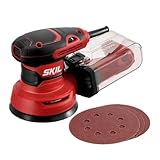


Best value orbital sanders at a glance
| Model | Type | Orbit | Speed range | Approx. tool weight | Dust features | Typical market range |
|---|---|---|---|---|---|---|
| Bosch ROS20VSC | 5-inch corded | 3/32 inch | 7,500–12,000 OPM | 3.5 lb | Microfilter canister; vacuum port | $70–$100 |
| DeWalt DWE6423 | 5-inch corded | 3/32 inch | 8,000–12,000 OPM | 2.9 lb | Dust bag; vacuum adapter | $70–$100 |
| Makita BO5041 | 5-inch corded | 1/8 inch | 4,000–12,000 OPM | 3.1 lb | Dust bag; vacuum port | $90–$130 |
| Festool ETS 125 REQ | 5-inch corded | 3/32 inch | 6,000–15,000 OPM | 2.4 lb | Integrated extraction design | $300–$400 |
| DeWalt DCW210B | 5-inch cordless | 3/32 inch | 8,000–12,000 OPM | 2.9 lb bare | Dust bag; vacuum adapter | $120–$160 bare tool |
Specifications and prices can vary by package, region, and production revision. Cordless weights exclude the battery, and a complete cordless setup costs more than the bare-tool price suggests.
Which sander offers the best long-term value?
Bosch ROS20VSC: best overall value for most woodworkers
The Bosch ROS20VSC is a particularly balanced purchase for furniture repairs, cabinets, doors, trim, and general workshop sanding. Its variable-speed control helps prevent burning on softwood and veneer, while the 3/32-inch orbit leaves a relatively fine finish when used with the correct abrasive sequence.
The microfilter dust canister is more effective than a simple cloth bag for light work, although a shop vacuum remains the better choice for long sanding sessions. The main ownership advantage is compatibility with common 5-inch, eight-hole hook-and-loop discs. Those abrasives are widely available in economical multipacks, so consumable costs remain predictable.
DeWalt DWE6423: best simple corded workhorse
The DWE6423 is a strong alternative when low weight and uncomplicated operation matter more than premium dust filtration. Its 2.9-pound body is easy to control on vertical panels, and its variable-speed dial covers both stock removal and finish sanding.
Its dust bag is convenient for quick jobs but typically captures less fine dust than a well-sealed vacuum setup. Inspect the hook-and-loop pad regularly: clogged hooks, torn edges, and heat damage can cause discs to lift prematurely. The DWE6423 makes the most sense for a user who wants a proven corded tool and already owns compatible DeWalt service support or accessories.
Makita BO5041: best value for frequent hand-held sanding
The Makita BO5041 costs more than basic corded sanders but adds a useful front auxiliary handle and a larger 1/8-inch orbit. That orbit can remove material more quickly than a fine-finish 3/32-inch pattern, while the variable-speed control still allows careful work.
The added handle is useful when sanding broad tabletops or working for extended periods, but it can make the tool less convenient in tight corners. Choose this model when sanding speed and two-handed control are more important than the smallest possible body.
Festool ETS 125 REQ: premium value for extraction-focused work
The Festool ETS 125 REQ is difficult to justify for occasional home repairs, but its low weight, refined handling, and extraction-oriented design can be valuable to cabinetmakers, remodelers, and finishers who sand many hours each week. Its price is high, and replacement abrasives may cost more than generic discs.
The ownership calculation changes if cleaner work areas, less cleanup, and consistent finishing speed are part of the job. It is a productivity purchase rather than the cheapest way to obtain a smooth surface.
DeWalt DCW210B: best cordless value for mobile work
The DCW210B is attractive when a power cord would obstruct a job, such as installing trim, repairing a stair, or sanding outdoors. The bare tool is reasonably light, but the battery adds both weight and cost. Runtime varies substantially with battery capacity, abrasive pressure, wood species, and speed.
For occasional sanding, buying into a battery platform solely for this tool is rarely the lowest-cost decision. For an existing 20-volt battery owner, however, cordless convenience can outweigh the higher total purchase price.
Decision matrix by situation
| Your situation | Best direction | Why | What to avoid |
|---|---|---|---|
| First sander, occasional projects | Bosch ROS20VSC or DeWalt DWE6423 | Low entry cost, common discs, adequate control | Paying premium prices for features you will rarely use |
| Frequent furniture or cabinet work | Makita BO5041 or a premium low-vibration model | Better handling and useful speed range over long sessions | Using a small dust bag instead of extraction when sanding indoors |
| Already own a compatible cordless platform | DeWalt DCW210B or equivalent platform model | No new charger or battery ecosystem required | Comparing bare-tool price with a complete corded setup |
| Very limited workspace | Compact 5-inch corded sander with vacuum connection | No battery charging and no bulky battery attached | Large random-orbit or forced-rotation sanders for small parts |
| Daily professional finishing | Festool ETS 125 REQ or another extraction-focused premium model | Lower fatigue and better dust-management potential | Choosing solely by purchase price |
How purchase price changes the real cost
Consider two corded sanders used for 40 projects over four years. A $85 sander with $0.45 discs may cost approximately $85 plus $72 for one four-disc set per project, or $157 in tool and abrasives. A $120 sander using the same discs costs $192 under identical assumptions. The more expensive tool needs to save at least $35 elsewhere to break even.
That saving could come from longer pad life, fewer discarded discs, reduced cleanup, or faster work. For example, if better dust extraction prevents one $5 disc from clogging on each of 20 projects, that alone saves $100. The result depends on your workload; for only five projects, the premium may not pay back.
What wears out first
- Abrasive discs: The cheapest disc is not always the least expensive. Discs that load quickly can increase sanding time and heat.
- Hook-and-loop pad: Pressing too hard, sanding overheated surfaces, or allowing dust to fill the hooks reduces disc adhesion. Replacement pads commonly cost about $15–$35.
- Dust seals and bags: A damaged seal allows fine dust into the mechanism and reduces extraction performance.
- Carbon brushes and switches: On older corded tools, these service parts may eventually fail, although availability varies by brand and model.
- Bearings and counterbalance components: Excessive noise, new vibration, or sideways pad movement can indicate wear. Stop using the tool if the pad becomes unstable.
Setup choices that protect both finish and tool
- Use the correct disc pattern. Match the sander’s hole layout and disc diameter. Misaligned holes reduce airflow and increase dust buildup.
- Start with light pressure. Let the abrasive cut. Heavy pressure slows the pad, raises heat, and can shorten pad and bearing life.
- Keep the pad flat. Tilting onto an edge concentrates wear and can create hollow or uneven sanding marks.
- Move at a steady pace. Keep the sander moving across the surface rather than dwelling in one spot.
- Progress through grits. A practical sequence is 80 or 100 grit for significant defects, 120 or 150 for refinement, and 180 or 220 before many finishes. Skipping too many grits leaves scratches that the next disc cannot remove efficiently.
- Clean after use. Empty the canister or bag, clear the pad holes, and blow or vacuum the vents according to the manufacturer’s instructions. Do not force compressed air into sealed bearings or electrical openings.
Final recommendation
For the broadest combination of price, sanding performance, comfort, dust control, and affordable consumables, choose the Bosch ROS20VSC. Pick the DeWalt DWE6423 when low weight and a straightforward corded design are priorities, the Makita BO5041 for frequent two-handed sanding and faster stock removal, the DeWalt DCW210B when you already own its battery platform, and the Festool ETS 125 REQ when daily productivity and extraction quality justify the premium.
Whichever model you choose, budget for quality abrasives, a replacement pad after extended use, and a vacuum adapter if you sand indoors. Those ownership costs often matter more to long-term value than a small difference in the initial tool price.