How to Compare Tool Bundles During Memorial Day Promotions
What's inside
As an Amazon Associate I earn from qualifying purchases. This post may contain affiliate links at no extra cost to you.
Memorial Day promotions can make tool bundles look cheaper than they really are. A box may include eight or ten pieces, but some may be low-value accessories, duplicate batteries, or tools you would not otherwise buy. The right comparison is not the biggest kit or the largest advertised discount. It is the cost of getting the tools, batteries, charger, and performance you actually need.
Start With the Work, Not the Bundle Count
List the jobs you expect to do over the next two years. Separate them into occasional tasks, such as hanging shelves or assembling furniture, and demanding work, such as building a deck, repairing a fence, or remodeling a room. This prevents a common Memorial Day mistake: paying for specialty tools because they make the package sound complete.
For light household work, a drill/driver, impact driver, light, and one or two batteries may be enough. If you will cut lumber, add a circular saw. If you will install trim or flooring, a brad nailer may save time, but it is rarely essential for a first purchase. A reciprocating saw is useful for demolition and pruning, yet it is a poor substitute for a circular saw when you need accurate, straight cuts.
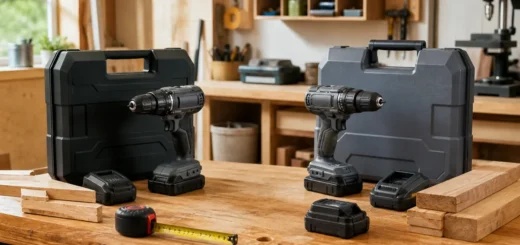
When comparing cordless power tool combo kits, write down each included tool and assign it a realistic value. If you would not buy that tool separately, assign it a value of zero. The bundle may still be a bargain, but you will see the bargain clearly.
Calculate the Real Cost
Compare the complete starting system, not just the tool bodies. A bare tool is useless until you own a compatible battery and charger. Some holiday packages include one small battery that runs a drill acceptably but makes a saw slow and frustrating. Others include two batteries but charge only one at a time.
Use this simple calculation:
Real system cost = bundle price + missing batteries and charger + necessary accessories − value of items you would buy separately.
Check battery capacity as well as battery count. A 2.0Ah battery is light and suitable for a drill, impact driver, or light, but it may drain quickly in a circular saw. A 4.0Ah or 5.0Ah pack usually provides better runtime for saws and grinders, although it adds weight. If the kit includes two 2.0Ah batteries and you need a larger pack later, the advertised savings may disappear.
| Bundle feature | Usually valuable | Potential catch |
|---|---|---|
| Two batteries | Less downtime and a spare for charging | Both may be small 1.5Ah or 2.0Ah packs |
| Brushless tools | Better efficiency and often longer service life | Higher price; not always important for occasional use |
| Circular saw | Useful for plywood, framing, and shelving | May need a larger battery and quality blade |
| Impact driver | Fast screw and lag-bolt driving | Can damage small screws or split soft wood |
| Accessory set | Convenient for immediate use | Bits and blades may wear out quickly |
Compare Battery Platforms and Brand Value
Battery platforms are long-term commitments. Once you own three or four batteries, switching brands means replacing more than one tool. Compare the brand’s available tools, battery prices, warranty process, and local availability before accepting a low bundle price.
Premium systems can justify their cost for frequent users. They typically offer more compact brushless tools, stronger saws, better ergonomics, and a wider selection of specialty tools. A homeowner who uses tools every weekend may notice those advantages. An occasional user hanging pictures or assembling cabinets may not. A less expensive brushed kit can be perfectly adequate if it has a decent drill, usable batteries, and a warranty you can access.
Do not assume a familiar professional brand is automatically the best value. A $300 kit used twice a year is not a better purchase than a $180 kit that handles those jobs safely. Conversely, the cheapest platform is a bad deal if replacement batteries cost nearly as much as a new kit or if the lineup lacks the saw or nailer you expect to need.
For a first system, compare brushless drill and impact driver kits against the price of equivalent brushed kits. Pay extra for brushless when you expect heavy use, long drilling sessions, or future expansion. For occasional repairs, spend the difference on good bits, a second battery, or a proper carrying case.
Inspect What the Tools Can Actually Do
Read specifications beyond voltage. Look for chuck size, maximum cutting depth, speed settings, weight with the battery installed, and whether the tool has a useful work light. A 1/2-inch drill chuck accepts larger bits than a 3/8-inch chuck, but the larger drill may be heavier. A compact impact driver is convenient overhead, while a high-torque model can overdrive screws and shear smaller fasteners.
For saws, check the cutting depth at 90 degrees. Many compact circular saws cut roughly 1-1/2 inches, enough for standard 2-by lumber in one pass, while smaller models may not. Also budget for a better blade. The included blade may be suitable for rough construction but leave chipped edges on plywood.
Watch for kit tools with missing features. A drill without a clutch can strip screws. A light without a battery gauge can stop unexpectedly. A reciprocating saw without variable speed is harder to control during delicate cuts. These omissions matter more than an extra tool you will rarely use.
Verify the Memorial Day Discount
Compare the sale price with the product’s price history, not the crossed-out list price. Retailers often rotate bundle prices, add free tools, or offer a battery promotion instead of making a direct discount. A “free” tool is valuable only if it is useful and would otherwise cost more than the required battery or accessory purchase.
Check whether the promotion is a limited-time price, a mail-in rebate, or a store-credit offer. A rebate requiring registration may be worthwhile, but record the deadline and save the receipt. Also check return rules. Some retailers treat promotional bundles as one item, so returning an unwanted tool may require returning the entire package.
Before buying, search for replacement cordless tool batteries and chargers. If one 5.0Ah battery costs $100 or more, a bundle that includes two larger packs can be a strong value even when its headline discount looks modest. If replacement packs are inexpensive, prioritize tool quality and ergonomics instead.
Avoid Common Bundle Mistakes
Do not buy a large kit with the plan to sell unwanted tools unless you have checked used prices first. Extra tools often sell for far less than their implied bundle value, especially lights, small vacuums, and older brushed models. Include shipping, platform fees, and your time in the calculation.
Do not mix batteries from similar-looking product lines without confirming compatibility. Voltage, physical rails, and electronics can differ. Use the manufacturer’s approved batteries and chargers, especially for high-draw tools such as grinders and saws.
Finally, leave room in the budget for consumables. A practical starter allowance is $30 to $60 for drill bits, driver bits, saw blades, anchors, and eye protection. A bundle that consumes the entire budget but leaves you unable to use it is not a bargain. Choose the smallest platform that covers your real jobs, then expand during future sales when a needed bare tool is genuinely discounted.