How to Compare Tool Discounts During Labor Day Sales
What's inside
As an Amazon Associate I earn from qualifying purchases. This post may contain affiliate links at no extra cost to you.
Labor Day sales can produce real savings on tools, but the biggest percentage discount is rarely the best deal. Retailers may compare a sale price with an inflated list price, bundle a low-value accessory, or discount an older battery platform while keeping replacement batteries expensive. A useful comparison looks at the total cost of ownership, the tool’s workload, and whether the sale price is actually below normal street pricing.
Start With the Real Price
Before comparing two sale tags, check the tool’s price history if possible. A “40% off” claim is less meaningful when the product has sold at the same price for the last three months. Search the exact model number, not just a product description. A retailer may list “18-volt drill kit” for one price while another includes a larger battery or a charger with faster charging.
Record three numbers: the current sale price, the usual selling price, and the complete price needed to use the tool. For a cordless tool, that usually means the tool, battery, charger, and sometimes a case. For a corded tool, include a suitable extension cord if you do not already own one. A $99 bare tool is not cheaper than a $139 kit if you need to spend $80 on a battery and charger.
Price alerts and browser history are useful, but do not treat any single price tracker as definitive. Retailers change bundles and product identifiers. Checking two or three major sellers and the manufacturer’s own store is usually enough to expose a misleading reference price.
Compare Complete Kits, Not Just Tool Bodies
Battery platform costs often matter more than the first purchase. If you already own compatible batteries, a bare tool can be the best Labor Day buy. If you are starting from scratch, a kit is usually safer, particularly when it includes a 4.0Ah or larger battery rather than a small 1.5Ah pack.
| Purchase type | Best for | Common advantage | Common drawback |
|---|---|---|---|
| Bare tool | Owners of the same battery platform | Lowest upfront cost | Expensive if batteries are not already owned |
| Starter kit | First-time cordless buyers | Includes battery and charger | May include a small battery or weak charger |
| Two-tool bundle | Homeowners building a basic set | Lower cost per tool | One tool may be rarely used or lower quality |
| Tool plus free battery | Existing platform users | Can deliver the best effective discount | Battery value varies widely by capacity |
Calculate the effective price of each item in a bundle before deciding it is a bargain. If a drill-and-impact-driver kit costs $199 and a comparable drill alone normally sells for $89, the second tool is effectively costing about $110. That may be good value if you need both, but it is not a saving if the impact driver will sit unused.
Battery capacity also changes the deal. A 2.0Ah battery is lighter and fine for occasional fastening, while a 5.0Ah pack usually runs longer and handles demanding tools better. The larger pack adds weight and cost, however. For overhead work, a compact battery may be worth more than maximum runtime.
Compare Brands by the Work You Actually Do
Brand tiers matter most when tools face sustained loads, dust, heat, or frequent use. A budget drill can be perfectly adequate for assembling furniture, drilling pilot holes, and installing shelves. It may struggle with repeated large holes, masonry drilling, or driving long structural screws.
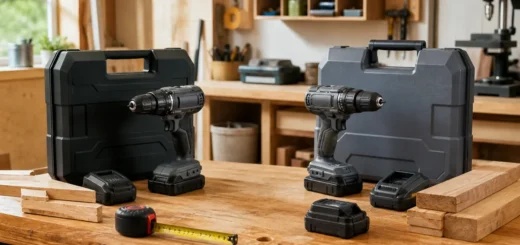
For occasional household repairs, compare budget cordless drill kits by warranty, battery availability, chuck quality, and included accessories—not just torque claims. A cheaper drill is acceptable when it will run for a few minutes at a time and downtime is not costly.
For remodeling, decking, or regular shop work, a stronger platform may justify a higher price. Better lines commonly offer more brushless options, larger batteries, faster chargers, and a wider range of compatible tools. The premium is harder to justify if the tool will be used only twice a year.
Do not assume that a premium brand is automatically more durable. Read reviews for specific failure modes: chucks loosening, gearboxes stripping, trigger switches failing, batteries refusing to charge, or plastic housings cracking after a short drop. A $30 saving is not worthwhile if the tool fails during a weekend project, but paying $100 extra for features you will never use is also poor value.
Match the Discount to the Job
Make a short list of the work the tool must perform. For a circular saw, that may mean cutting 2x lumber, sheet goods, or hardwood. For an oscillating tool, it may mean grout removal, flush cuts, or sanding. Power ratings alone do not predict performance well; blade size, cutting depth, speed control, vibration, and accessory cost can matter more.
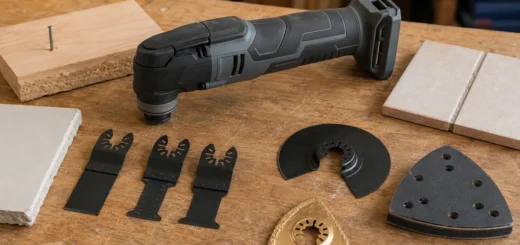
Buy the tool with enough capacity, but avoid paying for commercial duty when the job does not require it. A compact cordless oscillating multi-tool kit is convenient for trim and repairs, while a corded model can be the better choice for long grout-removal sessions because it avoids battery changes.
Account for consumables. A discounted angle grinder may cost little, but wheels, discs, blades, sanding sheets, and filters can exceed the tool price over time. Proprietary accessories are a warning sign when inexpensive standard alternatives are available. Also check whether the sale includes safety equipment; a cheap tool is not a bargain if you skip eye, hearing, or respiratory protection.
Spot Fake Savings and Weak Bundles
Be cautious with “doorbuster” tools that have fewer features or a shorter warranty than the retailer’s regular version. Read the specifications and model number carefully. A kit with two tools may use entry-level versions while a single-tool package uses a better motor and chuck.
Free gifts can also distort the comparison. A flashlight or small bag adds little value if you already own one. A second battery is more useful, but only if it fits tools you plan to buy later. Search the battery separately and check its normal price; some bundles assign most of their supposed value to a battery that is frequently discounted.
Use Timing and Return Policies to Your Advantage
Labor Day deals often begin in late August and continue through the holiday weekend. Inventory can change quickly, but rushing is risky. Compare the same item across sellers before checkout, and confirm shipping, sales tax, and pickup fees. A $10 lower online price may disappear after delivery charges.
Check the return window and warranty before buying. Test a power tool immediately: inspect the housing, run the motor briefly, check the battery latch, and verify that the charger recognizes the battery. Return it if the chuck wobbles badly, the trigger sticks, the battery overheats, or the tool emits grinding noises. These problems are easier to resolve during the retailer’s return period than through a manufacturer warranty claim.
If you need a general-purpose starter platform, compare cordless power tool combo kits by the number of genuinely useful tools and the battery sizes included. If you already have batteries and need one specialized tool, search for a bare cordless power tool instead. The best Labor Day deal is the one that lowers the cost of completing your work without creating a new, expensive battery or accessory commitment.