How to Choose a Tool Platform When You Expect to Add Only Two More Tools
What's inside
As an Amazon Associate I earn from qualifying purchases. This post may contain affiliate links at no extra cost to you.
Choosing a cordless tool platform is different when you expect to buy only two more tools. You are not building a contractor’s fleet, so the platform with the largest catalog is not automatically the best value. Your decision should focus on the three or four tools you will actually own, battery costs, warranty support, and whether the tools will still be available when you need them.
Start With the Three-Tool Set
List the tool you need now and the two additions you realistically expect to buy. Be specific about the job. “Cordless tools” is too broad; “drill, compact impact driver, and oscillating multitool” gives you a useful comparison.
Then mark each tool as essential, occasional, or merely convenient. An occasional tool may not justify moving to a more expensive battery platform. If you will use a reciprocating saw twice a year, a corded version can be cheaper than buying a battery, charger, and bare tool.
Check voltage carefully. Most brands separate compact 12V tools from their 18V or 20V lines, and batteries generally do not cross between them. A compact drill may be enough for cabinet hardware, while a higher-voltage drill is more suitable for long screws, hole saws, and masonry bits.
Compare Total Cost, Not Sticker Price
The cheapest kit is not always the cheapest platform. A drill kit may include two batteries and a charger, while the next tool you buy is sold bare. That is useful if you stay with the same platform. It is wasted money if the original batteries are weak, proprietary, or poorly supported.
For a small three-tool setup, calculate the cost of the starter kit plus two bare tools. Add another battery only if the planned tools will compete for the same battery during a job.
| Platform type | Typical cost pattern | Best fit | Main drawback |
|---|---|---|---|
| Budget homeowner platform | Low starter-kit price; inexpensive bare tools | Light repairs, furniture, seasonal maintenance | Fewer high-performance tools and less consistent long-term support |
| Mainstream professional platform | Higher kit price; broad midrange selection | Frequent DIY work and mixed indoor/outdoor jobs | You pay more for capacity and tool variety you may never use |
| Premium professional platform | Most expensive batteries and bare tools | Heavy use, demanding materials, long daily runtime | Poor value for occasional users |
| Corded or gas alternative | Low purchase price for one specialized tool | Infrequent use or long, uninterrupted jobs | Cord management, maintenance, noise, or fuel handling |
As a rough example, a $180 drill kit plus two $100 bare tools costs $380 before adding another battery. A $280 premium kit with two $150 bare tools reaches $580. The premium platform must save meaningful time or prevent repeated failures to justify that extra $200.
Look Closely at Batteries and Chargers
Battery capacity affects both runtime and weight. A 2.0Ah pack is comfortable on a drill or impact driver, but may run a reciprocating saw for only a short cutting session. A 4.0Ah or 5.0Ah pack lasts longer, yet adds noticeable weight when working overhead.
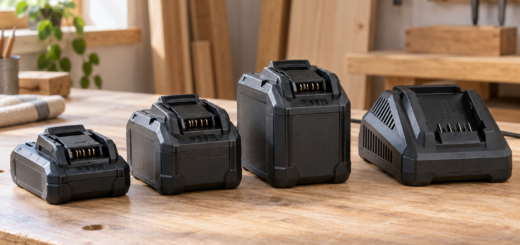
For three tools, two batteries are usually enough: a smaller pack for light tools and a larger pack for saws or outdoor equipment. If the platform sells only large, expensive batteries, the tools may feel cumbersome. If its starter kit includes one battery, price a second pack before buying.
Chargers also vary. A basic charger may take several hours to refill a large battery. That is fine for weekend work if you charge overnight. A rapid charger matters more when you will drain multiple packs in one day, but it can cost $50 to $100 and may shorten battery life if heat is not managed well.
Compare current battery prices through cordless battery and charger kits, not just tool prices. A discounted bare tool is not a bargain if a replacement battery costs nearly as much as the original kit.
Judge Tool Quality by the Job
Do not pay for maximum torque when your work does not require it. A budget drill is usually fine for pilot holes, cabinet screws, shelving, and small deck repairs. It becomes a poor choice when you regularly drill large holes, drive long structural screws, or work in dense hardwood.
An impact driver is useful for repeated screwdriving, but it is louder and easier to overdrive fasteners. For delicate work, a drill with an adjustable clutch is often the better tool. For cutting, budget reciprocating saws can handle occasional PVC, branches, and demolition, but may vibrate more, cut slower, and overheat sooner than premium models.
If one of your future tools is an outdoor product, such as a blower or string trimmer, runtime and battery cost matter more than peak torque. Consider a cordless string trimmer or blower only if you already own compatible batteries. Buying a new platform solely for one seasonal yard tool often costs more than a corded or gas alternative.
Check Availability and Warranty Support
A platform is a long-term purchase even if you expect only two additions. Search for the exact bare tools you may need and check whether they are sold by the manufacturer, a major retailer, or unknown marketplace sellers. A platform with a large catalog is not useful if common tools are permanently out of stock.
Look for battery warranty terms separately from tool warranty terms. Batteries are often covered for fewer years, and some warranties require registration or proof of purchase. Keep receipts and avoid mixing unofficial replacement batteries with expensive tools; a faulty pack can damage electronics or create a fire hazard.
When a Mixed Platform Is Smarter
You do not need one battery system for every tool. A corded angle grinder, compact corded sander, or manual hedge shears may be the sensible choice for occasional use. Likewise, a specialty tool used once a year can be rented for $30 to $60 instead of adding a $150 battery and bare tool.
Stay within one cordless platform for tools used together on the same project. Mixing brands creates duplicate chargers, batteries, and storage space. But do not force an expensive platform onto a job that a corded tool performs better. For most homeowners, the best value is a reliable midrange system for the core tools, with corded, rented, or budget equipment filling the gaps.
Before buying, price the complete three-tool package, confirm the batteries fit every planned tool, and decide whether your heaviest job really needs professional performance. If the cheaper platform handles your materials and offers replacement batteries locally, it is usually the right choice.