DeWalt vs Makita Cordless Drills: Comparing Battery Costs and Jobsite Value
What's inside
As an Amazon Associate I earn from qualifying purchases. This post may contain affiliate links at no extra cost to you.
DeWalt and Makita both make dependable cordless drills, but the drill itself is only part of the purchase. Batteries, chargers, replacement packs, and the other tools you may add later often determine the real cost. A cheaper kit can become the expensive choice if you need extra batteries every day. Conversely, a premium battery platform is wasted money if you only drill a few holes each month.
As an Amazon Associate we earn from qualifying purchases at no extra cost to you.


Quick comparison: DeWalt vs Makita
| Factor | DeWalt | Makita |
|---|---|---|
| Typical market position | Strong contractor and remodeler focus | Broad professional and woodworking range |
| Battery platform | 20V MAX system | 18V LXT system, plus newer 40V XGT |
| Best value for | Users wanting a large selection of jobsite tools | Users already invested in LXT or wanting smooth, compact tools |
| Battery-cost concern | Large packs can be costly; compact packs may limit runtime | LXT packs are widely available, but high-capacity replacements are not cheap |
| Main trade-off | Some kits emphasize power over compact size | Tool and battery combinations can be confusing across LXT and XGT |
The battery cost changes the comparison
A bare drill is rarely the sensible starting point unless you already own compatible batteries. A typical two-battery kit may cost roughly $130 to $250 during ordinary sales, with premium hammer-drill kits and high-capacity packs going higher. Bare tools often look inexpensive at $80 to $150, but adding two batteries and a charger can erase that apparent savings.
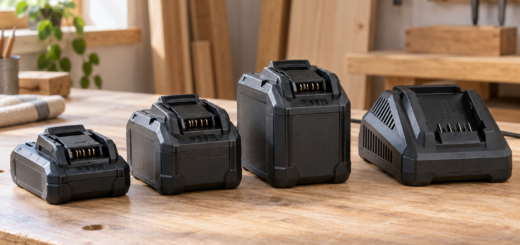
Replacement batteries commonly cost about $60 to $120 each, depending on capacity and promotions. Compact 1.5Ah or 2.0Ah packs are lighter and often cheaper. They work well for cabinet hardware, electrical boxes, and occasional screwdriving. Larger 4.0Ah, 5.0Ah, or 6.0Ah packs provide substantially more runtime, but add weight and may cost enough that a discounted kit is a better purchase.
For a homeowner starting from zero, compare the kit price rather than the drill price. A $179 kit with two batteries may be a better deal than a $99 bare drill followed by a $90 battery purchase. Check whether the kit includes a rapid charger, a soft bag or case, and batteries of useful capacity. A kit with two tiny packs may have a low headline price but require an upgrade soon.
See current deals on DeWalt 20V MAX drill kits and Makita 18V LXT drill kits, but compare the battery amp-hour ratings before comparing prices.
Jobsite value: what you actually pay for
DeWalt’s 20V MAX ecosystem is particularly useful for general construction, remodeling, and maintenance. It includes drills, impact drivers, saws, lights, vacuums, nailers, and specialty tools. That breadth matters when a drill purchase becomes the first step toward a larger cordless setup. DeWalt also has strong availability at home centers and tool retailers, making batteries easier to find when a pack fails during a project.
Makita’s 18V LXT platform is similarly extensive and has a strong reputation among carpenters, cabinet installers, electricians, and finish workers. Many Makita drills feel balanced and relatively refined, especially with compact batteries. The system includes a wide range of saws, sanders, planers, vacuums, and outdoor equipment. The catch is platform selection: Makita’s 40V XGT tools use different batteries, so buying into XGT later does not make existing LXT packs interchangeable.
That ecosystem value is only real if the brand has the tools you need. If your future list includes a cordless nailer, recip saw, and jobsite light, compare those prices too. A drill that saves $30 can become poor value if every later tool or battery costs more in the platform you selected.
Performance, runtime, and failure modes
For typical drilling, both brands offer enough power for wood, metal, and masonry when you choose the correct drill type and bit. A standard drill is suitable for wood and metal. For regular brick or block work, choose a hammer drill. Neither cordless drill should be treated as a rotary hammer for sustained concrete drilling; overheating the clutch, motor, or battery is a common failure mode.
Battery capacity affects more than runtime. A high-capacity pack can reduce voltage sag under heavy loads, but it also makes the drill tiring overhead. A compact battery may run out while boring large holes, forcing a swap every 20 to 40 minutes of demanding work, depending on material and bit size. For repeated framing or hole-saw work, two medium or large packs are more practical than one oversized battery.
Heat is another warning sign. If the battery or motor becomes too hot to comfortably hold, stop and let it cool. Forcing a dull bit, using the wrong speed, or leaning heavily on the drill can shorten battery life and damage the tool. Replacement packs also fail faster when stored fully discharged, left in a hot vehicle, or repeatedly run until the protection circuit shuts the tool off.
Which platform makes sense for your work?
Choose DeWalt if local availability, broad construction-tool selection, and frequent jobsite use are priorities. It is a practical choice for contractors who may add cordless nailers, saws, or fastening tools and want one widely supported battery family.
Choose Makita if you value compact handling, woodworking and finish-work tools, or already own LXT batteries. Makita is not automatically cheaper, but sales on LXT kits can make it an excellent value. Existing battery ownership should outweigh small differences in drill specifications.
For occasional household work, buy whichever reputable kit is on sale with two batteries, a hammer function if you need masonry, and at least one battery around 4.0Ah or larger. You do not need the most powerful model to assemble furniture, mount shelves, or maintain a home. A basic kit is often the better budget pick.
When to buy
The strongest cordless-tool promotions usually appear around major holiday sales, Father’s Day, spring home-improvement events, and late November. Watch for kits that include a free tool or an additional battery rather than focusing only on a percentage discount. A free bare tool has little value if you do not need it, while a second battery can prevent a later $80 purchase.
Before buying, check the battery warranty, return period, and whether the listing is sold by a reputable retailer. Avoid suspiciously cheap loose batteries and third-party packs for demanding work; poor cells, inaccurate charge indicators, and overheating protection can turn a bargain into downtime or a safety problem. The best value is usually the platform you can support for the next five to ten years, not the drill with the lowest price today.