Makita 18V Brushless Circular Saw: Specs, Blade Size, and Real-World Cutting Power
What's inside
As an Amazon Associate I earn from qualifying purchases. This post may contain affiliate links at no extra cost to you.
The Makita 18V brushless circular saw most buyers mean — the XSH03Z — is a 6-1/2-inch sidewinder that cuts 2-1/4 inches at 90°, about 1-5/8 inches at 45°, spins at 5,000 RPM, and lands surprisingly close to Makita’s own 15-amp corded saws on everything short of all-day ripping. If you want full corded parity in a single tool, Makita sells that too: the XSH06Z runs two 18V packs (36V total) and a 7-1/4-inch blade. The right pick depends on which of those two saws the phrase “Makita circular saw 18V brushless” actually describes for your work.
As an Amazon Associate we earn from qualifying purchases at no extra cost to you.


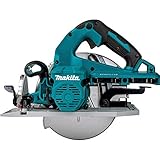

The lineup at a glance: three cordless saws, one corded benchmark
Makita’s LXT family includes two single-battery brushless saws and one dual-battery model. The table below puts them against the 5007MG, the 15-amp corded saw they’re most often compared to.
| Model | Power | Blade dia. | No-load RPM | Depth @ 90° | Depth @ 45° | Bevel range | Typical weight |
|---|---|---|---|---|---|---|---|
| XSH03Z (18V brushless) | 1× 18V | 6-1/2″ | 5,000 | 2-1/4″ | 1-5/8″ | 0–50° | ~7.3 lb w/ 5.0Ah |
| XSH04ZB (sub-compact) | 1× 18V | 6-1/2″ | 5,000 | 2-1/4″ | 1-5/8″ | 0–50° | ~6.5 lb w/ battery |
| XSH06Z (18V X2) | 2× 18V (36V) | 7-1/4″ | 5,800 | 2-9/16″ | 1-3/4″ | 0–53° | ~10.5 lb w/ two packs |
| 5007MG (corded) | 120V, 15A | 7-1/4″ | 5,800 | 2-1/2″ | 1-3/4″ | 0–56° | 10.6 lb |
Bare-tool pricing generally falls in the $130–$200 band for the single-battery saws and $200–$270 for the XSH06Z, while the corded 5007MG typically sells for less than a bare XSH03Z once a battery and charger are factored in. That gap is the real cost of going cordless, not the saw itself.
Blade size and what the cut-depth numbers actually mean
Both single-battery saws use a 6-1/2-inch blade on a standard 5/8-inch arbor; the XSH06Z steps up to the same 7-1/4-inch format as corded framing saws. The practical differences:
- 90° crosscuts: Even the smallest saw clears 2x lumber (1-1/2″ actual) by three-quarters of an inch. Depth at 90° is a non-issue for framing, decking, and sheet goods.
- 45° bevels: This is where blade diameter bites. The 6-1/2″ saws deliver about 1-5/8″ at full bevel — they get through a 2x in one pass with only ~1/8″ to spare. It works, but a dull blade or aggressive feed will bog. The 7-1/4″ XSH06Z’s 1-3/4″ makes the same cut comfortable.
- Blade economics: 6-1/2″ blades cost slightly less and are widely stocked, but the 7-1/4″ format has the deepest selection of specialty blades (thin-kerf, fiber cement, metal).
Bottom line: a 6-1/2″ saw only feels limited if you bevel-cut 2x material routinely or gang-cut stacked sheets.
Runtime per battery: a worked estimate
Makita’s published figures for the XSH03Z land around 500 crosscuts in SPF 2×4 per 5.0Ah charge under ideal conditions. A quick sanity check: a 5.0Ah pack stores ~90Wh; a two-second crosscut pulling roughly 400–500W consumes about 0.25Wh, so 300–450 cuts is the honest planning range once blade wear and colder wood are accounted for. In pressure-treated lumber or hardwood, discount those numbers by roughly 40–50%.
| Battery | Watt-hours | Est. 2×4 SPF crosscuts | Est. 3/4″ plywood rips |
|---|---|---|---|
| BL1830B (3.0Ah) | 54 Wh | ~250–300 | ~100–130 linear ft |
| BL1840B (4.0Ah) | 72 Wh | ~350–400 | ~140–170 linear ft |
| BL1850B (5.0Ah) | 90 Wh | ~450–500 | ~180–220 linear ft |
| BL1860B (6.0Ah) | 108 Wh | ~550–600 | ~220–260 linear ft |
Two runtime multipliers that listings never mention: a thin-kerf blade buys roughly 15–25% more cuts per charge, and a dull blade can quietly halve them — “the saw feels weak” is very often a blade problem, not a motor problem.
Brushless vs. Makita’s corded saws
Brushless motors eliminate the wearable carbon brushes and let the electronics meter power to load, which is why Makita advertises meaningfully longer runtime than its older brushed LXT saws. Against the corded 5007MG specifically:
- The XSH06Z matches the corded saw’s 5,800 RPM and actually beats it slightly on 90° capacity (2-9/16″ vs 2-1/2″), while its Automatic Speed Change feature trades RPM for torque when the blade meets resistance — the closest thing to corded behavior in a battery saw.
- The single-battery XSH03Z runs a bit slower (5,000 RPM) and will bog sooner in dense LVL or wet PT stock, though it cuts SPF studs at essentially the same pace and weighs ~3 lb less.
- Corded still wins two ways: unlimited runtime on sheet-goods marathons, and total cost — no batteries to buy or replace.
Which one fits your work
| Your situation | Best pick | Why |
|---|---|---|
| DIY remodels, punch lists, a dozen cuts at a time | XSH03Z + 5.0Ah | Full 2x depth at ~7 lb; one pack covers a weekend |
| Framing and decking, all-day cutting | XSH06Z | 7-1/4″ bevel capacity, corded-level torque |
| Overhead work, tight stud bays, smaller hands | XSH04ZB | ~1 lb lighter with a slimmer grip and housing |
| Shop-adjacent work near outlets | 5007MG (corded) | Cheaper all-in, never fades on long rips |
| Demolition, plunge cuts, nail-embedded wood | XRJ05Z recip saw | A circular saw can’t plunge or chew through nails |
Where the Makita 18V brushless reciprocating saw fits
The XRJ05Z is the natural companion, not a competitor: a brushless recip with a 1-1/4-inch stroke and two speed ranges (0–2,300 and 0–3,000 SPM) that handles demo, PVC and metal pipe, pruning, and the rough plunge cuts a circular saw physically cannot make. Because it runs on the same LXT batteries, two 5.0Ah packs effectively power both tools — the circular saw for anything you need straight and dimensioned, the recip for everything destructive or awkward.
Ownership realities after the honeymoon
- The lower guard is the weak link. Dust packs into the return mechanism and the guard starts sticking — the most common “my saw broke” complaint. Blow it out regularly.
- Blades are your main consumable. The stock 24T framing blade dulls fast in pressure-treated stock; budget for replacements and treat a sudden runtime drop as a blade symptom first.
- Batteries age out. Expect roughly 3–5 years of weekend use per pack; store them partially charged and off the charger.
- Don’t force bevel cuts in 2x with the 6-1/2″ saws. The 1/8″ depth margin means slow, steady feed on a sharp blade — pushing invites bogging and kickback.
- Check shoe flatness after any drop. A tweaked baseplate shows up as a blade that won’t track square.
Quick answers
Can the XSH03Z cut 2x lumber at 45° in one pass? Yes — 1-5/8″ of depth against 1-1/2″ of stock, but with little margin. Use a sharp blade and a patient feed.
Do my other LXT batteries fit? Every 18V LXT pack fits — including the ones running your XRJ05Z recip saw — though the XSH06Z needs two at once.
Cordless or the corded 5007MG? If most cuts happen away from outlets, cordless wins on time saved. If a cord is already in reach and you rip sheets for hours, the 5007MG is cheaper and tireless.