Best Budget Power Tool Sets Under $300
What's inside
As an Amazon Associate I earn from qualifying purchases. This post may contain affiliate links at no extra cost to you.
Best Budget Power Tool Sets Under $300
The best budget power tool set under $300 for most homeowners is a reputable-brand 18V or 20V kit with a drill/driver, an impact driver, two batteries, a charger, and a case; choose a smaller drill-only kit if space and light-duty work matter more than versatility.
Prices and kit contents change frequently, so treat the ranges below as typical U.S. market pricing, not guaranteed current offers. Compare the exact model number: a brand may sell several bundles with similar names but different battery counts, capacities, or included tools.
As an Amazon Associate we earn from qualifying purchases at no extra cost to you.


Shortlist by situation
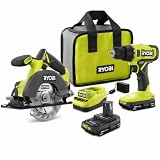
- Best all-around: Ryobi ONE+ 18V two-tool kit. Look for a drill/driver and impact driver, two batteries, charger, and bag or case. Ryobi’s broad ONE+ lineup makes it a practical starting point for homeowners who expect to add tools later. Typical kit pricing: about $150–$250.
- Best for frequent DIY: DeWalt 20V MAX drill-and-impact-driver combo. A two-tool set with two batteries and a charger is a useful foundation for assembly, repairs, and routine fastening. Check battery capacity and the specific included models rather than assuming every combo is the same. Typical pricing: about $180–$300.
- Best compact choice: Bosch 18V drill/driver kit. A drill-focused kit can be easier to store and handle for shelves, furniture, and small repairs. It usually gives up the impact driver and some expansion value of a two-tool bundle, so compare the cost of adding a second tool before choosing it. Typical pricing: about $100–$200.
- Best for occasional household jobs: a two-tool kit with one battery. Some entry bundles include a drill, impact driver, charger, and just one battery. These can fit a tight budget, but a second battery may be a worthwhile later purchase if work involves repeated drilling or fastening.
These are product-line recommendations, not guarantees that a particular bundle is available at a particular price. Verify the current contents and compatibility on the box or manufacturer’s product page before buying.
What matters more than the tool count
Included tools should match the work
A drill/driver handles drilling holes and driving screws with a clutch that helps reduce overdriving. An impact driver delivers short rotational blows, making it more effective for driving many long screws or fasteners. For ordinary home projects, those two tools cover more situations than a large assortment of less-used tools.
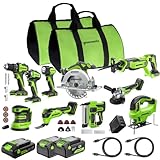
Multi-tool kits can look like better value, but count the tools you will actually use. A flashlight or small saw may be useful; a collection of accessories does not make up for a weak battery setup or tools that do not suit your projects.
Voltage is not a performance ranking
Most homeowner kits in this price range use an 18V or 20V MAX battery platform. Those labels describe nominal versus maximum voltage conventions, not a simple difference in power. Compare the tool’s intended duty, battery capacity in amp-hours (Ah), ergonomics, and the platform’s available tools. For repeated work, a larger-capacity battery can extend runtime, but it also adds weight.
Two batteries can matter more than a big accessory pack
With two batteries, one can charge while the other is in use. This is especially helpful when drilling many holes or assembling several pieces of furniture. A single battery is adequate for occasional short jobs, but check whether a second compatible battery is affordable and readily available. In a tight bundle budget, prioritize the second battery over a large collection of generic bits.
Accessories are useful only if they fit the job
A starter set of driver bits and drill bits is convenient, but inexpensive bits can wear, strip, or break faster than better-quality replacements. Check whether the kit includes common Phillips, square, and Torx driver bits, plus drill bits suited to your materials. For masonry, use a hammer drill and masonry-rated bit; a standard drill/driver is not a substitute. For large holes in wood, use the appropriate wood-boring bit and follow the tool’s limits.
At-a-glance comparison
The figures below describe common kit configurations, not a guarantee for every bundle. Weight varies by exact tool, battery, and accessories; check the listing for the particular model number.
| Kit type or platform example | Typical tools | Battery setup to seek | Typical bundle range | Best fit |
|---|---|---|---|---|
| Ryobi ONE+ 18V two-tool combo | Drill/driver + impact driver | 2 batteries; often around 1.5–2.0 Ah each in entry bundles | $150–$250 | Homeowners who want a broad expansion platform |
| DeWalt 20V MAX two-tool combo | Drill/driver + impact driver | 2 batteries; capacity varies by bundle | $180–$300 | Frequent DIY and routine repairs |
| Bosch 18V drill-focused kit | Drill/driver, sometimes with a compact accessory set | 1 or 2 batteries; capacity varies | $100–$200 | Light-duty jobs and limited storage |
| Entry-level two-tool bundle, any compatible platform | Drill/driver + impact driver | 1 battery; consider the cost of adding a second | $100–$200 | Occasional use with a strict upfront budget |
Battery capacity, included accessories, and tool dimensions differ by model, so there is no reliable single weight or runtime figure for an entire brand’s kits. Runtime also depends heavily on material, bit size, fastening load, and technique. Avoid comparing advertised maximum speed or voltage alone.
Choose by workload and ownership cost
| Your situation | What to buy | Why |
|---|---|---|
| First kit, occasional shelves and repairs | Drill/driver, one or two batteries, charger | A drill covers the likely jobs; skip tools you may never use. |
| Furniture assembly or deck repairs several times a year | Drill/driver + impact driver, preferably two batteries | The impact driver speeds up repeated fastening while the drill remains ready for holes. |
| Small apartment or limited storage | Compact drill kit with a case | Smaller tools and fewer accessories are easier to store; check tool length and grip before buying. |
| Already own compatible batteries | Bare tool or a kit with a higher-capacity battery | A duplicate charger or starter battery may be poor value if your existing batteries fit. |
| Planning to build a tool collection | Two-tool kit from a platform with the additional tools you expect to need | Future battery compatibility can matter more than a small initial price difference. |
For example, if a two-tool kit costs $220 and a similar one-tool kit costs $150, the extra $70 buys an impact driver and often a second battery. If you expect to use the impact driver for two projects a year, that may be a sensible upgrade; if you only need to hang a few pictures, the drill-only kit is likely the better use of the budget. Compare the value of the tools you will use, not the number of items in the box.
Durability and upgrade potential
In budget kits, the first wear items are often the accessories rather than the motor: driver-bit tips round off, drill bits dull, and batteries gradually lose capacity after repeated use and aging. Keep batteries dry and within the manufacturer’s storage-temperature guidance, use the right bit for the fastener, and avoid forcing a stalled tool. Let hot tools cool during demanding work instead of running them continuously.
A carrying bag protects against dust and makes storage easier, but it does not replace a hard case if tools will be transported loose in a vehicle. Check that replacement batteries and chargers are sold separately, and confirm that future tools use the same battery platform. A platform with more compatible saws, sanders, and outdoor tools can save money later; a low kit price is less attractive if batteries are hard to find or the tools you want require a separate system.
Bottom line
For most shoppers, a two-tool 18V or 20V MAX kit with a drill/driver, impact driver, two batteries, charger, and case is the most complete buy under $300. Ryobi ONE+ is a strong value-oriented option for building a household collection; a DeWalt combo is worth comparing for heavier or more frequent DIY. Choose a compact drill kit if your needs are modest, and inspect the exact battery count, capacity, accessory quality, and platform compatibility before checkout.