Best Budget Jigsaws Under $150
What's inside
- Best Budget Jigsaws Under $150
- Quick comparison: budget jigsaws worth considering
- Best overall value: SKIL JS314901
- Best for controlled cuts: Bosch JS260
- Best corded upgrade: Makita JV0600K
- Best cordless choices under $150
- Which jigsaw fits your situation?
- How these saws perform in common materials
- Blade-change design and ownership costs
- Setup steps for cleaner, safer cuts
- Best Budget Jigsaws Under $150
- Quick comparison: budget jigsaws worth considering
- Best overall value: SKIL JS314901
- Best for controlled cuts: Bosch JS260
- Best corded upgrade: Makita JV0600K
- Best cordless choices under $150
- Which jigsaw fits your situation?
- How these saws perform in common materials
- Blade-change design and ownership costs
- Setup steps for cleaner, safer cuts
As an Amazon Associate I earn from qualifying purchases. This post may contain affiliate links at no extra cost to you.
Best Budget Jigsaws Under $150
The best budget jigsaw under 150 dollars is usually the SKIL JS314901 for new users, while the Bosch JS260 is the better corded choice for smoother control and the Makita JV0600K suits frequent workshop use. Cordless buyers should consider the DEWALT DCS334B or Ryobi PBLJS01B only if they already own compatible batteries.
These saws are not interchangeable in day-to-day use. A jigsaw that looks attractive on motor power may be less useful if its trigger is difficult to feather, its shoe shifts during a curve, or changing blades requires a tool. The important value questions are how confidently it follows a line, how cleanly it cuts wood and laminate, whether orbital action can be reduced for metal, and what ownership costs remain after the purchase.
As an Amazon Associate we earn from qualifying purchases at no extra cost to you.

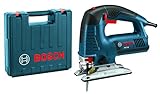
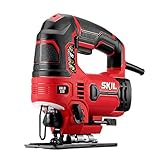

Quick comparison: budget jigsaws worth considering
| Model | Power type | Strokes per minute | Maximum wood capacity | Bevel range | Approximate tool price |
|---|---|---|---|---|---|
| SKIL JS314901 | Corded, 6.0 amp | 800–3,100 | 4.5 inches | Up to 45 degrees | $55–$80 |
| Bosch JS260 | Corded, 6.0 amp | 500–3,100 | 3.5 inches | Up to 45 degrees | $90–$125 |
| Makita JV0600K | Corded, 6.5 amp | 500–3,100 | 3.5 inches | Up to 45 degrees | $105–$145 |
| DEWALT DCS334B | 20V cordless, bare tool | 1,000–3,200 | 5 inches | Up to 45 degrees | $125–$150 |
| Ryobi PBLJS01B | 18V cordless, bare tool | 800–3,400 | 3.5 inches | Up to 45 degrees | $90–$130 |
Specifications can vary slightly by package and market. Cordless prices above normally exclude the battery and charger, which can add $60–$120 if you are not already invested in that platform. The listed wood capacities are useful upper limits, not a promise of effortless cutting through thick hardwood.
Best overall value: SKIL JS314901
The SKIL JS314901 offers the most features for a first jigsaw without approaching the $150 ceiling. It has four orbital settings, a variable-speed trigger, a tool-free blade clamp, a built-in work light, and a dust port. Its 4.5-inch wood capacity is generous for shelves, plywood, trim, and basic furniture work.
For curved-cut control, the important combination is the adjustable speed and a low-orbital setting. Use slower strokes when entering a tight curve, then increase speed on a broad arc. Orbital action makes the blade cut more aggressively on the return stroke, which improves speed in construction lumber but can pull the saw away from a delicate line. Set orbital action to zero for laminate, veneer, and thin metal.
The main compromise is refinement. At the top of its speed range, a low-cost jigsaw can transmit more vibration through the handle than a better-balanced professional tool. That is manageable for occasional work, but it makes careful scrolling more tiring. It is the right pick when capability per dollar matters more than the quietest operation.
Best for controlled cuts: Bosch JS260
The Bosch JS260 is a strong choice when control matters more than maximum cutting depth. Its variable-speed trigger, four orbital settings, low-vibration design, and tool-free blade change make it predictable for curves and cutouts. The lower 3.5-inch wood capacity is still enough for most household projects.
Bosch’s blade-changing arrangement is particularly useful when switching between a coarse wood blade and a fine laminate or metal blade. A tool-free clamp saves only a minute per change, but it also reduces the temptation to continue using a dull or unsuitable blade. The saw accepts common T-shank blades, which are widely available in wood, bi-metal, and specialty versions.
Choose the JS260 for cabinet openings, countertop cutouts, and repeated plywood work where a steady shoe and manageable vibration are more valuable than an extra inch of capacity.
Best corded upgrade: Makita JV0600K
The Makita JV0600K is a sensible upgrade for a user who expects to keep a jigsaw for years and does not need cordless convenience. Its 6.5-amp motor, three orbital settings, variable speed, and compact form suit repeated cutting in sheet goods and solid wood.
It does not offer the same number of orbital positions as some competitors, but three settings are enough for practical work: no orbit for clean or delicate cuts, moderate orbit for general plywood, and maximum orbit for fast rough cuts. The reduced complexity can be an advantage because the control is easier to understand.
Its approximately 3.5-inch wood capacity puts it behind the SKIL and DEWALT on paper. In normal furniture and remodeling work, however, blade choice and feed pressure usually affect the result more than that difference. The included case also helps protect the tool and keep blades together.
Best cordless choices under $150
DEWALT DCS334B
The DEWALT DCS334B is one of the more capable cordless options, with a 20V system, four orbital settings, variable speed, tool-free blade changes, and a five-inch wood capacity. Its bare-tool price can fall under $150, but the complete setup is not under that limit unless you already own a DEWALT 20V battery and charger.
Cordless freedom helps with sink cutouts, outdoor repairs, and large sheets where a cord catches on the workpiece. The tradeoff is added weight and runtime management. A compact 2Ah battery keeps the saw easier to handle; a larger pack extends runtime but can make overhead or vertical cutting less comfortable.
Ryobi PBLJS01B
The Ryobi PBLJS01B is a practical option for people already using the 18V ONE+ system. It offers variable speed, orbital adjustment, a tool-free clamp, and a work light. Its value is strongest when the battery, charger, and other tools are already available.
For occasional cutting, platform compatibility can matter more than a small difference in vibration or capacity. For a new buyer, calculate the full system cost before choosing it over a corded model.
Which jigsaw fits your situation?
| Your situation | Best direction | Why |
|---|---|---|
| Lowest complete cost | SKIL JS314901 | No battery purchase; strong capacity and useful adjustments |
| Beginner making careful curves | Bosch JS260 | Predictable speed control and reduced vibration |
| Frequent workshop use | Makita JV0600K | Robust corded platform and compact handling |
| Already own DEWALT 20V tools | DEWALT DCS334B | Good capacity without adding a battery platform |
| Occasional mobile work with Ryobi batteries | Ryobi PBLJS01B | Convenient platform compatibility |
How these saws perform in common materials
Solid wood and plywood
Use a sharp T-shank wood blade with six to ten teeth per inch for fast cuts in construction lumber and plywood. For visible edges, choose a finer blade and slow the feed rate. Let the teeth do the work; forcing the saw increases deflection, heat, and vibration.
Laminate and veneered panels
Laminate chips easily because the surface layer is thin and brittle. Select a fine-tooth blade, turn orbital action off, and place painter’s tape over the cut line. Cutting with the finished face down can also put splintering on the waste side, depending on the blade’s tooth direction. Make a short test cut in scrap first.
Thin metal
Use a bi-metal metal-cutting blade, the lowest practical speed, and no orbital action. Clamp the sheet firmly against a sacrificial board so it cannot chatter. A few drops of suitable cutting lubricant can reduce heat, but keep liquids away from the motor and electrical controls. For frequent metal work, a jigsaw is less efficient than a dedicated metal-cutting tool.
Blade-change design and ownership costs
A tool-free blade clamp is now expected at this price, but not all clamps hold a blade equally well. Before cutting, pull the installed blade lightly to confirm it is seated and check that the blade is perpendicular to the shoe. A loose blade can produce an angled cut even when the shoe is set correctly.
Blades are the main consumable. A typical project may use one or two blades, but cutting nails, glued-up lumber, or abrasive laminate can shorten their life sharply. If a blade starts wandering, burns the material, requires excessive pressure, or leaves a rougher edge than usual, replace it rather than compensating with more force.
For a simple cost comparison, suppose a corded $70 jigsaw is used for 14 projects over three years. The tool cost is $5 per project before blades. A $130 cordless bare tool may seem more expensive, but if you already own the battery its effective cost could be under $10 per project after 14 uses; if you also need a $90 battery and charger, the total rises to about $15.70 per project. The right value depends on your existing battery platform and expected frequency of use.
Setup steps for cleaner, safer cuts
- Install the correct blade and check that it locks fully into the clamp.
- Set orbital action to zero for laminate, veneer, thin metal, and tight curves.
- Choose a low speed for metal and a moderate speed for plastics or delicate laminates.
- Support the workpiece on both sides of the cut and clamp it near the line without obstructing the shoe.
- Start with the shoe flat, let the blade reach speed, and advance without twisting the housing.
- Clean dust from the shoe, blade clamp, and ventilation openings after use; compressed air should be used carefully and away from bearings.
For most buyers, the SKIL JS314901 is the best budget jigsaw under 150 dollars when capacity and features lead the decision. Pick the Bosch JS260 for more controlled curves, the Makita JV0600K for a durable corded workshop tool, and a cordless model only when its battery platform already makes financial sense.