Best Automatic Pour-Over Coffee Makers
What's inside
As an Amazon Associate I earn from qualifying purchases. This post may contain affiliate links at no extra cost to you.
Best Automatic Pour-Over Coffee Makers: Which One Fits Your Routine?
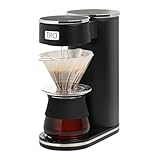
The best automatic pour-over coffee makers combine stable brew temperature and even water distribution with the batch size, filter format, and cleanup your daily routine can handle. For most households, the OXO Brew 8-Cup offers the most practical balance; choose the Technivorm Moccamaster Cup-One for a single mug, the Breville Precision Brewer for extensive control and larger batches, or the Fellow Aiden for programmable, recipe-driven brewing.
These machines automate pouring, not every decision. Coffee dose, grind size, and water quality still shape the cup. The comparisons below focus on the features that most affect whether a brewer feels convenient without making pour-over-style brewing a black box.
As an Amazon Associate we earn from qualifying purchases at no extra cost to you.



Quick comparison
Published capacities and dimensions are rounded; check the manufacturer’s current specifications before buying, especially if shelf clearance is tight. Dimensions are approximate width × depth × height.
| Brewer | Maximum batch | Temperature or brew control | Filter format | Approx. size (W × D × H) | Best fit |
|---|---|---|---|---|---|
| OXO Brew 8-Cup | 8 cups; about 40 oz | SCA-certified model; designed to brew in the Specialty Coffee Association’s recommended temperature range | Flat-bottom basket; paper filters | 7 × 10.5 × 14 in | Everyday brewing with straightforward controls |
| Technivorm Moccamaster Cup-One | One 10 oz cup | Brews in roughly 4 minutes; no temperature adjustment | Size No. 1 cone paper filters | 10 × 6 × 12 in | One coffee drinker who values a simple, compact brewer |
| Breville Precision Brewer | Up to 60 oz | Adjustable temperature, bloom time, and flow settings; presets vary by model | Flat-bottom paper filter; cone insert included on some versions | About 9 × 14 × 16 in | Experimenters and households that brew different amounts |
| Fellow Aiden | Up to about 10 cups | Programmable recipes, including temperature and bloom settings | Basket and single-serve paper filters, depending on brew setup | About 8 × 9 × 13 in | People who want saved recipes and guided brewing |
“Cup” is not a universal measure: the Moccamaster Cup-One’s 10-ounce serving is different from the smaller cup units used by some coffee makers. Compare ounces of water, not cup counts, when estimating how much coffee a machine will make.
Choose by situation
- One person, one mug: The Moccamaster Cup-One avoids brewing a larger pot that goes stale. Its trade-off is less flexibility: there is no user temperature control, and each serving needs a fresh brew cycle.
- Two to four people, minimal fuss: The OXO Brew 8-Cup is a sensible middle ground. Its flat-bottom basket is forgiving for routine batches, and the machine is less about tweaking than about repeatable, convenient brewing.
- Different coffees or batch sizes: The Breville Precision Brewer gives experienced users more ways to adjust brewing. That flexibility is useful only if you’ll use it; the larger footprint and additional settings may be needless complexity for a fixed morning recipe.
- Saved recipes and automation: The Fellow Aiden suits someone who wants to set up a brewing profile and repeat it. Consider whether its app-connected features and recipe options are worth the added setup compared with a simpler brewer.
- Limited counter or cabinet space: Measure the actual space, including room to lift the lid, fill the reservoir, and remove the brew basket. A brewer that fits by width may still be awkward under low cabinets.
What separates a good automatic pour-over from a basic drip machine?
Temperature consistency matters more than a flashy temperature display
Water that is too cool can leave a brew tasting thin or sour; excessive heat can make some coffees taste harsh. A stable brewing range is valuable, but a display that lets you choose a temperature does not by itself guarantee that water reaches the grounds evenly or stays there throughout the brew. The OXO emphasizes repeatable brewing, while the Breville and Fellow offer more ways to customize the process.
Showerhead coverage affects extraction
A showerhead should wet the coffee bed broadly rather than repeatedly dumping water into one small spot. Uneven wetting can leave some grounds under-extracted while others contribute bitterness. Design details such as outlet placement and water distribution are not always described in a way that allows direct comparison, so look for a brewer with a well-designed dispersion system and a brew basket suited to the batch size. A smaller batch in a machine designed for a full pot may behave differently from a full batch.
Filter shape changes the brew and the cleanup
Flat-bottom baskets often use widely available basket-style paper filters and are convenient for batch brewing. Cone filters concentrate the coffee bed into a narrower shape and are common for single-serve brewing. Filter fit matters: a filter that is too small can collapse or overflow, while an oversized filter may fold awkwardly. Confirm the required filter size before buying, and avoid assuming that all basket filters or cone filters are interchangeable.
Ownership details that listings tend to skip
Paper filters are an ongoing cost, though generally a modest one. Reusable filters reduce paper use but retain more oils and need a thorough rinse after every brew; fine grounds can collect in the mesh. If the machine uses a thermal carafe, clean the interior regularly because coffee oils accumulate even when the outside looks spotless. For a hot plate, leaving coffee on heat for a long time can dull its flavor.
Mineral scale is a more consequential maintenance issue. Hard water can slow heating and affect brewing performance over time. Follow the manufacturer’s descaling instructions and schedule; do not assume that a generic vinegar treatment is suitable, since it can leave odor or conflict with the recommended procedure. Wipe the showerhead and brew basket as needed, and rinse removable parts promptly so oils and fines do not build up.
The parts most likely to need routine attention are the filter basket, carafe, seals, and any removable showerhead or water-contact components. Before choosing a model, check whether these parts are easy to remove and whether replacement filters or carafes are available. A slightly less customizable machine can be the better long-term choice if its daily cleanup is simpler.
Get a repeatable recipe before changing settings
Start with the same coffee-to-water ratio each time so you can tell whether a change in temperature or bloom setting made a difference. A useful starting point is 60 grams of coffee per liter of water, adjusted to taste. For a 600 ml brew, that works out to:
60 g ÷ 1,000 ml × 600 ml = 36 g of coffee.
Use a medium grind as a starting point, then adjust the grind if the cup is consistently too slow and bitter or too fast and sour. Change one variable at a time. If you adjust the dose, grind, temperature, and bloom all at once, you will have little idea which change helped.
Bottom line
Choose the OXO Brew 8-Cup for uncomplicated household brewing, the Moccamaster Cup-One for a single daily serving, the Breville Precision Brewer for hands-on control and larger batches, or the Fellow Aiden for saved, repeatable recipes. Whichever fits your routine, prioritize suitable batch size, even water distribution, readily available filters, and parts you can clean without a struggle. Those everyday details matter at least as much as the feature list.